
LOCTITE
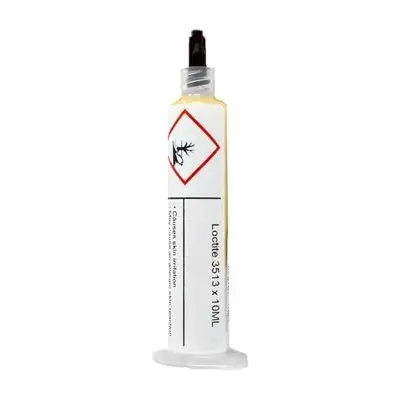
LOCTITE 3513
Product code: 3513
One-part reworkable epoxy underfill for CSP (FBGA) and BGA. Its low viscosity fills the gap under the package, and it cures in 10 minutes at 150 °C.
PCB materials
CSP underfill is a low-viscosity resin that is dispensed beside a chip-scale package or BGA after reflow, flows under the package by capillary action and cures to couple the package, solder joints and board into one load-bearing structure.
A CSP underfill is a filled or unfilled epoxy resin that occupies the standoff between the underside of a chip-scale package, wafer-level package or BGA and the PCB. After cure it bonds to the package body, the board and every solder joint, so mechanical and thermal loads are spread over the whole package area instead of being carried by the corner balls alone.
Underfill goes on the packages whose joints are most at risk: small, fine-pitch packages with many balls under a stiff silicon body, mounted on thin boards that bend when the product is dropped. On a smartphone board that means the processor, memory and RF packages; in automotive products it means any CSP or BGA that must survive long thermal cycling or vibration.
Solder joints under a CSP fail in two main ways: in a drop the board flexes while the stiff package does not, cracking the corner joints, and in thermal cycling the expansion mismatch between silicon and the organic board shears the joints until they fatigue. Underfill distributes the strain over the whole footprint and constrains the joints so they see a fraction of the stress.
Almost all CSP underfills are one-part epoxies supplied frozen in syringes. Capillary underfill is the dominant type, dispensed after reflow along one or two edges and drawn under the package by surface tension. Reworkable grades soften at rework temperature so a package can be replaced, and no-flow or fluxing grades are applied before placement and cure during reflow.
For capillary underfill the first question is whether it will flow under the package in the available time, so viscosity at the dispensing temperature and the measured flow time for a given standoff head the list. After cure, Tg, CTE and modulus decide reliability: higher modulus and lower CTE favor thermal cycling, while a somewhat lower modulus favors drop performance. Confirm every value on the TDS of the specific grade.
Capillary underfill is dispensed with an auger, piston or jetting valve along one edge in an L-pass (one long and one short side) or a U-pass (three sides) for larger packages, or as a single line for small CSPs. The board is preheated on a heated stage to lower viscosity, and the material flows in one direction so that air is pushed out of the opposite edge. Curing follows the TDS in a batch or in-line oven.
Capillary flow depends on standoff height, the solder mask surface and what reflow leaves on it. A standoff below about 50 micrometers makes fill slow and void-prone, and no-clean flux residues reduce wetting, so the underfill must be qualified with the specific solder paste. Rework is possible only with reworkable grades, so electrical test before underfill is mandatory.
Voids under the package are the defining underfill defect: they appear when the flow front splits around solder balls and traps air, when material is dispensed from two opposite sides, when open vias or flux residue disturb the flow, or when moisture outgasses during cure. Incomplete fill comes from too little volume, a cold board, over-thawed material or a standoff lower than the grade can handle.
The right underfill depends first on the failure you want to prevent: drop and shock favor a tougher, moderate-modulus grade with fast flow, thermal cycling favors a filled, higher-Tg grade, and a repairable product needs a reworkable grade. ADVANCE will shortlist candidate grades, provide the TDS and SDS, and supply sample syringes for a flow and reliability trial on your own boards.
LOCTITE
Product code: 3513
One-part reworkable epoxy underfill for CSP (FBGA) and BGA. Its low viscosity fills the gap under the package, and it cures in 10 minutes at 150 °C.
LOCTITE
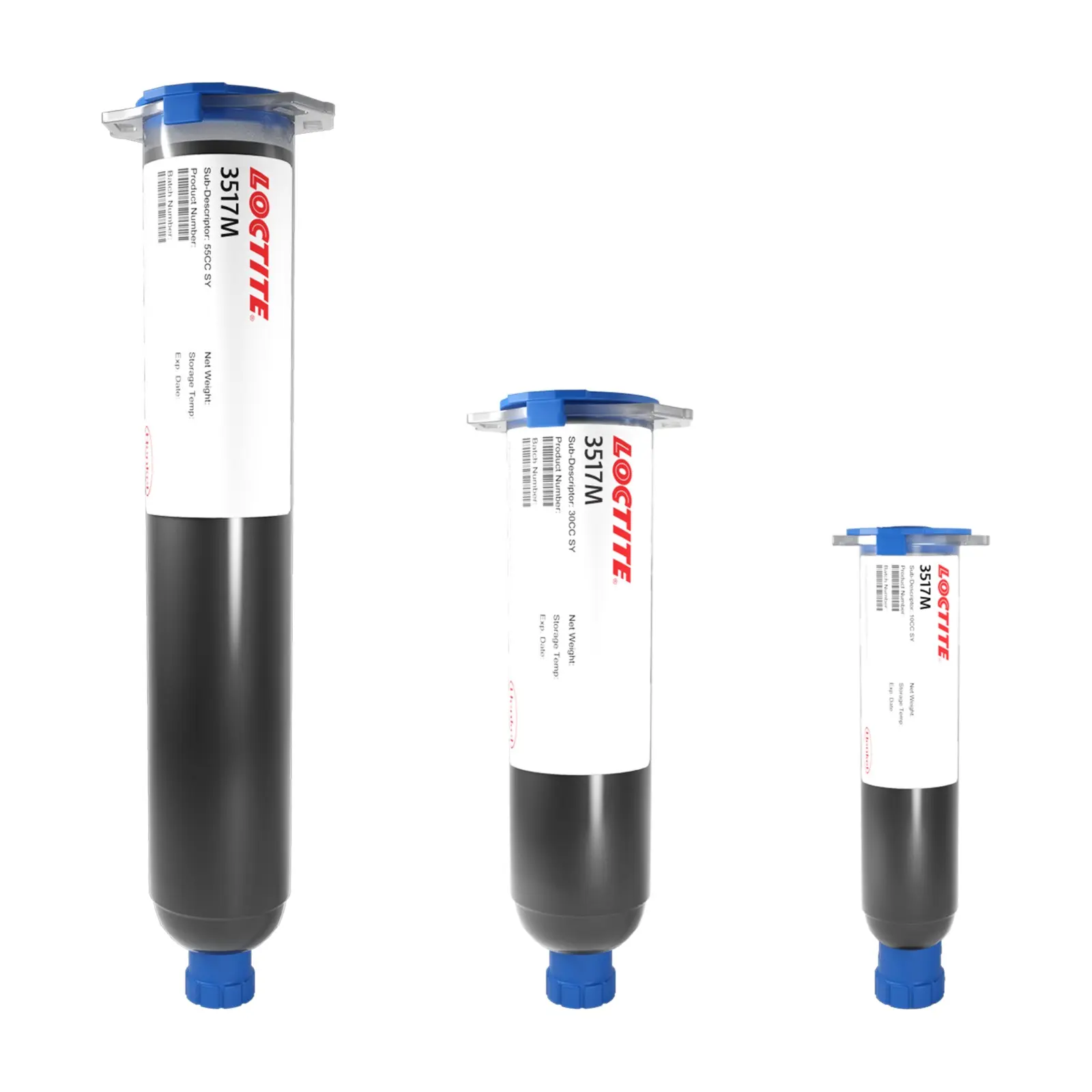
Product code: 3517M
One-part black epoxy underfill for CSP, flip chip BGA and BGA in handheld devices. It protects solder joints from mechanical stress and is reworkable.
LOCTITE
Product code: 3563
One-part fast-flowing epoxy capillary underfill for flip chip, CSP and BGA. It penetrates gaps as small as 25 µm and is not reworkable.
LOCTITE
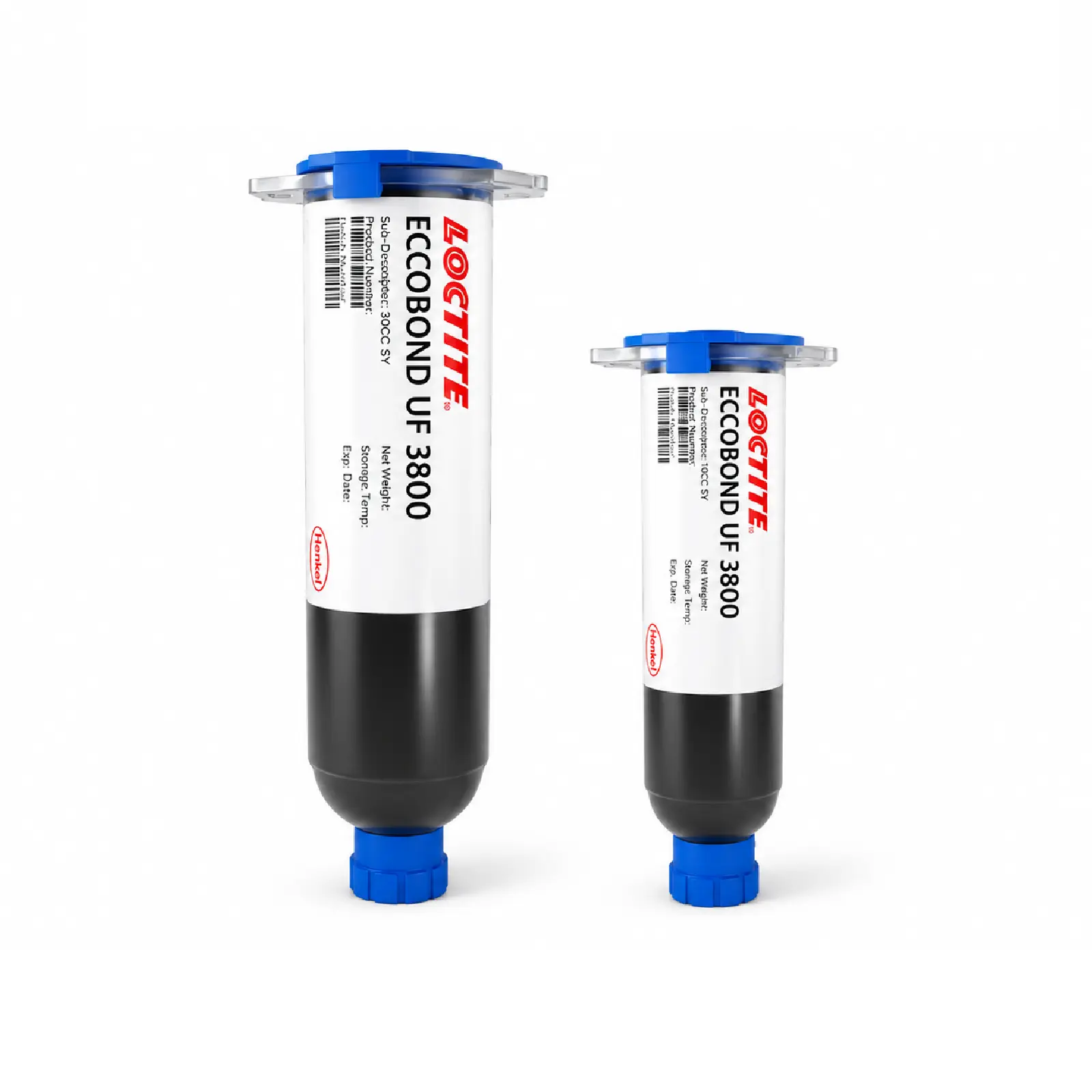
Product code: ECCOBOND UF 3800
Reworkable one-part epoxy underfill for CSP and BGA. Flows at room temperature and cures in 8 minutes at 130 °C to protect solder joints.
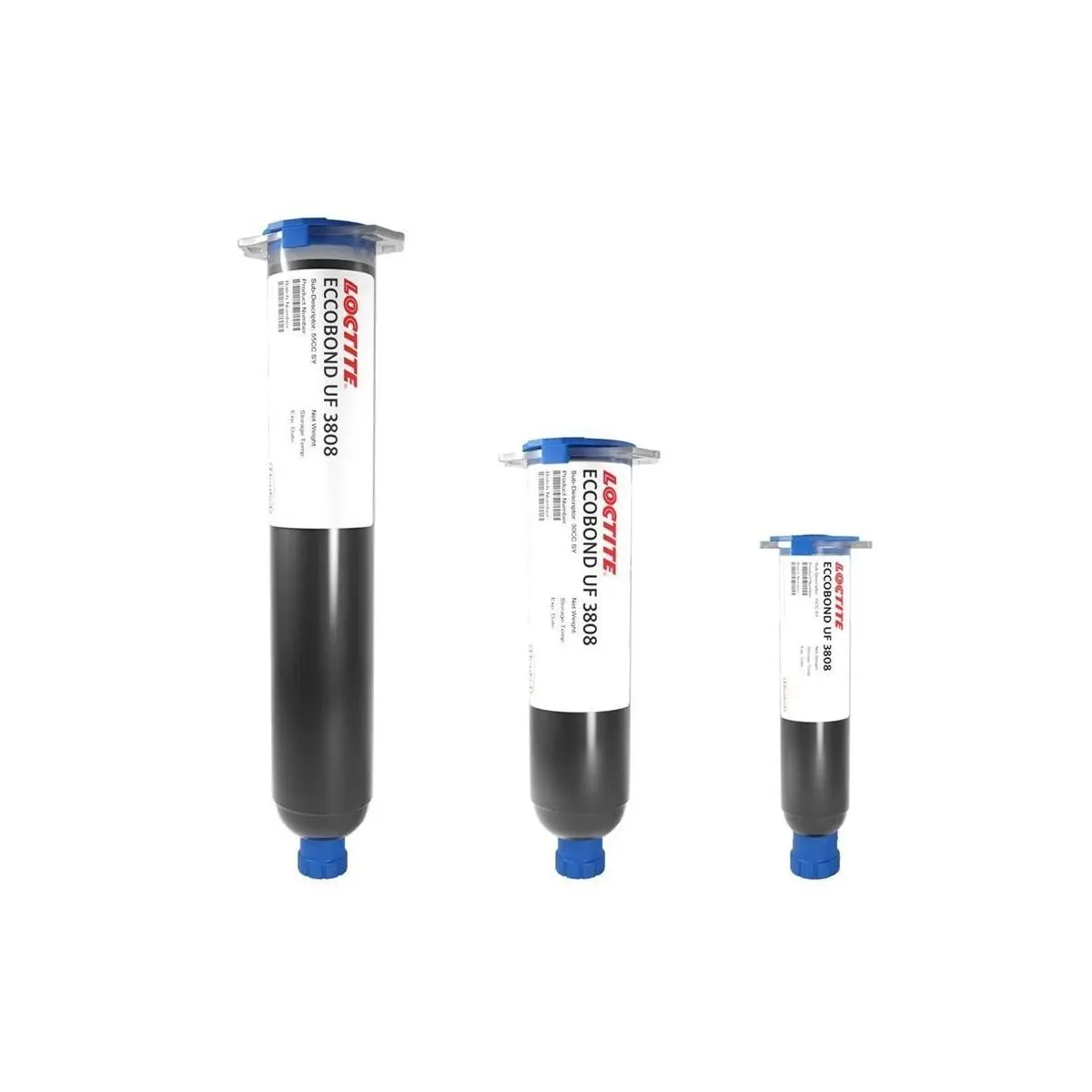
LOCTITE
Product code: ECCOBOND UF 3808
Reworkable one-part epoxy capillary underfill for CSP and BGA. Flows at room temperature and cures fast at low temperature, Tg 113 °C.
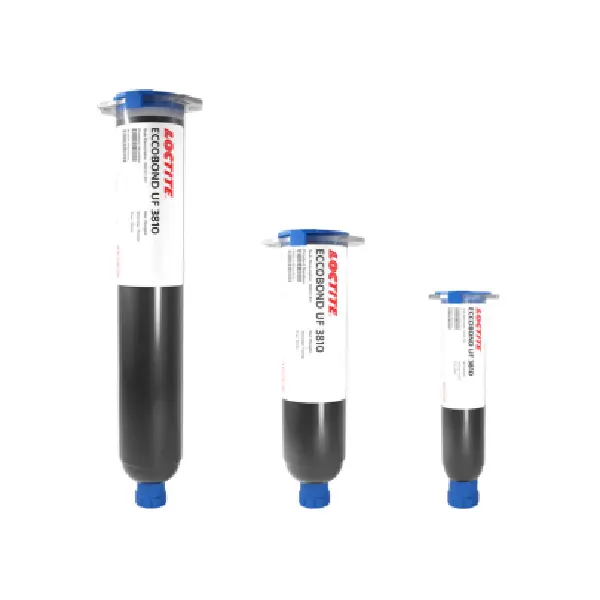
LOCTITE
Product code: ECCOBOND UF 3810
Reworkable one-part epoxy underfill for CSP and BGA. Flows at room temperature and cures in 8 minutes at 130 °C to protect solder joints.
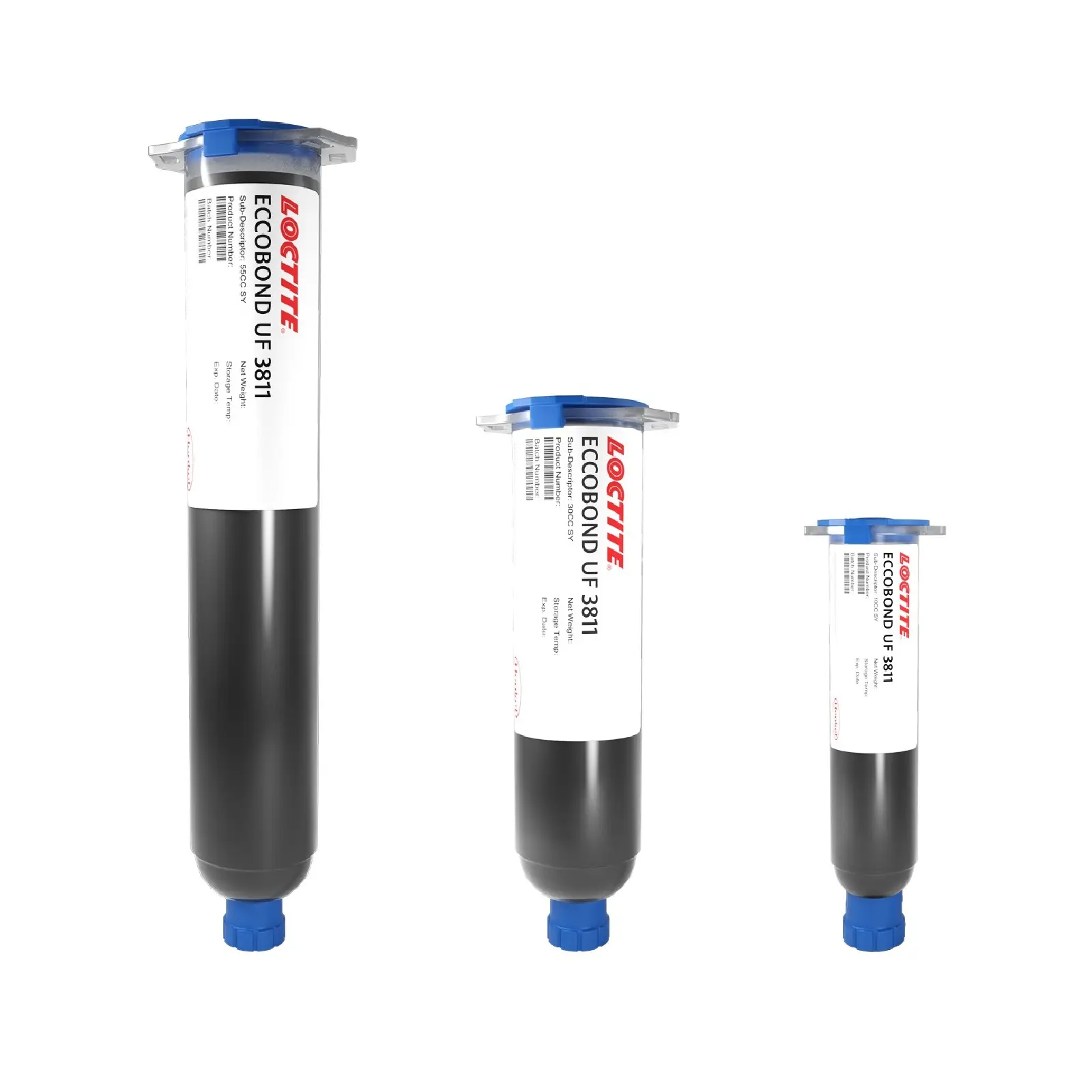
LOCTITE
Product code: ECCOBOND UF 3811
One-part epoxy underfill for CSP and BGA packages. It flows at room temperature without preheating, cures with heat and can be reworked.
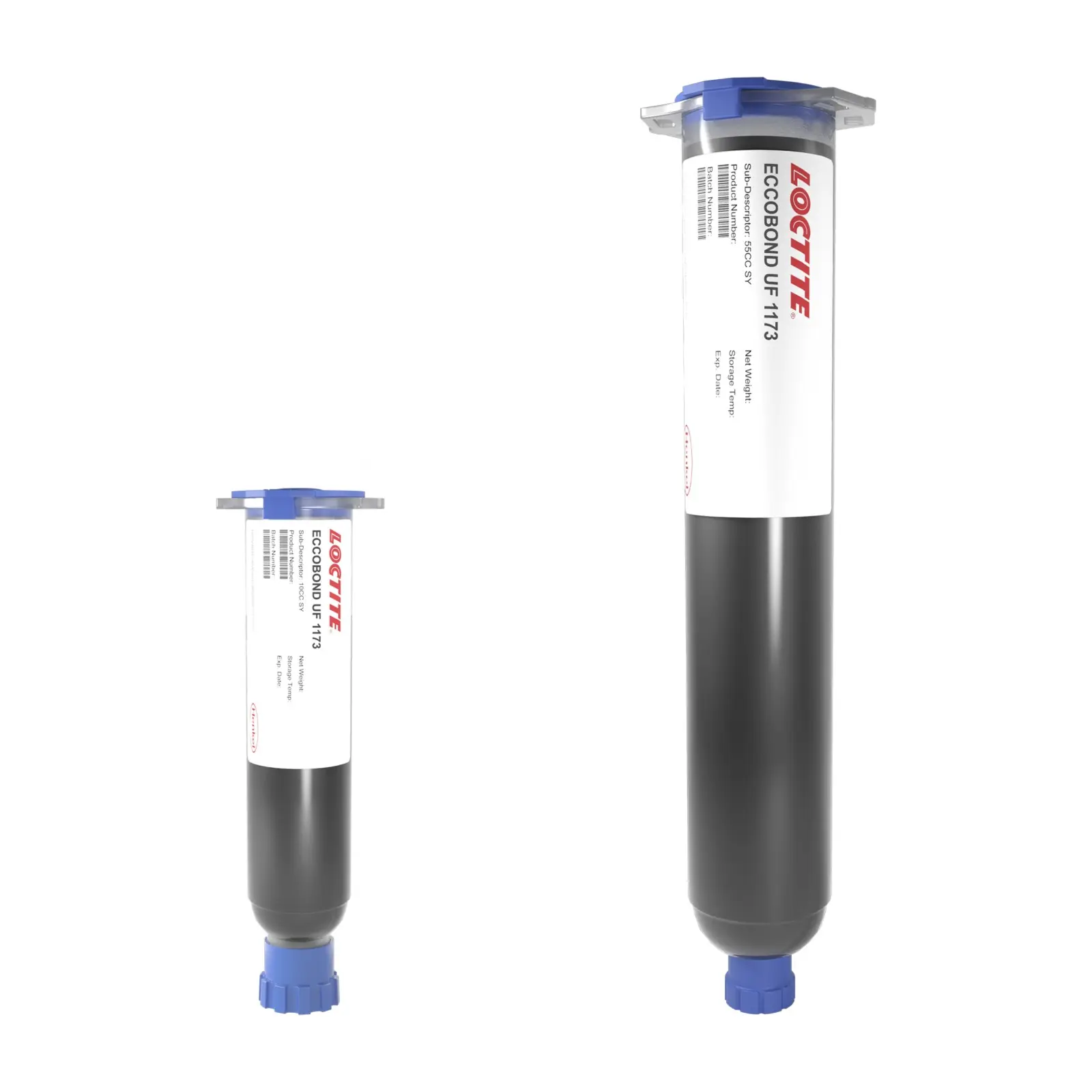
LOCTITE
Product code: ECCOBOND UF 1173
One-part black epoxy board-level underfill for CSP and BGA. Fills void-free under the package and spreads stress away from the solder joints.
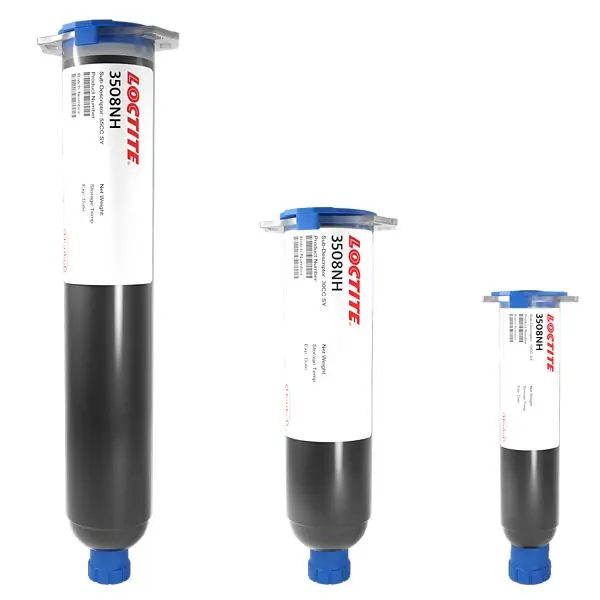
LOCTITE
Product code: 3508NH
One-part black epoxy corner fill for CSP and BGA, pre-applied at the pad corners and cured in the lead-free solder reflow. Reworkable.
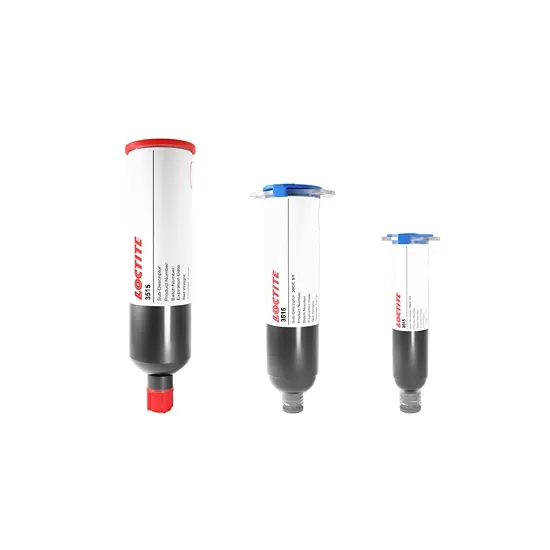
LOCTITE
Product code: 3515
One-part epoxy corner bond for CSP packages, dispensed at the pad corners before reflow. It cures in the solder reflow, so no separate underfill step is needed.
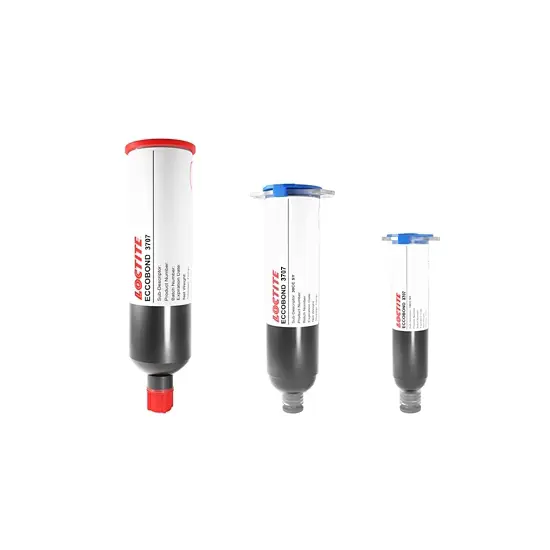
LOCTITE
Product code: ECCOBOND 3707
One-part black epoxy edge bond for flip chip packages and other components on PCBs, cured by UV light or a short oven cure. Fast flowing and reworkable.
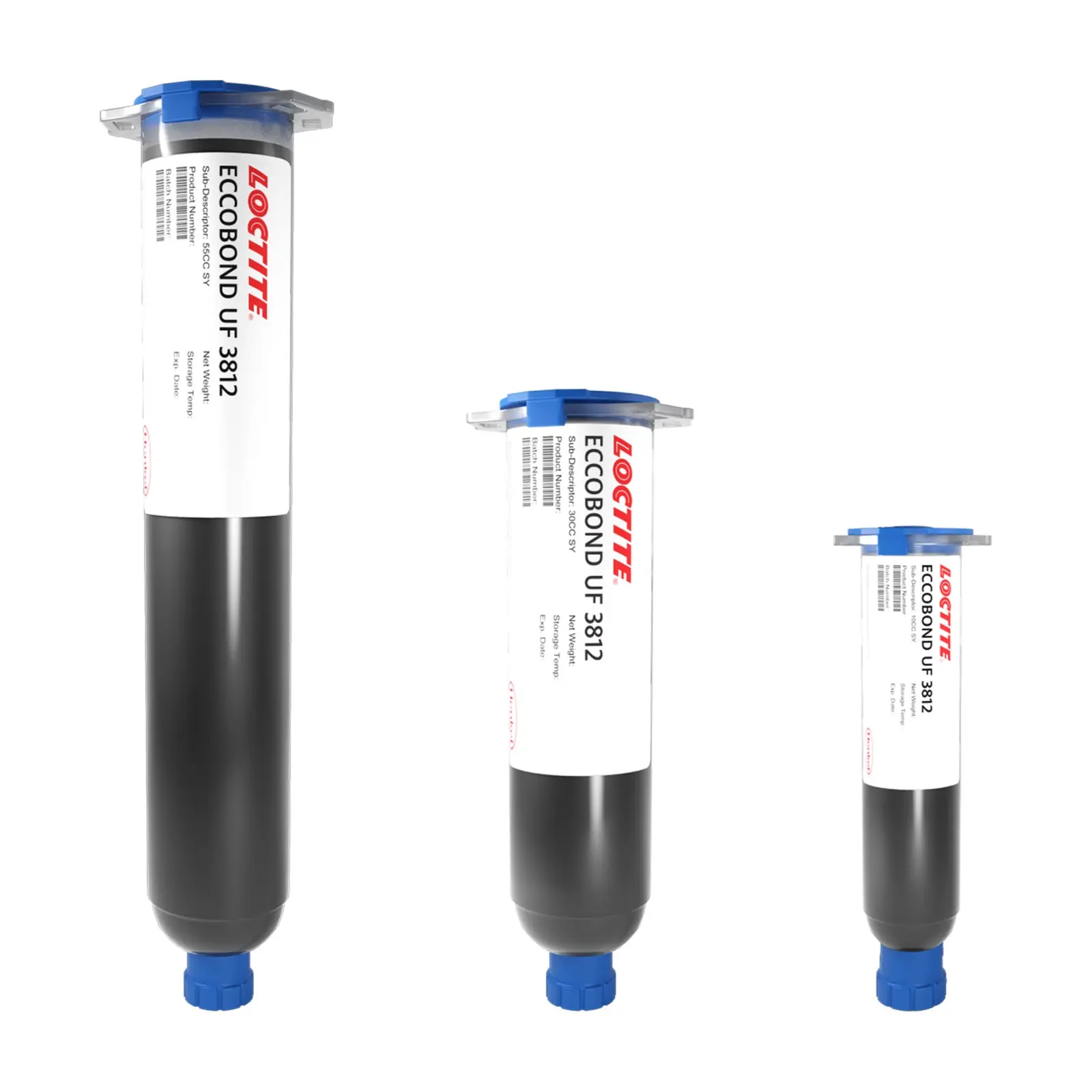
LOCTITE
Product code: ECCOBOND UF 3812
One-part epoxy underfill for CSP, WLCSP and BGA packages. It flows at room temperature, cures with heat, has a high Tg and is easy to rework.
Protects bare die and wire bonds from moisture, contamination and mechanical damage
Holds SMT components in place through wave soldering or second-side reflow until the solder joint takes over.
Insulating adhesive paste applied before placement to bond dies and components without bridging circuits.
A thin polymer film that follows the board contour and shields circuits from moisture, dust and chemicals.
Send ADVANCE your package list, standoff heights, board finish, reliability targets and dispensing and cure equipment. We will shortlist suitable grades, provide the TDS and SDS, and arrange sample syringes for a flow and reliability trial.
Not sure which product fits? Ask our assistant
Type the job, the material or a spec. It searches our published products and TDS values — no external AI.