
LOCTITE
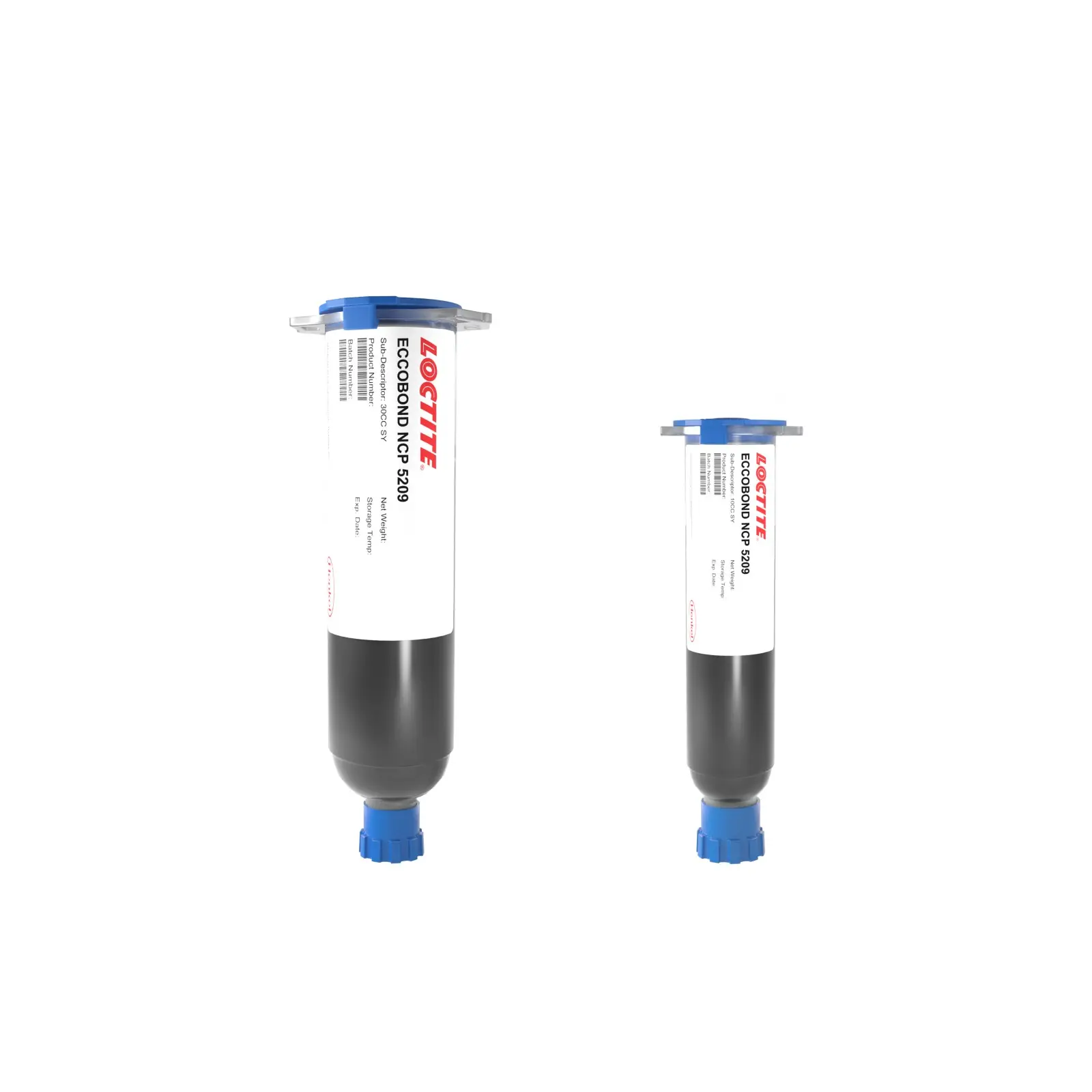
LOCTITE ECCOBOND NCP 5209
Product code: ECCOBOND NCP 5209
Non-conductive paste, pre-applied underfill for thermal compression bonding of Cu pillar flip chip to laminate, with fluxing activity.
PCB materials
Non-conductive paste (NCP) is a filled epoxy or acrylic adhesive dispensed onto a substrate before a die or component is placed, then cured to hold the part and insulate it from neighboring circuitry. It is the paste counterpart of non-conductive film and sits between underfill, die-attach adhesive and SMT adhesive in the assembly toolbox.
Non-conductive paste is a one-part thermoset adhesive loaded with insulating fillers such as silica, supplied in syringes for dispensing or jetting. It is applied to the substrate first, the die or component is pressed into it, and heat cures the paste into a rigid, electrically insulating bond line. In flip-chip and thermo-compression bonding it surrounds the solder bumps or copper pillars as they form; in wire-bond and sensor packages it fixes the die while keeping its backside insulated.
NCP is found wherever a bare die or a very small component must be bonded with an insulating layer under it, and wherever the gap under a part is too small or too crowded for capillary underfill to flow reliably. It is used in semiconductor packaging, in chip-on-board assembly on PCBs and flexible circuits, and increasingly in module assembly for sensors and power devices.
As bump pitch and standoff shrink, capillary underfill becomes slow and prone to voids, and the solder joints sit unprotected between reflow and underfill cure. NCP closes that window: the interconnect is encapsulated as it forms, which improves drop and thermal-cycling performance of fine-pitch packages and removes the separate flow and cure steps.
Almost all non-conductive pastes are one-part heat-cure epoxies, chosen for adhesion, low moisture uptake and a cure that can be tuned to the bonding cycle. Acrylic and epoxy-acrylate hybrids give faster, lower-temperature cure for heat-sensitive flex or plastic substrates. Products are further differentiated by filler level, which sets CTE and viscosity, and by whether they include a flux function so solder bumps can wet through the paste.
A non-conductive paste is specified around its cure behavior and its mechanical match to the parts it joins. The cure must finish within the bonder or oven cycle without gelling before the die is seated, and the cured CTE and modulus must keep solder joints and silicon within their stress limits. The figures below are typical ranges only and must be confirmed on the TDS of the selected product.
Paste is supplied frozen or refrigerated and is thawed to room temperature, unopened, to avoid condensation. It is dispensed as a dot, a pattern of dots or a thin line by needle, jet valve or stamping pin, with the volume set to fill the bond line and form a small fillet without climbing onto pads or the die top. In thermo-compression bonding the cure happens in seconds under heat and force, and the profile must let the solder melt and wet before the paste gels; in batch die attach the oven profile is verified with a thermocouple on a real board.
The substrate surface decides adhesion: solder mask type, surface finish, plasma cleaning and flux residues all change wetting and bond strength, so the paste should be qualified on the production finish. Keep-out zones around the die must allow for the fillet and any bleed-out, and wire-bond pads must stay free of resin bleed. For flip-chip, paste volume and bump layout must be matched so the paste is displaced outward without trapping air, and thin or flexible substrates need a lower-modulus or lower-temperature grade to limit warpage.
NCP defects are mostly invisible from outside and show up as reliability failures, so the process is normally qualified with cross-sections, acoustic microscopy and die shear before volume production. Most problems come from the dispense volume, the cure profile or the substrate surface, and each has a clear corrective action.
Because NCP is qualified on a specific package and bonder, the fastest path is a brief that describes the part, the substrate and the process window. ADVANCE can then propose candidate grades, supply TDS and SDS, and arrange sample syringes for a dispense and cure trial on your own line before any qualification build.
LOCTITE
Product code: ECCOBOND NCP 5209
Non-conductive paste, pre-applied underfill for thermal compression bonding of Cu pillar flip chip to laminate, with fluxing activity.
LOCTITE
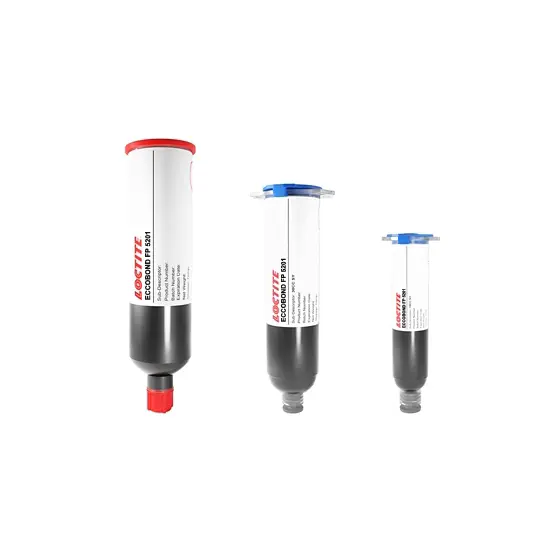
Product code: ECCOBOND FP 5201
One-part BMI/acrylate underfill for thermal compression bonding of flip chips to fine-pitch laminate, with gold, solder or copper pillar bumps.
LOCTITE
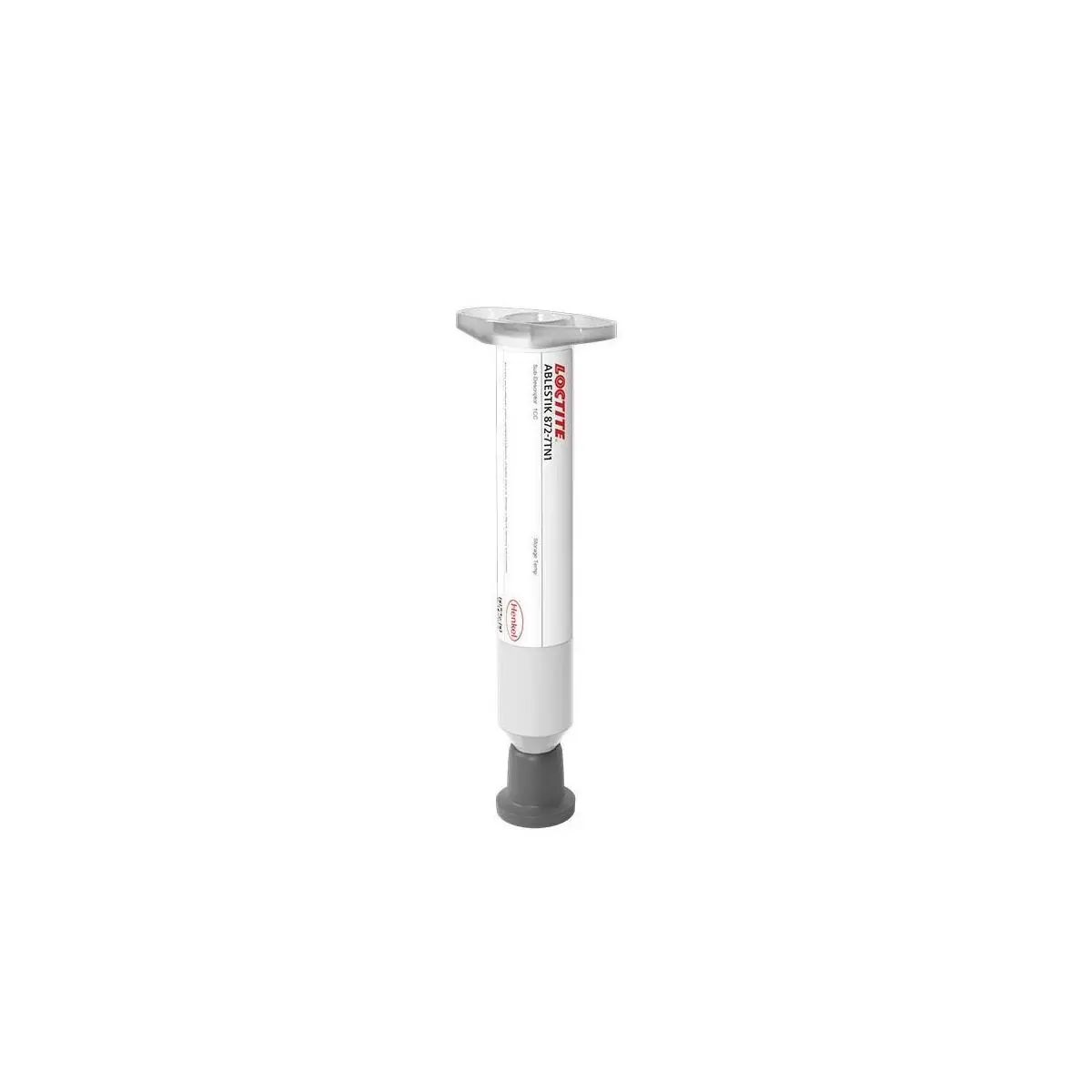
Product code: ABLESTIK 872 7TN1
Flexible, non-conductive white epoxy paste for electronic parts that need stress relief. It cures at low heat, 3 hours at 100 °C.
LOCTITE
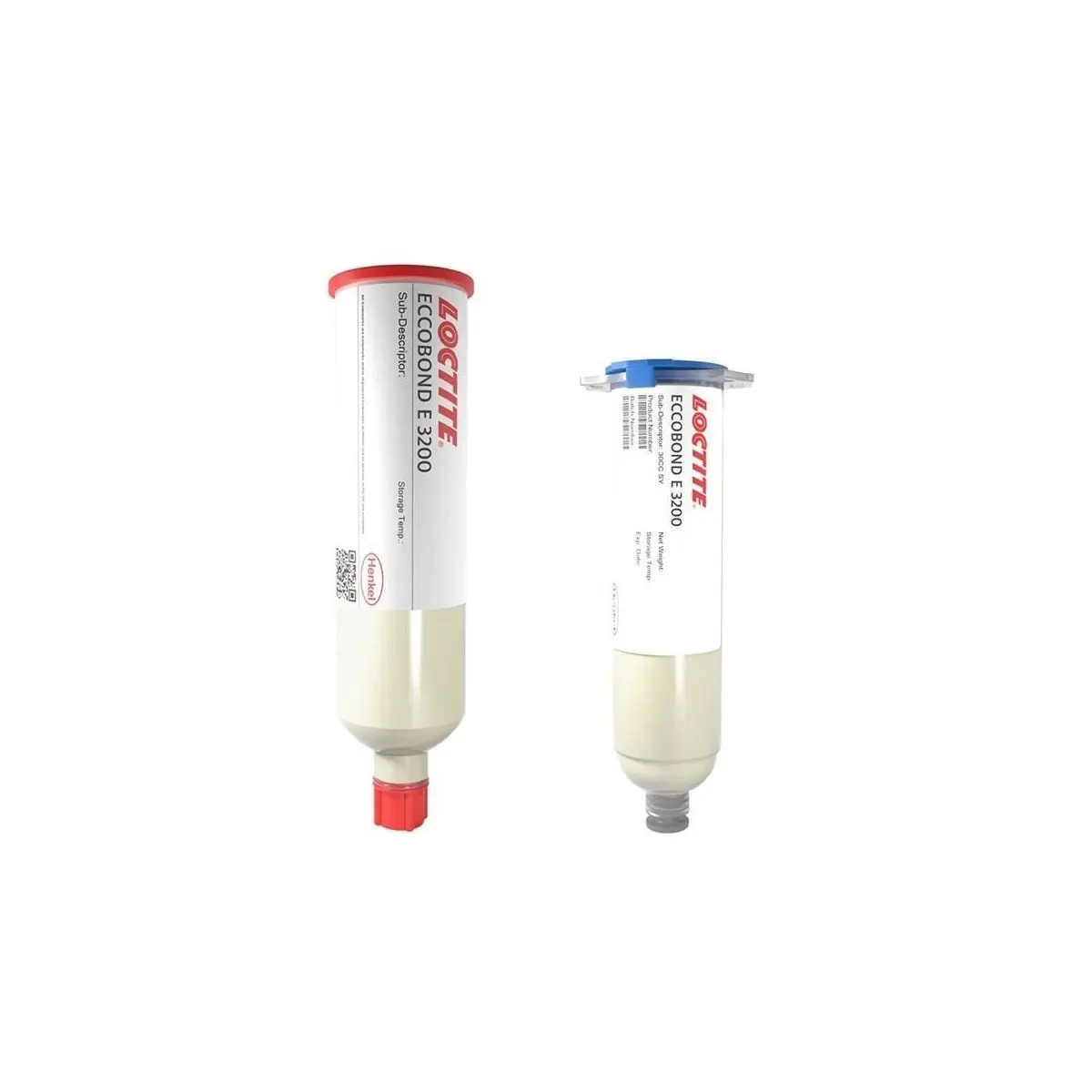
Product code: ECCOBOND E-3200
Non-conductive, flexible epoxy paste for bonding dissimilar engineering substrates. It cures fast at low temperature, 5 minutes at 120 °C.
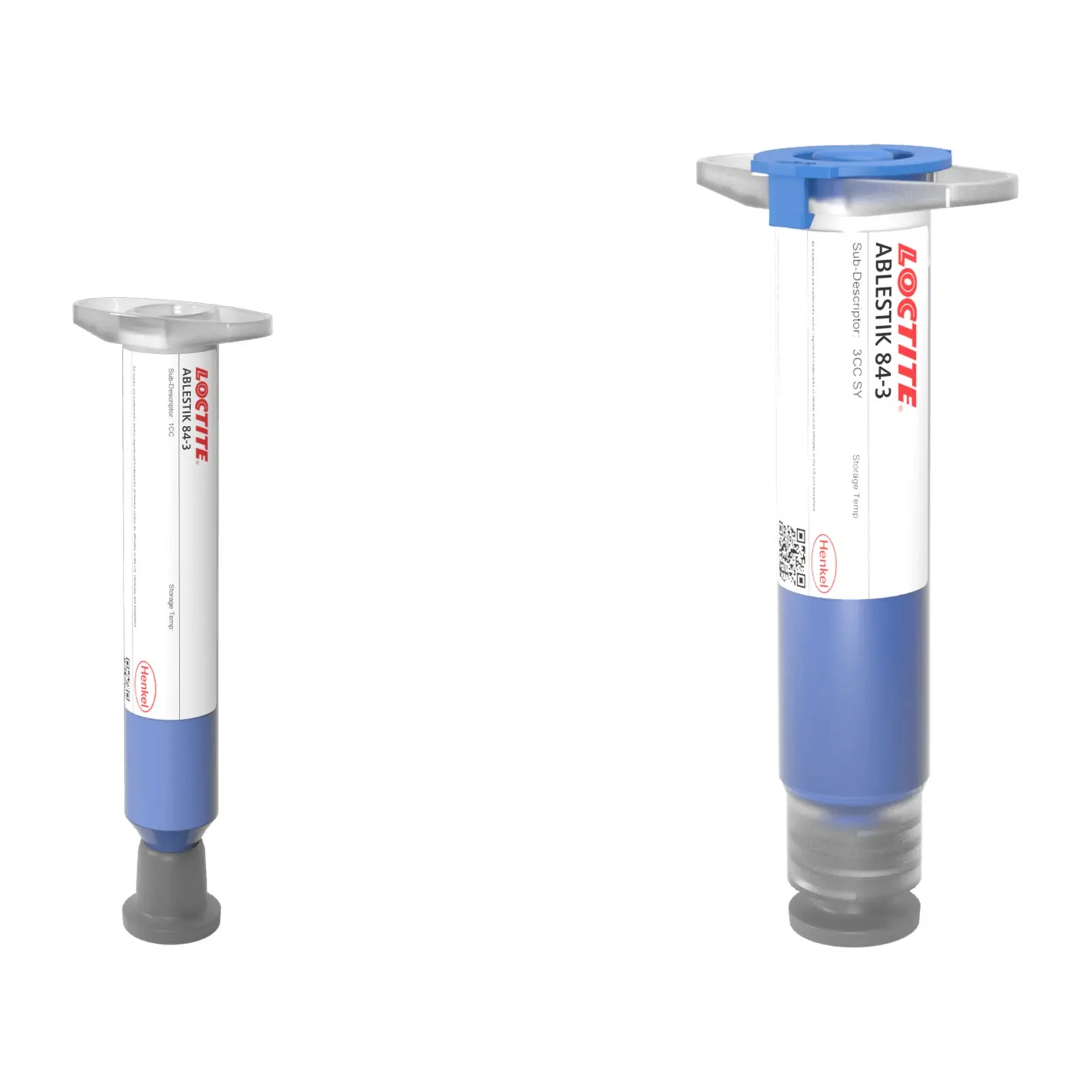
LOCTITE
Product code: ABLESTIK 84 3
Non-conductive blue epoxy for medium die attach, ready to use without mixing, applied by dispenser, screen printing or by hand.
LOCTITE
Product code: ABLESTIK 84 3LV
Low-viscosity, non-conductive blue epoxy paste for die attach by stamping or syringe dispensing. It is the low-viscosity version of 84-3.
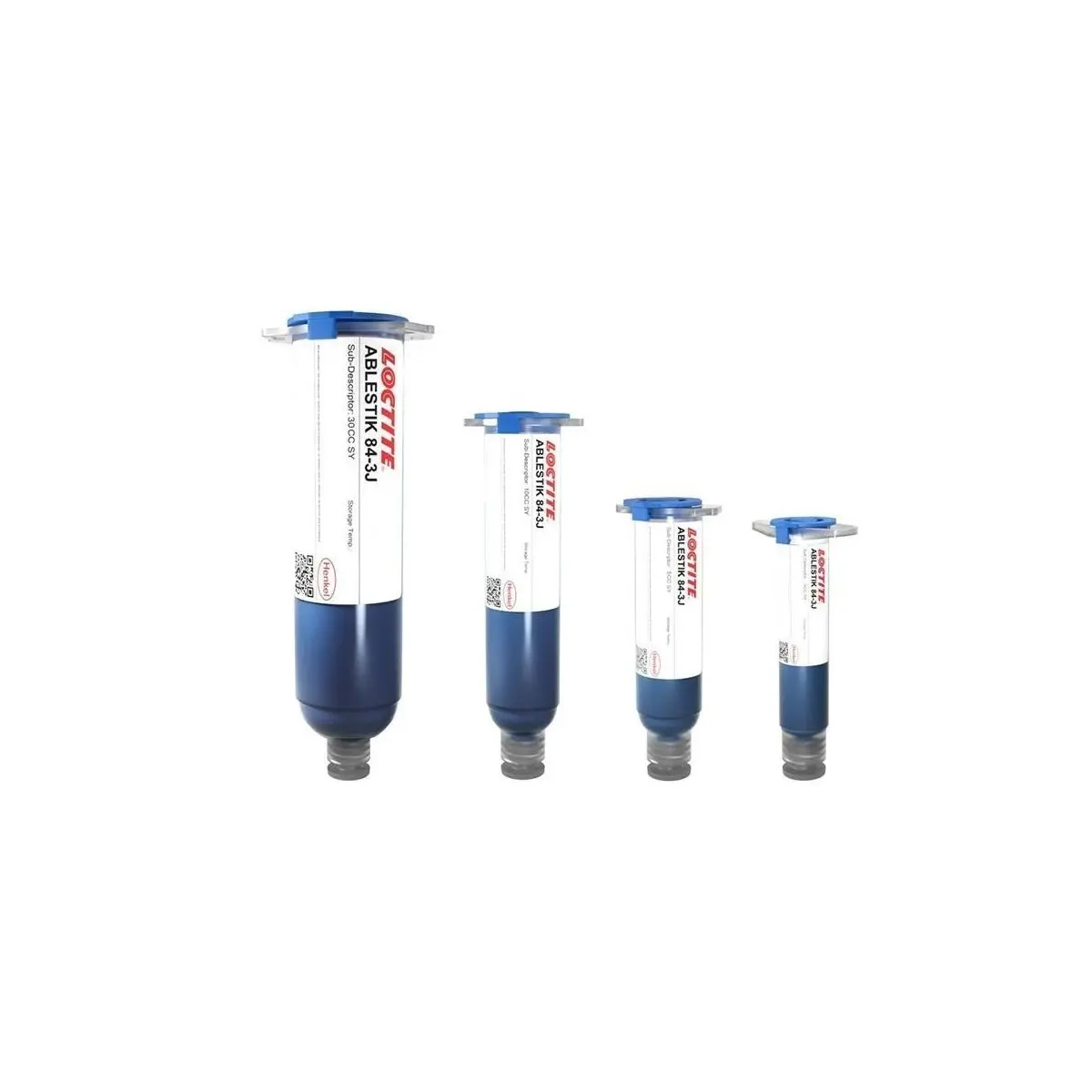
LOCTITE
Product code: ABLESTIK 84 3J
Non-conductive blue epoxy for die and component attach, and for staking under chip components to stop shorts from conductive adhesive.
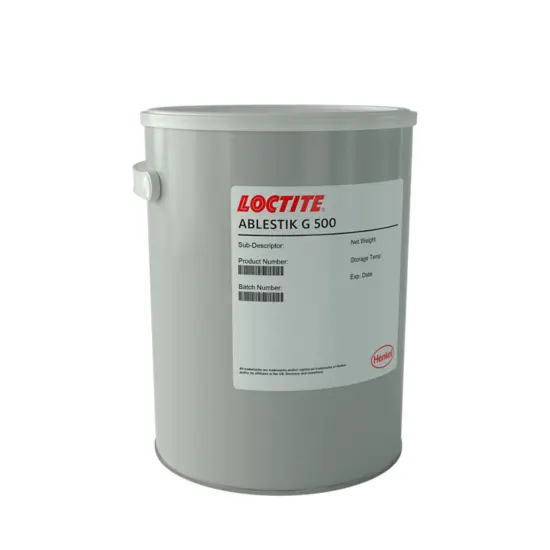
LOCTITE
Product code: ABLESTIK G 500
General-purpose, non-conductive epoxy adhesive and sealant for insulating copper and attaching leads to coils. Heat cures to a high-gloss finish.
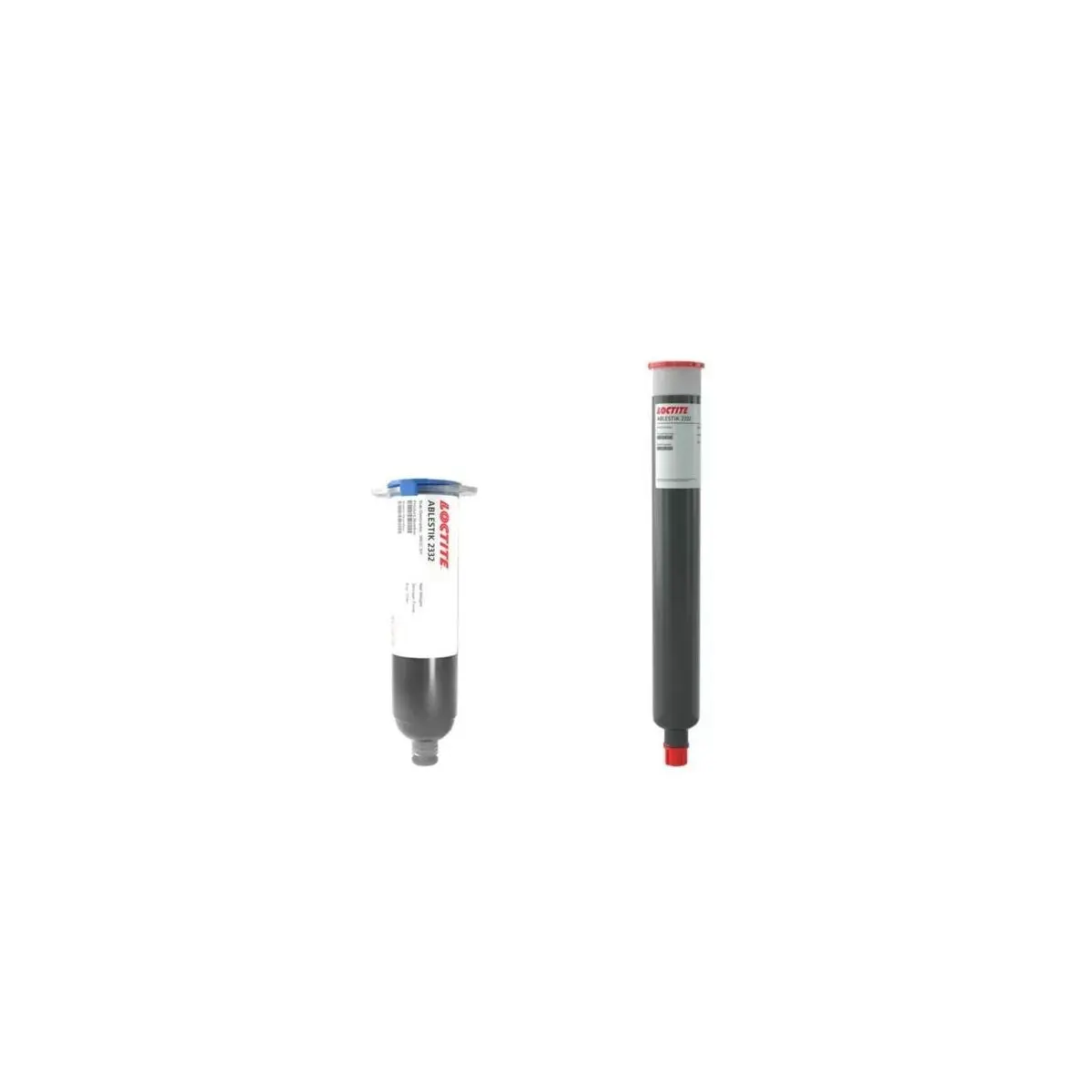
LOCTITE
Product code: ABLESTIK 2332
Black one-part epoxy for bonding copper, aluminum, nickel and rigid plastics. Non-conductive, cures from 100 °C, works from -40 to 150 °C.
Flows under CSP and BGA packages to lock solder joints against drop, shock and thermal cycling
Silver-filled adhesive that bonds and conducts where solder cannot: low temperature, flex, glass and ceramics
Solid film that bonds and conducts in one lamination step, for flex-to-board, display and fine-pitch joints.
Holds SMT components in place through wave soldering or second-side reflow until the solder joint takes over.
Send us the package type, die and substrate details, dispensing equipment and cure window. ADVANCE will propose candidate grades, provide TDS and SDS, and arrange sample syringes for a trial on your line. Request an RFQ or samples today.
Not sure which product fits? Ask our assistant
Type the job, the material or a spec. It searches our published products and TDS values — no external AI.