
LOCTITE
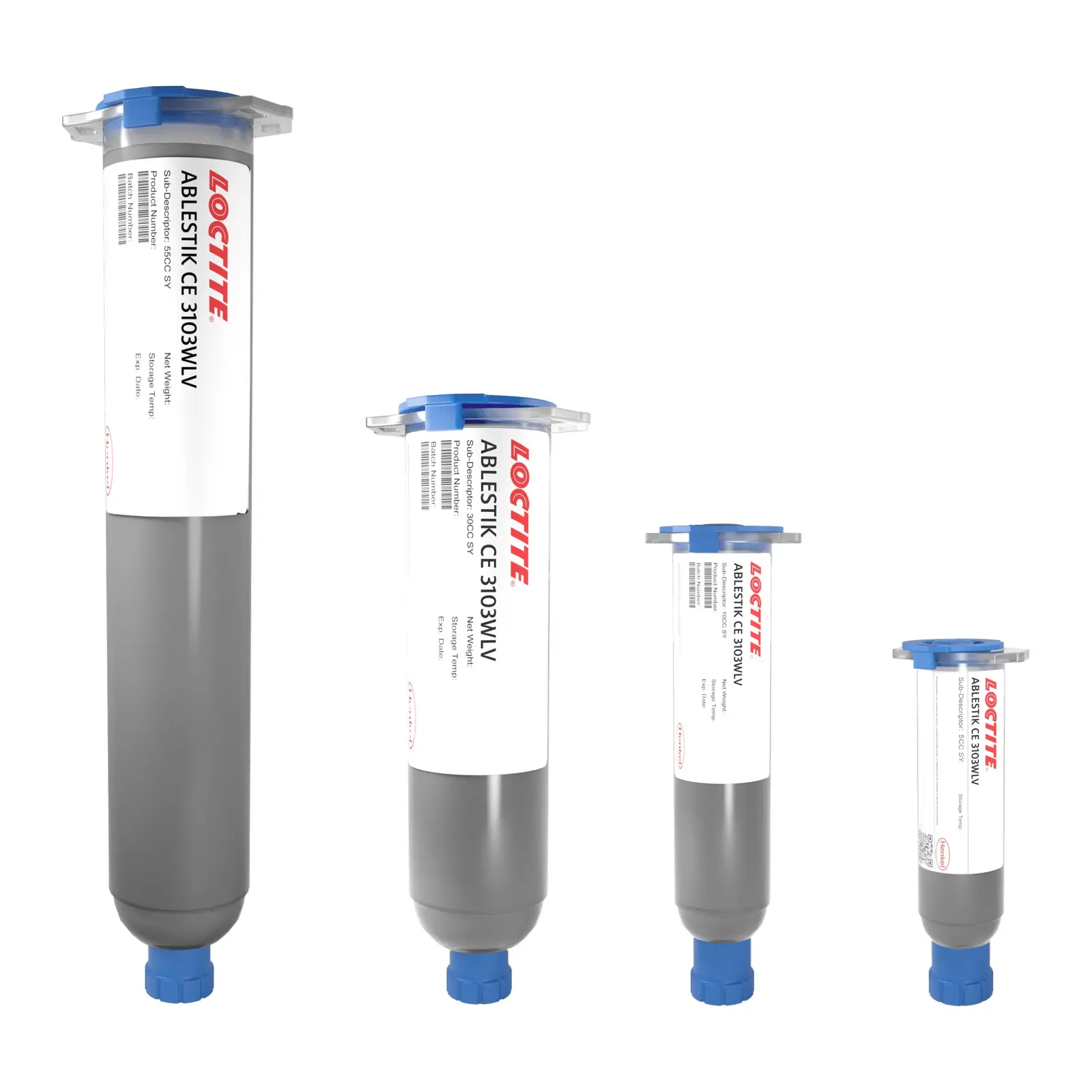
LOCTITE ABLESTIK CE 3103WLV
Product code: ABLESTIK CE 3103WLV
Silver-filled conductive epoxy as a lead-free alternative to solder for SMD attach on Sn, SnPb and OSP-Cu. Cures in 3 minutes at 150 °C.
PCB materials
Electrically conductive adhesives join components and conductors with a polymer that carries current through metal filler, giving an electrical and mechanical connection at temperatures far below solder reflow. They are the standard choice for heat-sensitive substrates, non-solderable surfaces and die attach.
An electrically conductive adhesive (ECA) is a polymer matrix, most often epoxy, loaded with conductive particles, most often silver flakes, at a level high enough for the particles to touch and form continuous paths through the cured bond line. The joint behaves electrically like a solder joint but is formed by curing, typically well below 150 degrees C, rather than by melting.
ECAs appear wherever a conductive joint is needed but solder is ruled out by temperature, surface metallurgy or geometry. The classic application is die attach for chips, LEDs and power devices, where the adhesive gives a low-resistance, thermally conductive path from the die backside to the substrate.
The first problem ECA solves is temperature: lead-free reflow peaks around 240 to 260 degrees C, which destroys polyester flex and many sensor elements, while an ECA cures at a fraction of that. The second is metallurgy, since printed silver, carbon, ITO and aluminum cannot be soldered but an adhesive bonds to them. The third is mechanical: a cured adhesive joint is more compliant than solder and survives flexing.
The main division is between isotropic and anisotropic materials. Isotropic conductive adhesives (ICA) conduct in all directions, are filled with silver flake at roughly 60 to 80 percent by weight, and are used like solder paste or die attach paste. Anisotropic adhesives (ACA) and films (ACF) carry a low particle loading that conducts only where two opposing pads compress the material during a heat-and-pressure bond.
The electrical headline is volume resistivity, typically a few times 10 to the minus 4 ohm-cm for silver-filled epoxies after full cure. What matters in the product is the contact resistance of the finished joint and how stable it stays after humidity and thermal aging, so ask for joint resistance on the intended surfaces, not only the bulk value.
Isotropic pastes are applied by stencil or screen printing for SMD attach on flex, by needle dispensing or jetting for die attach and selective joints, and by pin transfer for high-speed die bonders. Curing follows the TDS in a convection or in-line oven, typically from minutes at around 150 degrees C to an hour or more at 80 to 120 degrees C; full conductivity develops only when cure is complete. Anisotropic materials are bonded in a thermocompression bonder.
The surface finish on both sides of the joint decides long-term resistance. Silver-filled adhesives are stable on gold, silver, palladium and printed silver, acceptable on nickel and copper with proper cleaning, and problematic on tin and bare aluminum, where galvanic corrosion raises resistance after humidity exposure. Clean pads of oxides and oils immediately before application.
The most frequent electrical defect is a joint with high or unstable resistance, caused by incomplete cure, a contaminated or oxidized surface, a bond line that is too thick, or a metal combination that corrodes in humidity. Silver migration between closely spaced conductors under bias and humidity is a long-term risk managed by spacing and conformal coating.
Selection starts with the two surfaces being joined and the maximum temperature the assembly can see, because those decide the filler, finish compatibility and cure chemistry. Then define the current per joint, the resistance you can tolerate after aging, the tests in your specification and the application and cure equipment. ADVANCE will match these to candidate grades, supply the TDS and SDS, and provide samples for a resistance and shear trial on your own substrates.
LOCTITE
Product code: ABLESTIK CE 3103WLV
Silver-filled conductive epoxy as a lead-free alternative to solder for SMD attach on Sn, SnPb and OSP-Cu. Cures in 3 minutes at 150 °C.
LOCTITE
Product code: ABLESTIK CE 3104WXL
Silver-filled conductive epoxy for stencil or screen printing at pitches below 500 µm, a lead-free alternative to solder for SMD attach.
LOCTITE
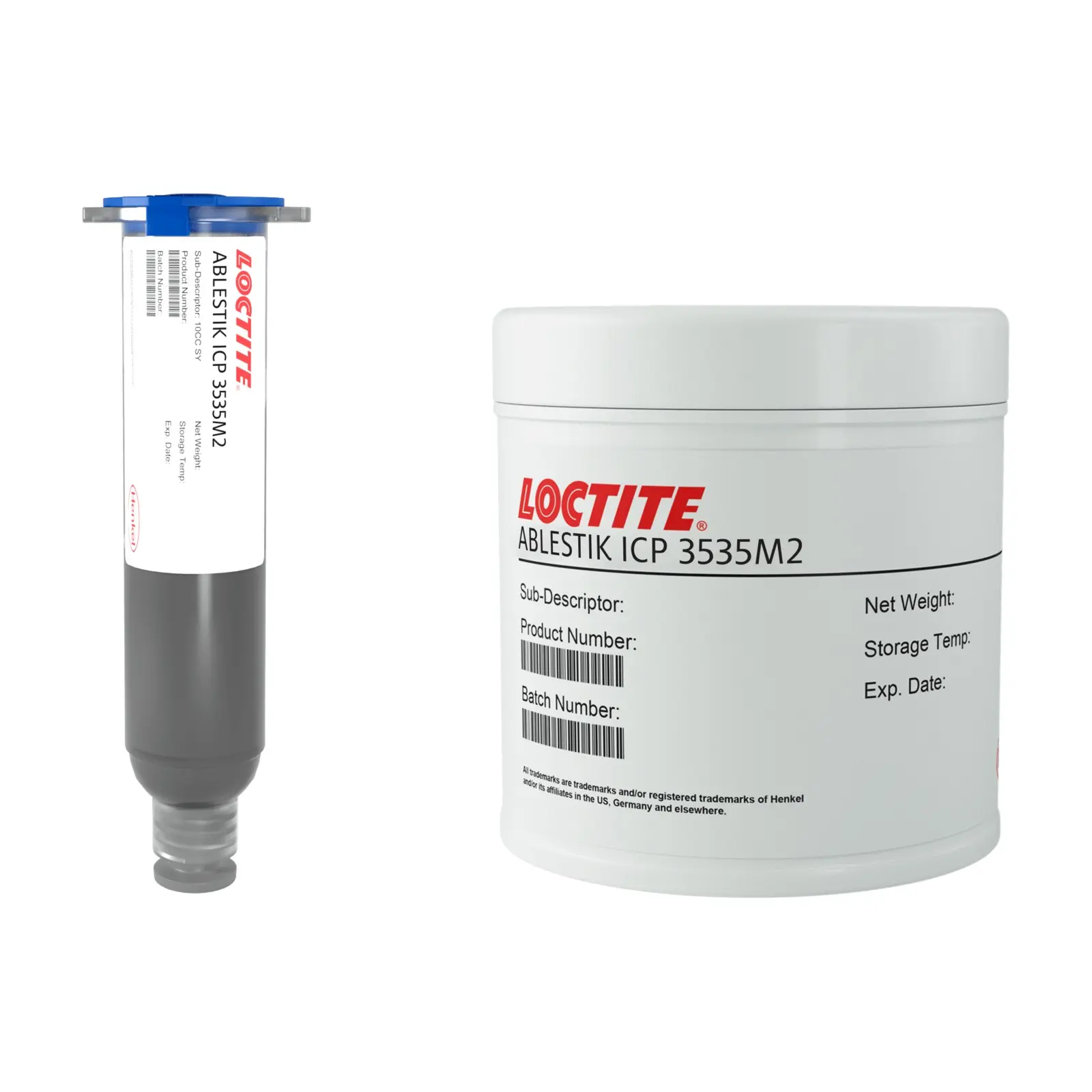
Product code: ABLESTIK ICP 3535M2
Silver-filled conductive epoxy that replaces solder for mounting tin-finished components, down to 0402 size, on PCBs and co-fired ceramic circuits.
LOCTITE
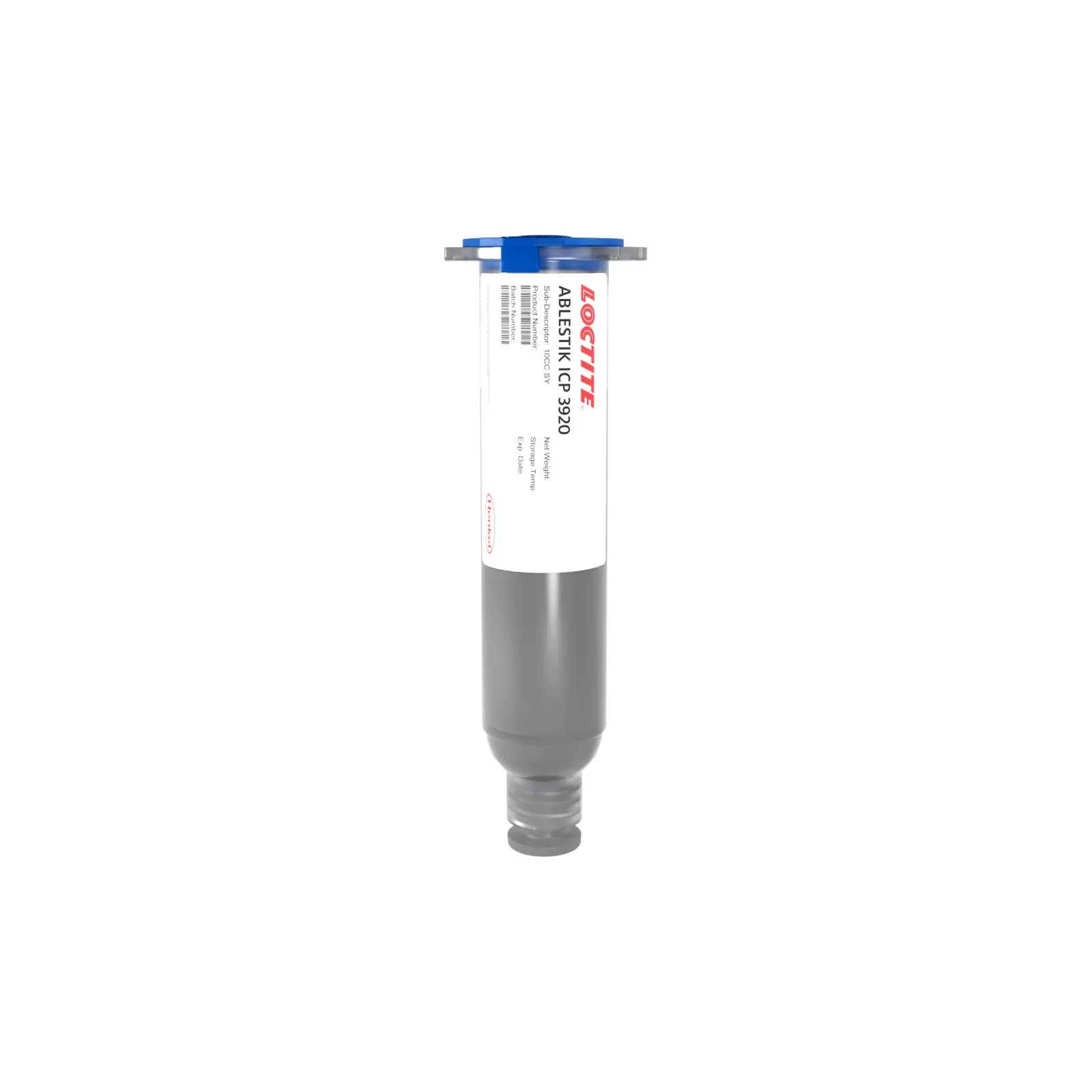
Product code: ABLESTIK ICP 3920
Silver-filled conductive epoxy for fine dispensing and printing in SMT assembly, as a lead-free alternative to solder. Cures in 5 minutes at 150 °C.
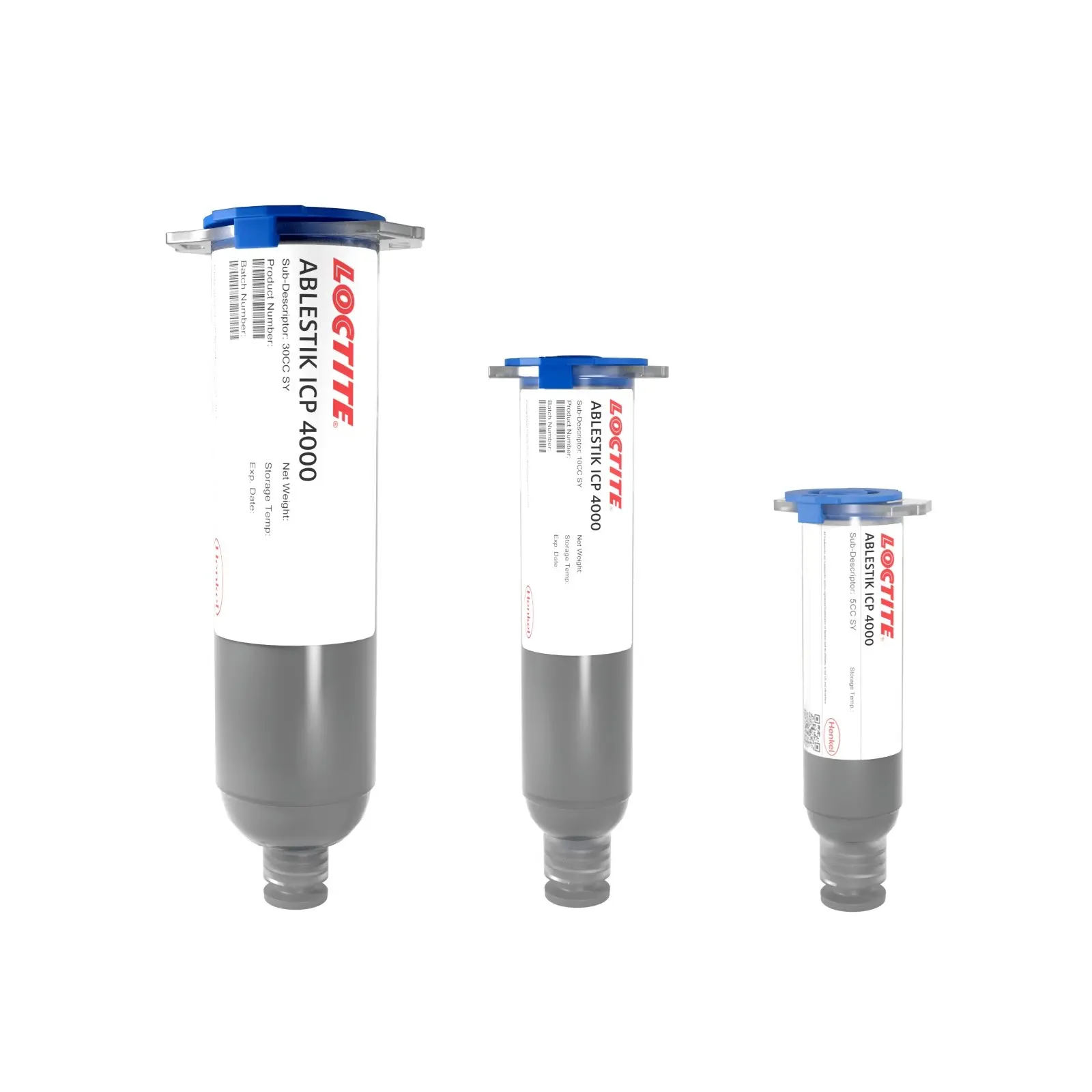
LOCTITE
Product code: ABLESTIK ICP 4000
Flexible silver-filled silicone conductive adhesive, a lead-free alternative to solder that keeps its flexibility and conductivity up to 200 °C.
LOCTITE
Product code: ABLESTIK ICP 4015
Flexible silver-filled silicone conductive adhesive that cures at low temperature, 30 minutes at 80 °C, and stays flexible and conductive when hot.
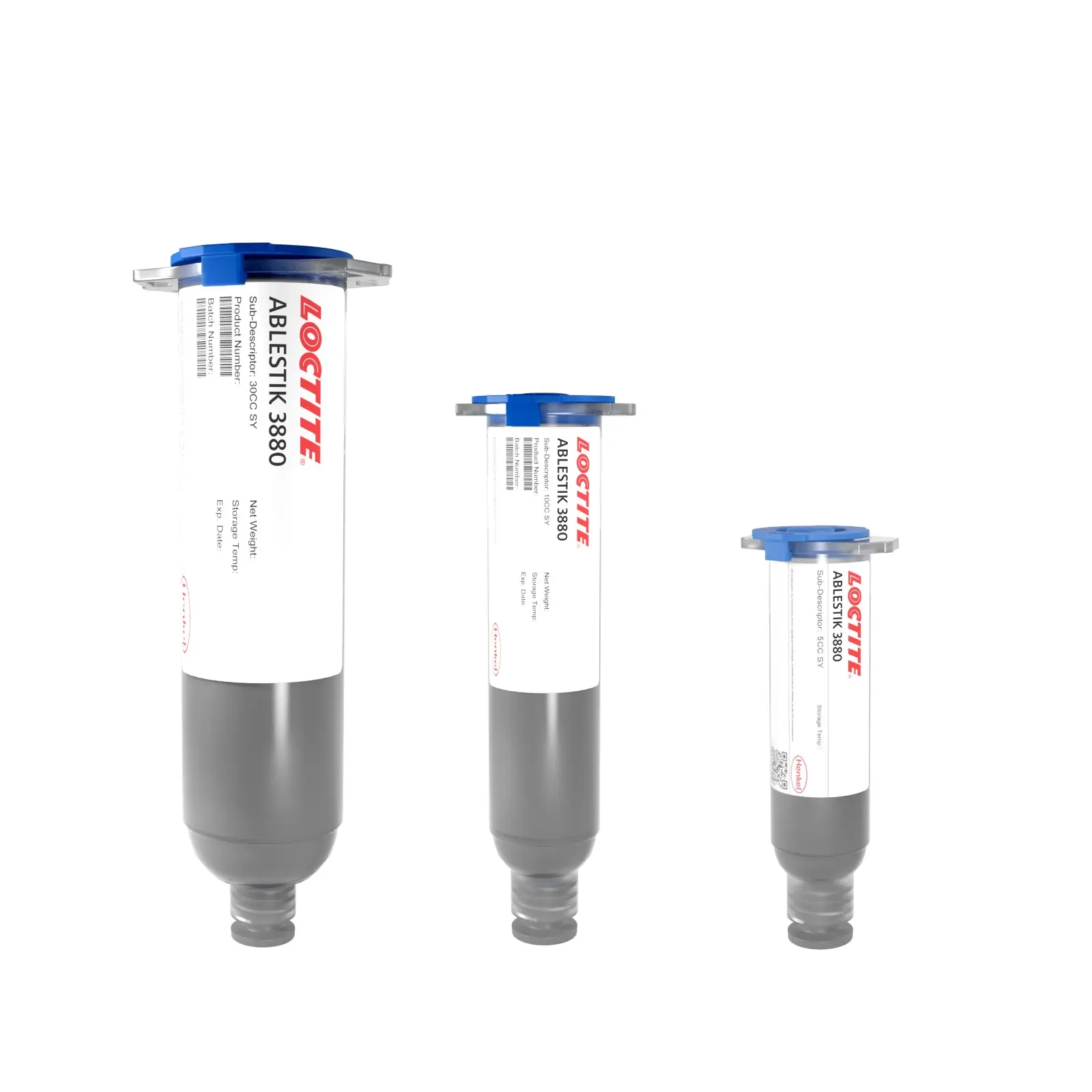
LOCTITE
Product code: ABLESTIK 3880
Silver-filled conductive epoxy paste for bonding SMDs, semiconductor elements, EMI parts and lead wires. Dispense or stencil print, then heat cure.
LOCTITE
Product code: ABLESTIK 8175
Silver-filled conductive epoxy used in place of solder for microelectronic interconnects. Screen or stencil printable, stress absorbing, lead-free.
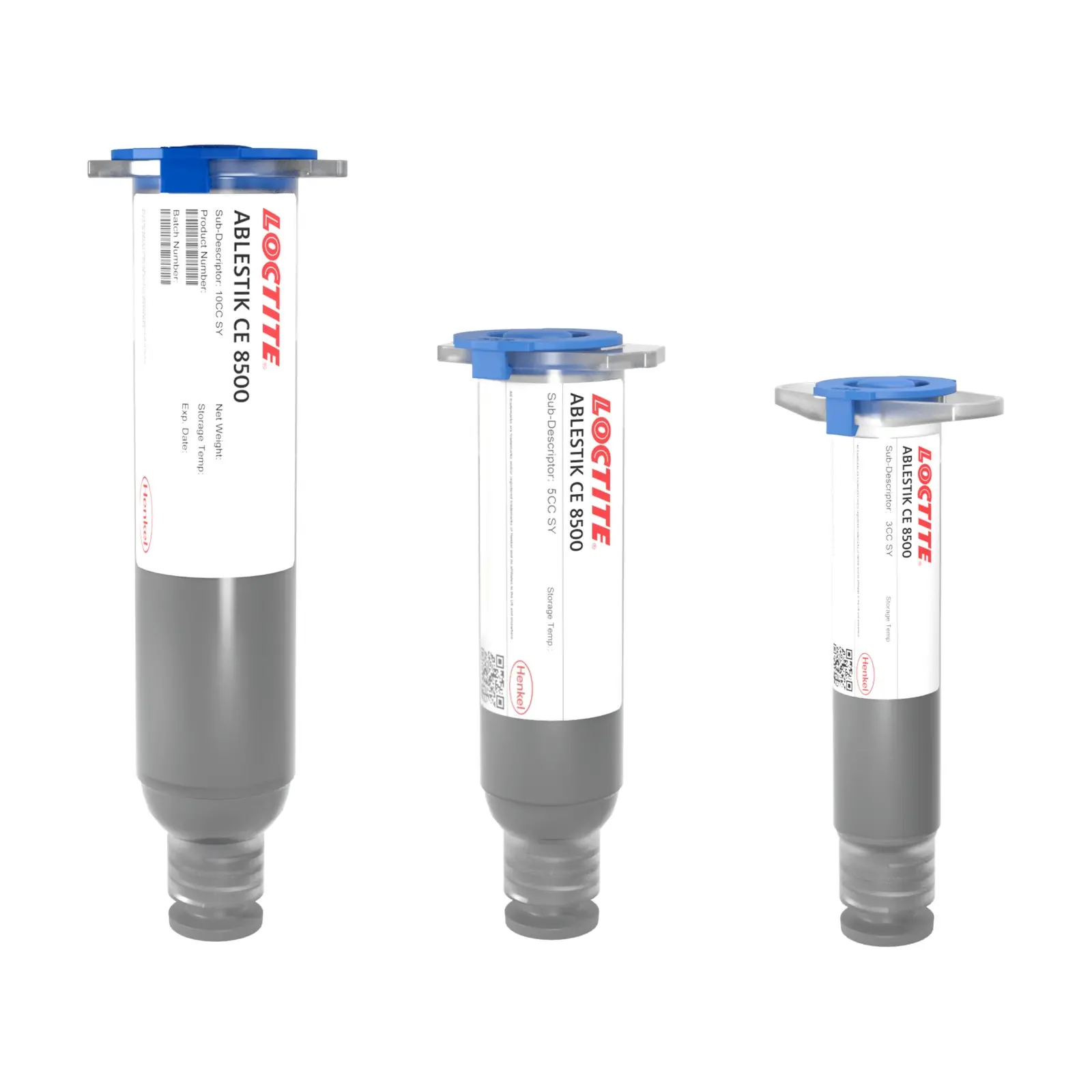
LOCTITE
Product code: ABLESTIK CE 8500
Flexible, low-stress silver-filled conductive epoxy for substrate, heat sink and sensor attach, with an operating range of -45 to 200 °C.
LOCTITE
Product code: ABLESTIK CA 3556HF
Silver-filled conductive acrylate adhesive that snap cures at low temperature, in 120 seconds at 110 °C, for high-throughput assembly on noble metals.
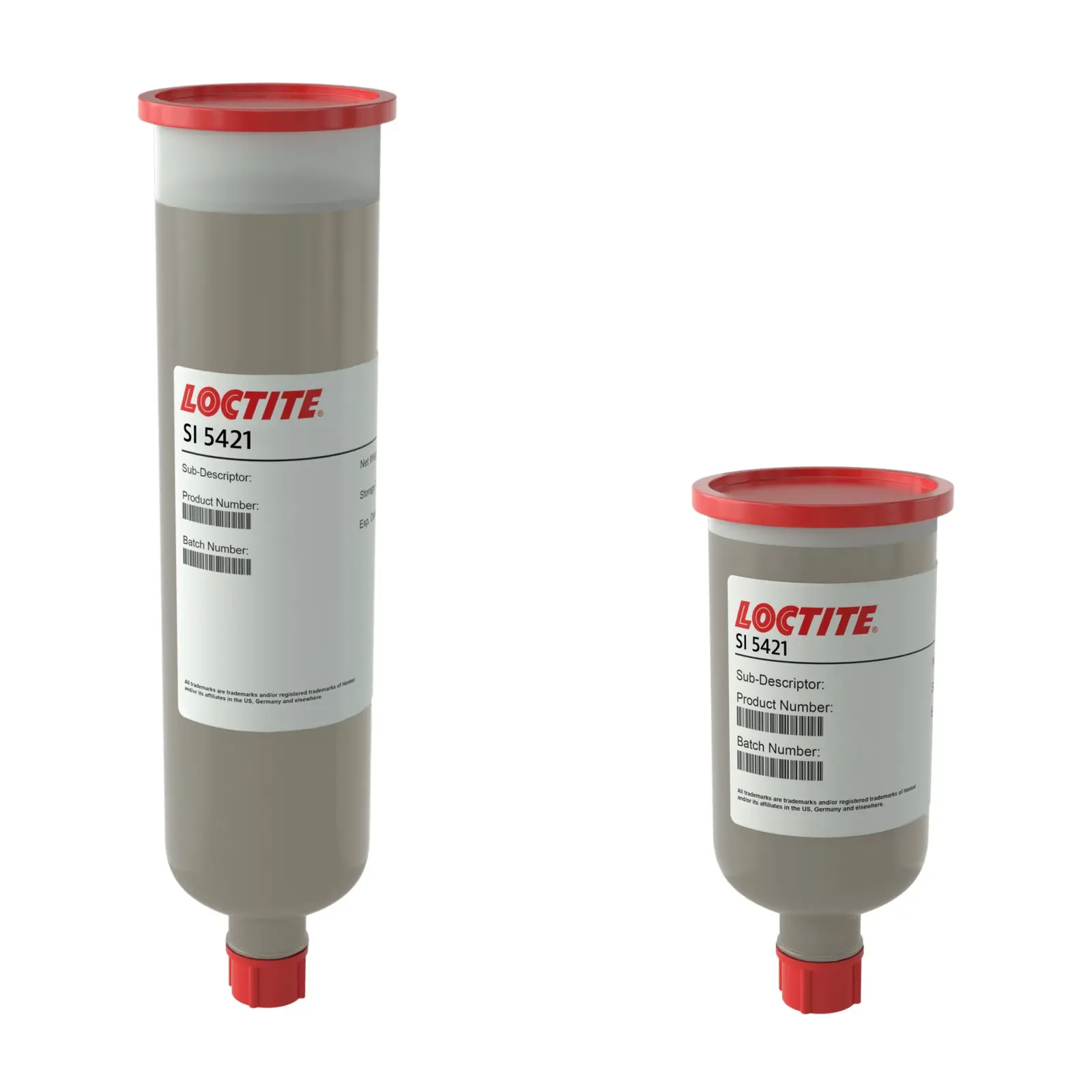
LOCTITE
Product code: SI 5421
One-part, moisture-curing conductive silicone for automotive sensor bonding and formed-in-place gaskets on EMI/RF shielded enclosures.
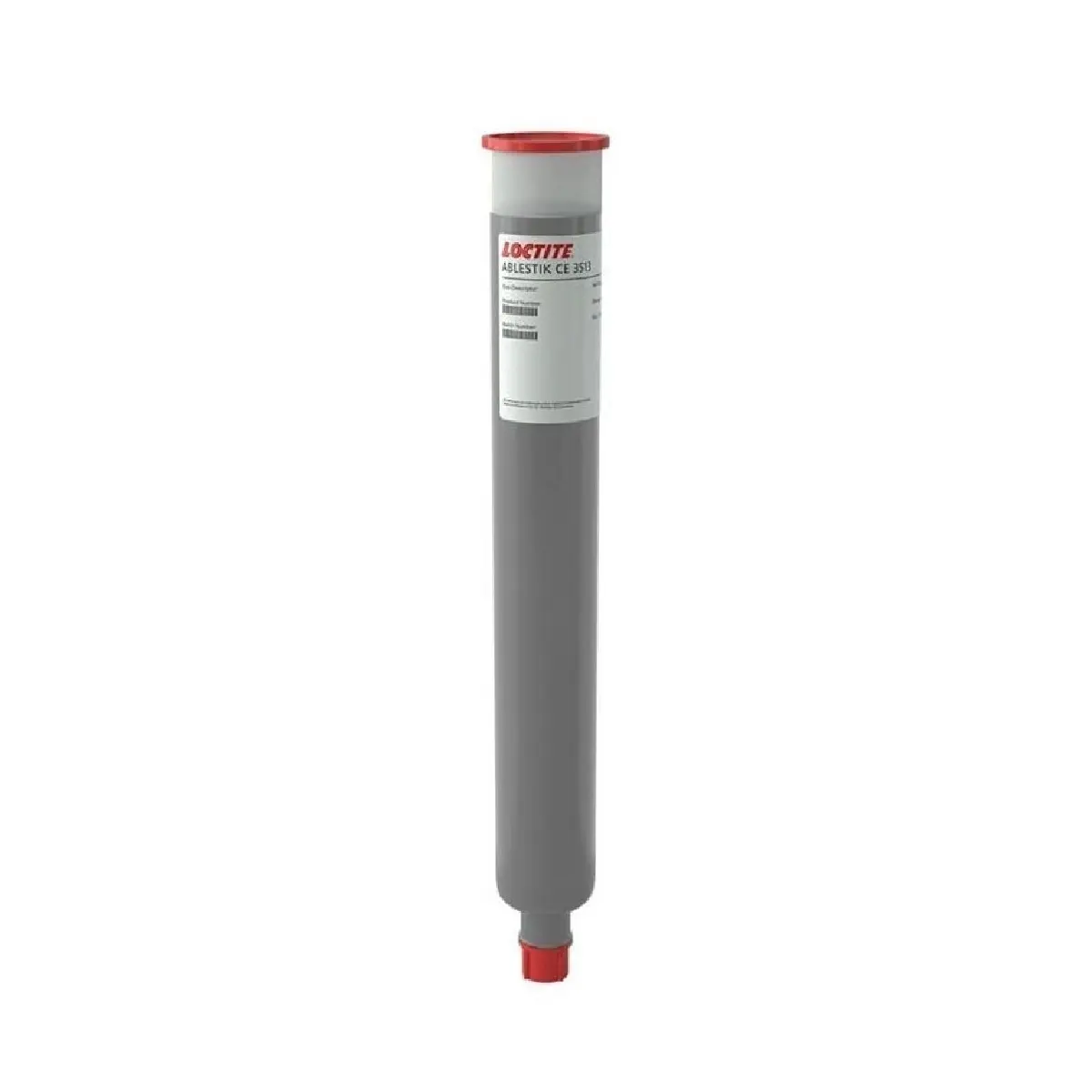
LOCTITE
Product code: ABLESTIK CE 3513
Low-viscosity silver-filled conductive epoxy for automated assembly and in-line curing. Dispenses well, does not bleed and cures fast at high temperature.
Solid film that bonds and conducts in one lamination step, for flex-to-board, display and fine-pitch joints.
Printable conductors and insulators that turn film, textile and plastic into circuits without etching copper.
Insulating adhesive paste applied before placement to bond dies and components without bridging circuits.
Bonds heat-generating components to heatsinks and housings while carrying heat away from the junction.
Send ADVANCE the surfaces you are joining, the maximum temperature your assembly tolerates, the current and resistance requirement and your application and cure equipment. We will propose candidate grades, provide the TDS and SDS, and arrange samples for a resistance and shear trial on your own parts.
Not sure which product fits? Ask our assistant
Type the job, the material or a spec. It searches our published products and TDS values — no external AI.