
LOCTITE
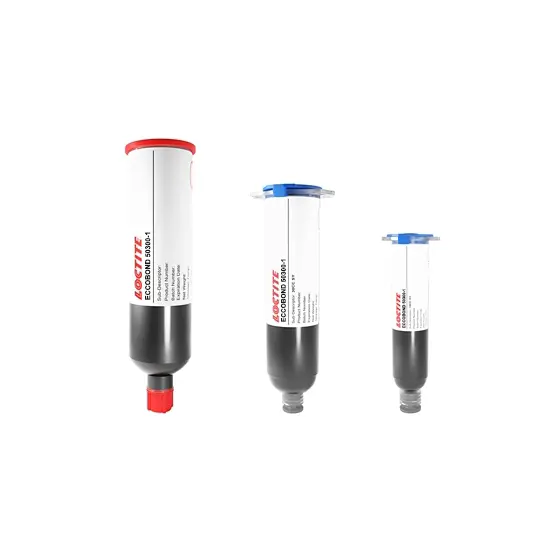
LOCTITE ECCOBOND 50300 1
Product code: ECCOBOND 50300 1
One-part black epoxy glob top for wire-bonded bare die on epoxy laminate. It has 70% filler and controlled spread for ICs with high wire loops.
PCB materials
Glob top and encapsulant materials cover bare die, wire bonds and sensitive components directly on the PCB so that the assembly survives handling, humidity and thermal cycling without a separate package.
A glob top is a dome of liquid resin dispensed over a bare semiconductor die and its wire bonds. Once cured it forms a hard or semi-flexible shell that takes the place of a molded package. Encapsulant is the broader term for the same materials when they cover larger areas, several components or a whole circuit region.
Glob top is the standard protection for chip-on-board (COB) assemblies, where a bare die is attached directly to the board and connected with gold or copper wire bonds. The same approach is used on flexible circuits, ceramic substrates and lead frames, and larger encapsulant fills seal a group of components without potting the whole housing.
An unprotected die and its wire bonds are the most fragile part of any board: a fingertip, a vacuum nozzle or a loose fiber can break a wire, and the die surface is open to moisture, ionic contamination and light. A properly selected glob top removes these failure modes, fixes the wire loops against vibration and slows moisture ingress to the bond pads.
Most glob tops are epoxy based because epoxies combine good adhesion, low moisture uptake and a high Tg; they come as one-part heat-cure systems for production and two-part systems for room-temperature cure. Dam-and-fill uses a thixotropic dam dispensed as a ring followed by a low-viscosity fill, while single-dome glob top uses one medium-viscosity material. Silicone encapsulants are chosen where the assembly must stay soft or optically clear.
The properties that decide whether a glob top works are flow before cure and stress after cure. Viscosity and thixotropy control the dome shape and the wetting of wire bonds; Tg, CTE and modulus decide how much stress the die, wires and board see over the temperature range. Epoxy glob tops typically have a Tg above about 130 degrees C and a filled CTE in the low tens of ppm per K; always confirm values on the TDS of the specific grade.
Glob top is applied by automated dispensing with a time-pressure, auger or piston pump. For dam-and-fill the dam is dispensed as a ring and partially cured before the fill is added and allowed to level. Curing follows the TDS schedule in a batch or in-line oven, often with a lower-temperature hold so trapped air can escape.
The layout must leave a keep-out zone around the die for the dam or dome footprint plus flow tolerance, and the surface inside it must be clean, since flux residue, mold release and absorbed moisture all reduce adhesion. A rigid epoxy dome over a large die on a thin board can crack the die or lift bonds at low temperature, so limit the dome volume or choose a lower-modulus grade.
Voids near wire bonds come from air folded in during dispensing, moisture in the material or board, or a cure ramp that is too fast. Bleed-out beyond the footprint is driven by low viscosity, a contaminated surface or too much volume. Cracking and delamination usually appear after thermal cycling rather than at cure; they are stress and adhesion problems, so the remedy is a better-matched material, a cleaner surface or a smaller dome.
Selection starts from the die and the reliability target, not from the dispenser. Tell us the die and wire details, the substrate, the temperature range and the qualification tests the product must pass, then describe the dispensing equipment, cure method and takt time. ADVANCE will propose candidate grades, share the TDS and SDS, and arrange sample syringes for a trial on your own boards.
LOCTITE
Product code: ECCOBOND 50300 1
One-part black epoxy glob top for wire-bonded bare die on epoxy laminate. It has 70% filler and controlled spread for ICs with high wire loops.
LOCTITE
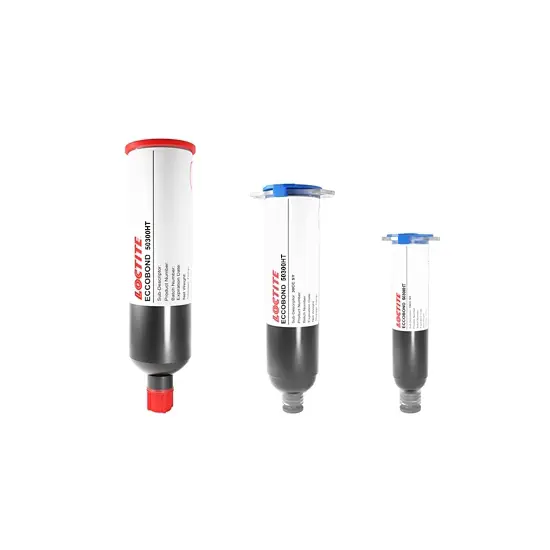
Product code: ECCOBOND 50300HT
One-part black epoxy glob top for wire-bonded bare die on epoxy laminate, for ICs with high wire profiles where the glob top must not spread during cure.
LOCTITE
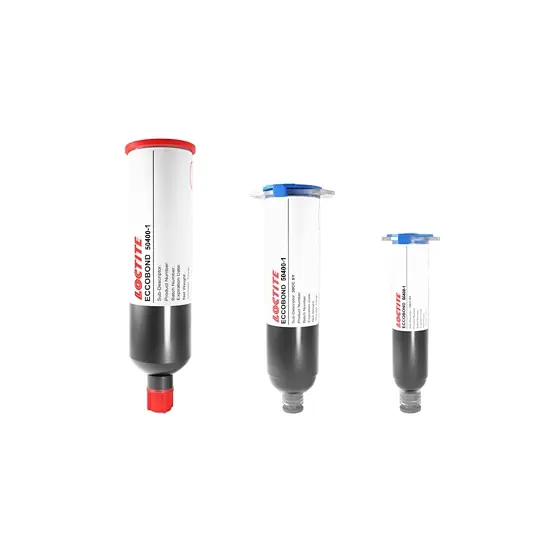
Product code: ECCOBOND 50400 1
One-part black epoxy glob top for wire-bonded bare die on epoxy laminate, with 70% filler and low CTE, for ICs with high wire profiles.
LOCTITE
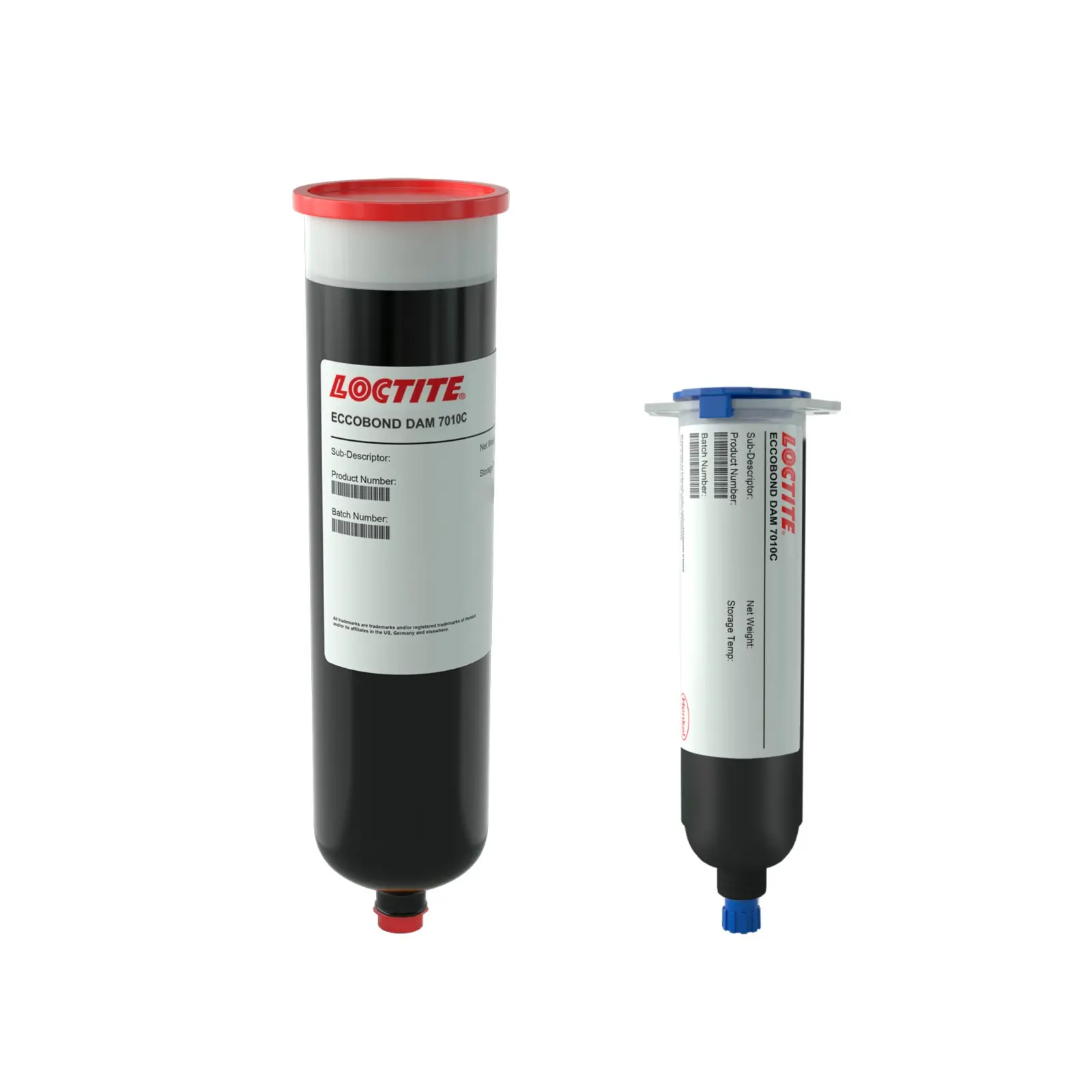
Product code: ECCOBOND DAM 7010C
One-part black non-sag epoxy dam encapsulant that sets the outline and height of a glob top, used with LOCTITE ECCOBOND FIL 7010C as the fill.
LOCTITE
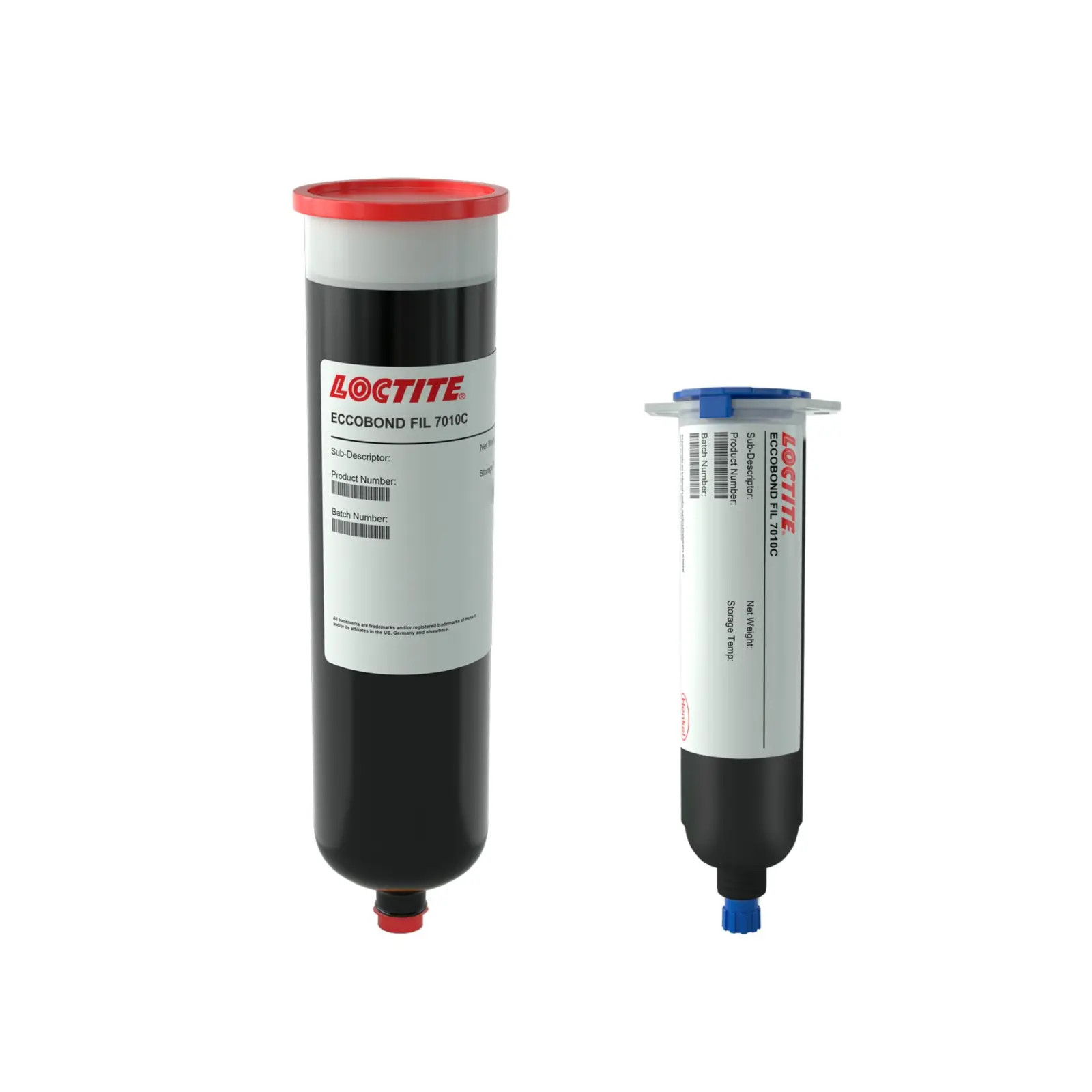
Product code: ECCOBOND FIL 7010C
One-part low-viscosity epoxy for potting stress-sensitive electronic components, and the fill inside a DAM 7010C dam for glob tops.
LOCTITE
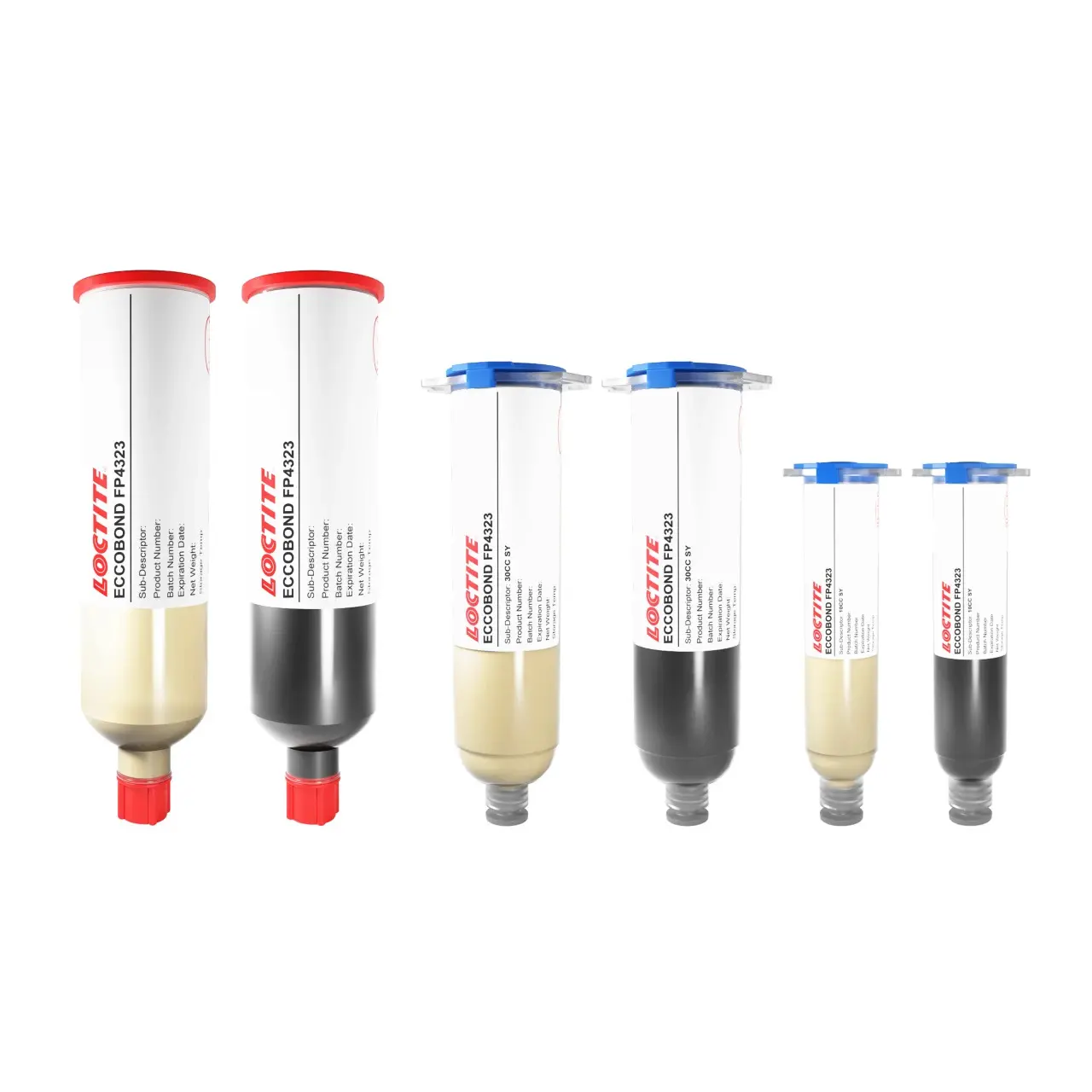
Product code: ECCOBOND FP4323
Two-part epoxy glob top for chip-on-board and plastic PGA. Mixed 100:100 by weight, it covers the chip without flowing beyond it.
LOCTITE
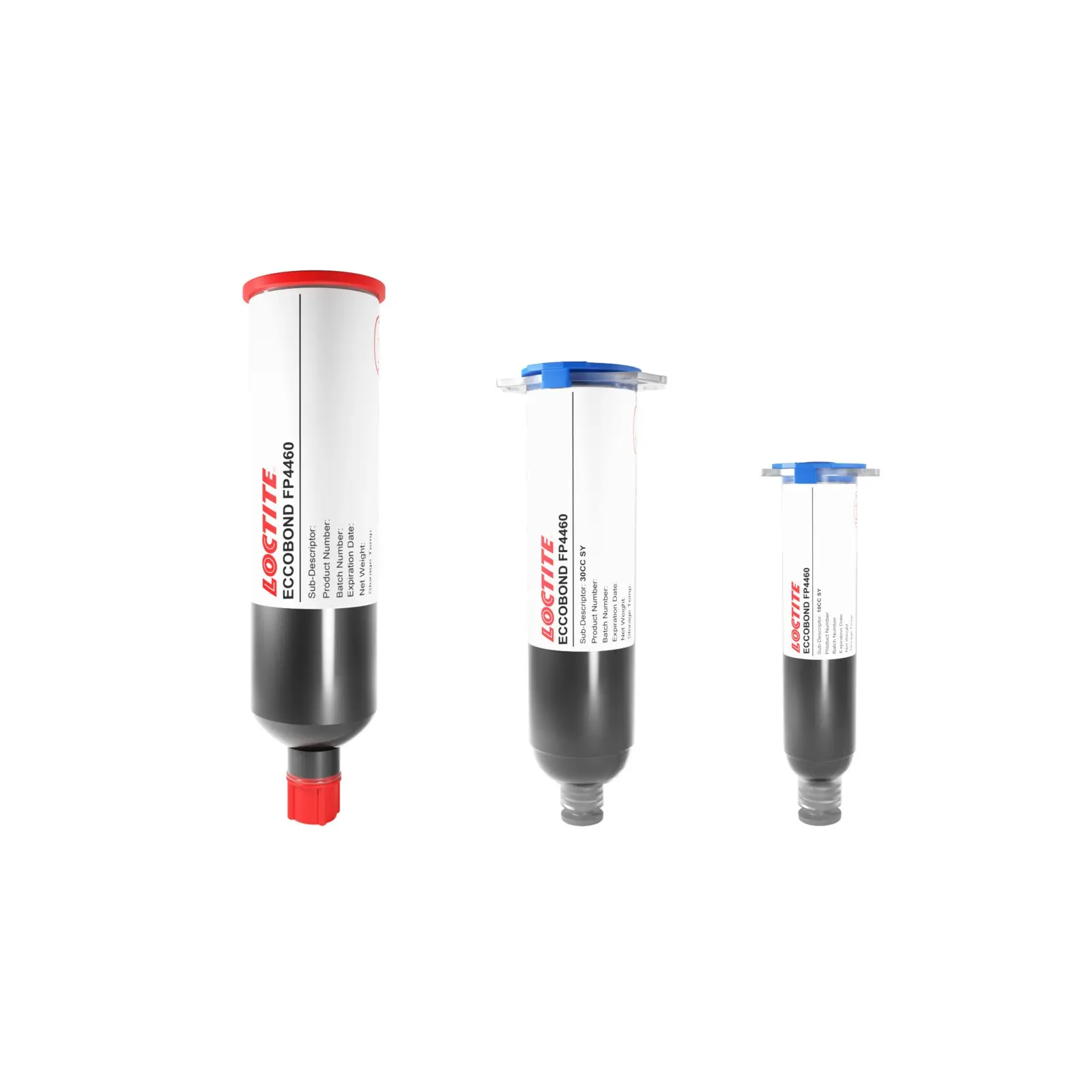
Product code: ECCOBOND FP4460
Black high-flow epoxy glob top that protects bare semiconductor devices on chip-on-board, BGA and multi-chip modules. Heat cure, 3 hours at 150 °C.
LOCTITE
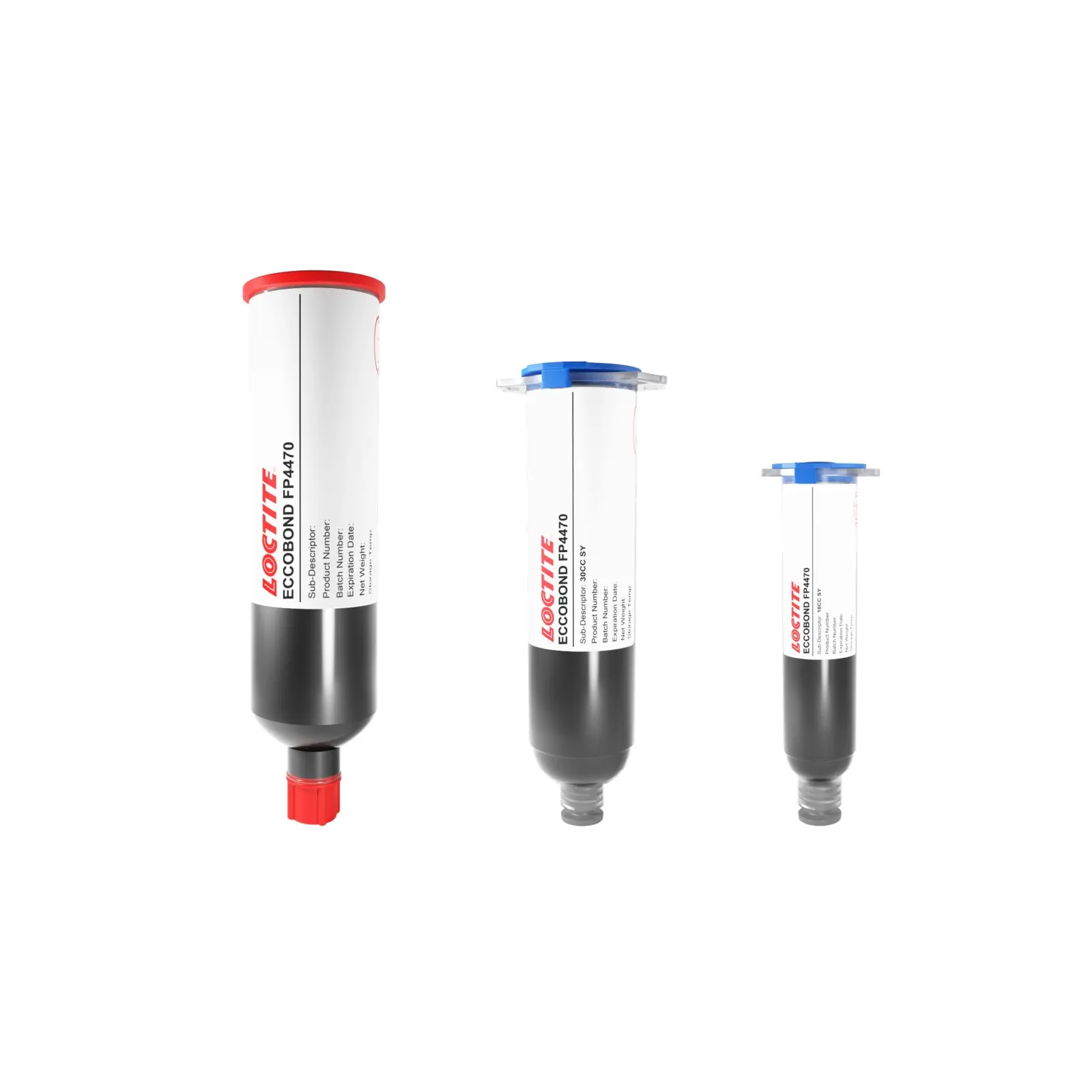
Product code: ECCOBOND FP4470
Black high-flow epoxy encapsulant that fills fine-pitch wire bonds and deep cavities without trapping voids. Takes 260 °C lead-free reflow.
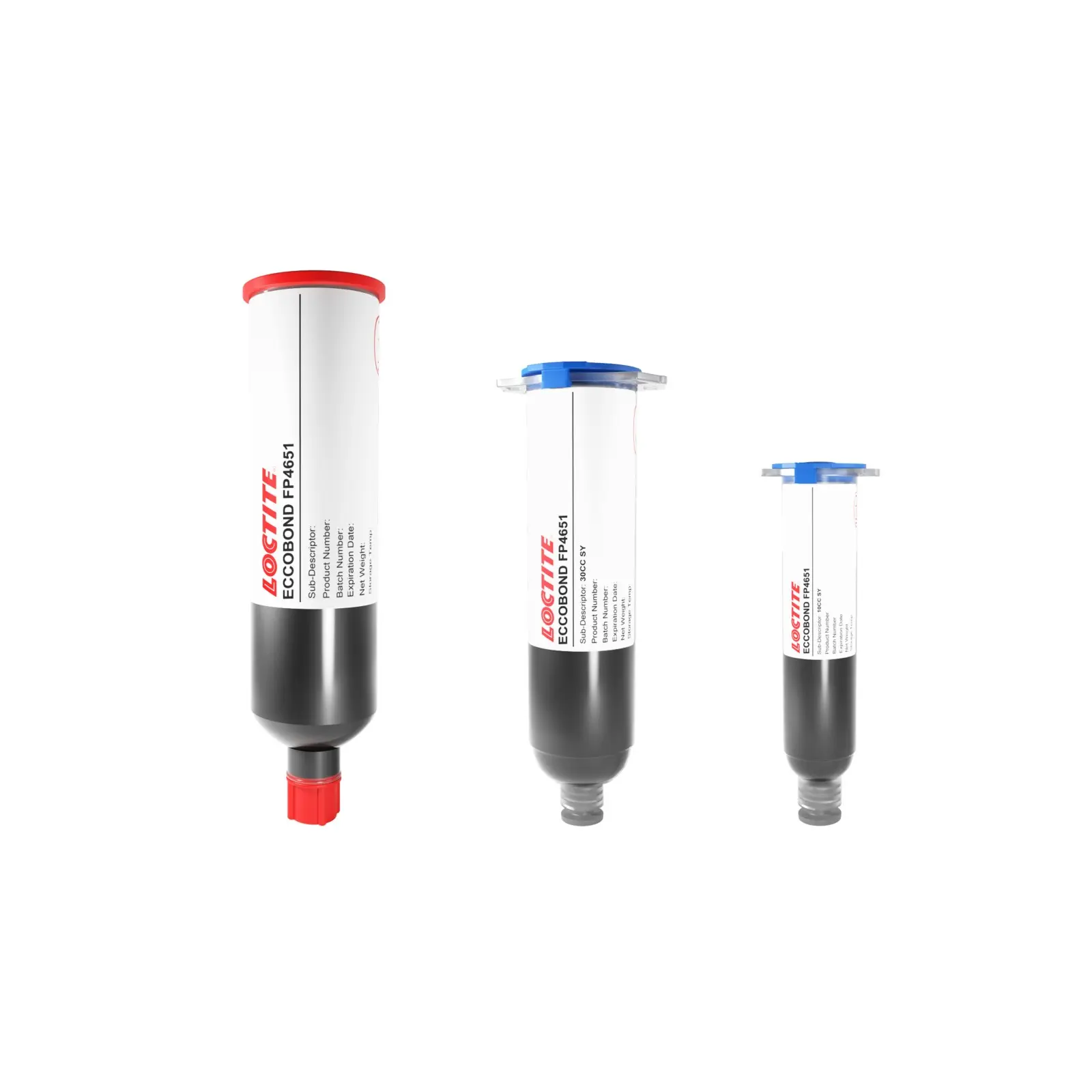
LOCTITE
Product code: ECCOBOND FP4651
One-part epoxy encapsulant for cavity fill and fine wire pitch work. Low viscosity and fine filler let it flow between closely spaced bond wires.
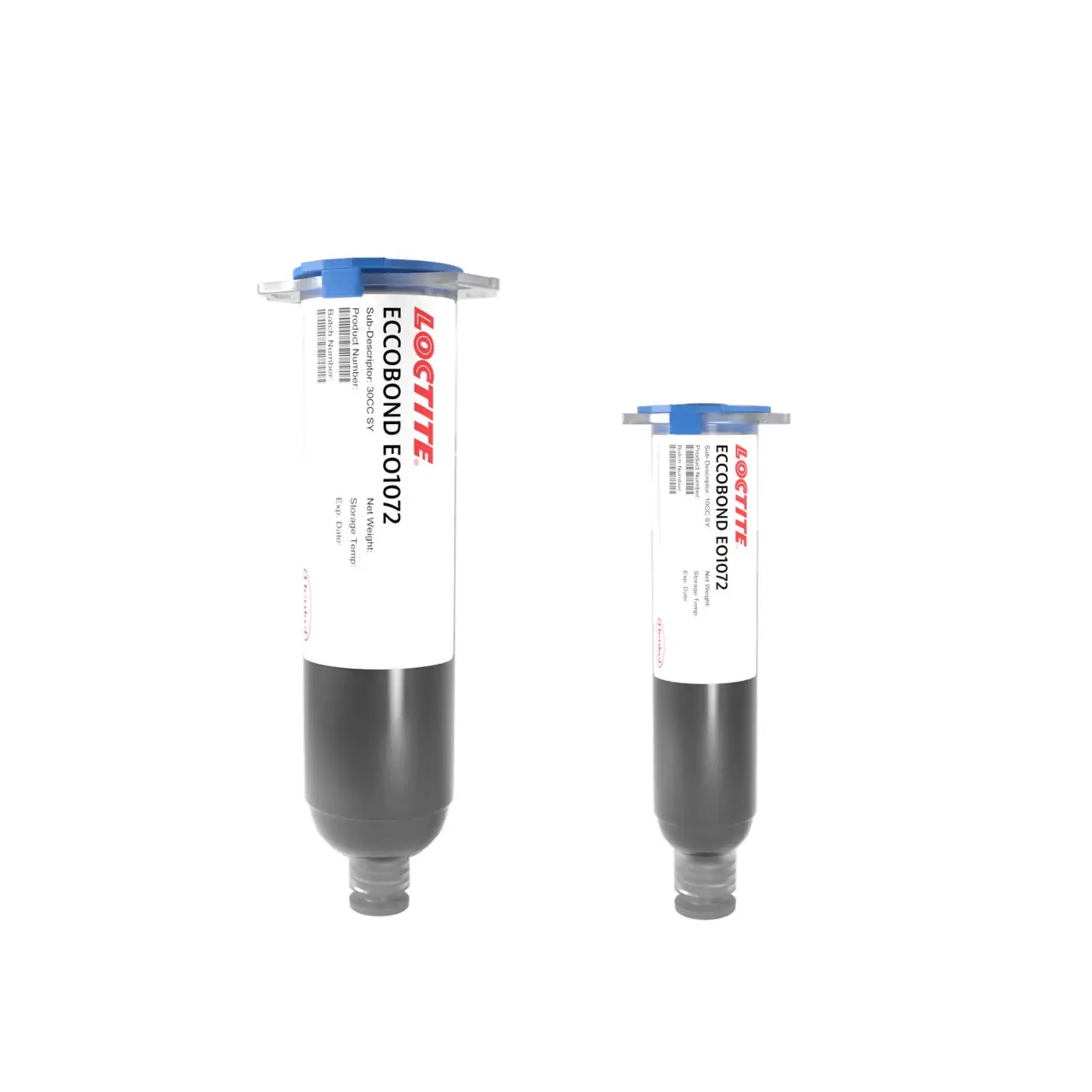
LOCTITE
Product code: EO 1072
One-part black epoxy encapsulant that works as both dam and fill. The substrate temperature decides whether it holds as a dam or flows as a fill.
LOCTITE
Product code: ECCOBOND 50300LT
One-part black epoxy glob top for wire-bonded bare die on large ICs with high wire profiles. It is the less thixotropic version of 50300HT.
LOCTITE
Product code: ECCOBOND FP4451TD
Black epoxy dam that forms a flow-control barrier around bare-chip encapsulation on BGA packages and IC memory cards.
Fully encases a PCB or module in cured resin to block moisture, damp vibration and spread heat.
Flows under CSP and BGA packages to lock solder joints against drop, shock and thermal cycling
A thin polymer film that follows the board contour and shields circuits from moisture, dust and chemicals.
Encapsulates a PCB or connector in hot-melt polyamide in seconds, with no housing and no cure oven.
Send ADVANCE your die size, substrate, temperature range and reliability targets together with details of your dispensing and cure equipment. We will propose candidate grades, provide the TDS and SDS, and arrange samples for a trial on your own boards.
Not sure which product fits? Ask our assistant
Type the job, the material or a spec. It searches our published products and TDS values — no external AI.