
LOCTITE
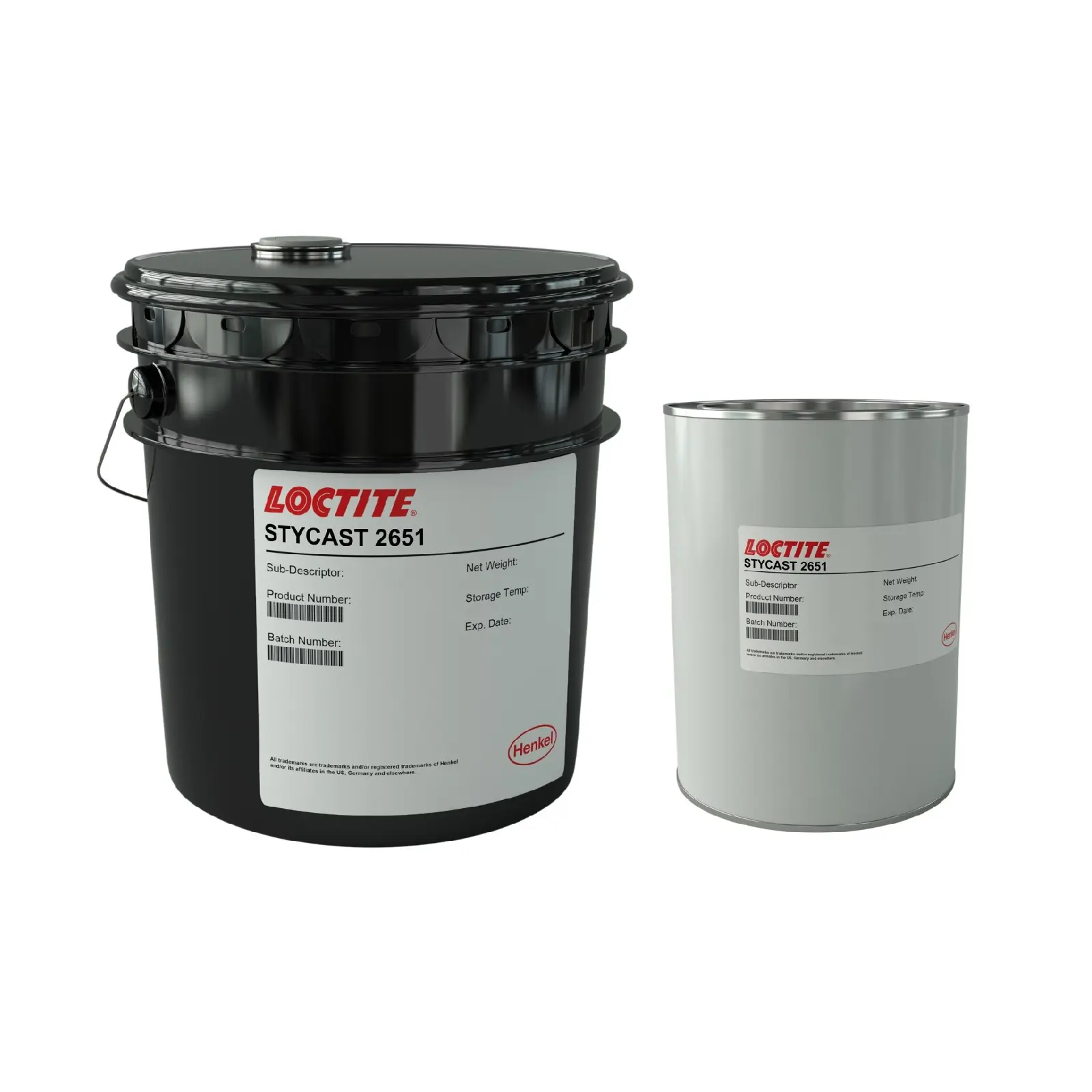
LOCTITE STYCAST 2651
Product code: STYCAST 2651
Black, general purpose dielectric epoxy encapsulant for electrical and electronic parts. Used with Catalyst 9 at 100:7, cures at room temperature.
PCB materials
Potting compounds are liquid resins dispensed into a housing so that the electronics inside are completely surrounded once cured. They are the standard answer when an assembly must survive water, chemicals, shock and vibration for years without service.
A potting compound is a one-part or two-part liquid resin dispensed into a housing or mold that holds a populated PCB, then cured into a solid or gel. Unlike a conformal coating, which is a thin film on the board surface, potting fills the whole cavity so that components, solder joints and wire terminations are locked in place and isolated from the environment. It is one of the last steps in assembly, after functional test, and is usually irreversible.
Potting is chosen for assemblies that leave the factory and are never opened again, especially where water, dust, salt spray or vibration are expected. The compound usually covers the whole board, but partial potting of a connector, a transformer or a high-voltage section is also common.
Most field failures of sealed electronics trace back to moisture ingress, corrosion of solder joints, lead fatigue under vibration or overheating of power parts. A well-chosen compound addresses all of these at once: it excludes water, supports every component against movement, and gives heat a continuous path to the housing wall.
Three resin families cover almost all potting work: epoxy, polyurethane and silicone. They differ mainly in hardness, flexibility, temperature range and cost, so the choice depends on how much stress the potted components accept and how hot the assembly runs. Most are two-part systems mixed before use; one-part heat-cure and UV-assisted grades exist for simpler process control.
Start the specification from the environment and the weakest component, not from the resin. Temperature range, heat flux, dielectric requirement and component sensitivity set the hardness and chemistry; the dispensing equipment and housing geometry then set viscosity and cure profile. The ranges below are typical across the market and must be confirmed on the TDS of the selected product.
Two-part compounds are mixed by hand for prototypes or by a meter-mix-dispense machine in production, then degassed or potted under vacuum to remove air that would form voids around components and leads. The resin is poured in one or more stages with a pause for bubbles to escape. Cure takes place at room temperature on racks for batch work or in an oven for in-line throughput, within the temperature limit of the components and housing, and is followed by inspection of fill level, surface tack and voids plus an electrical test.
Potting works best when the housing is designed for it, with fill points and vents in the right places and no closed pockets under tall components. Flux residues, mold release and fingerprints reduce adhesion and create leak paths, so boards are cleaned or confirmed no-clean compatible. With rigid compounds, glass diodes, ceramic capacitors and crystals can crack from cure shrinkage or CTE mismatch, so a soft buffer coat or a softer, low-shrinkage grade may be needed.
Potting defects are usually process defects rather than material faults, and most trace back to air, mix ratio, moisture or temperature. A short trial on real housings with the intended equipment finds them early and is far cheaper than a field return.
The fastest route to a correct choice is a short brief covering the environment, the components, the housing and the line. With that information ADVANCE can propose a shortlist, supply TDS and SDS, and arrange samples for a trial on your own housings before any volume commitment.
LOCTITE
Product code: STYCAST 2651
Black, general purpose dielectric epoxy encapsulant for electrical and electronic parts. Used with Catalyst 9 at 100:7, cures at room temperature.
LOCTITE
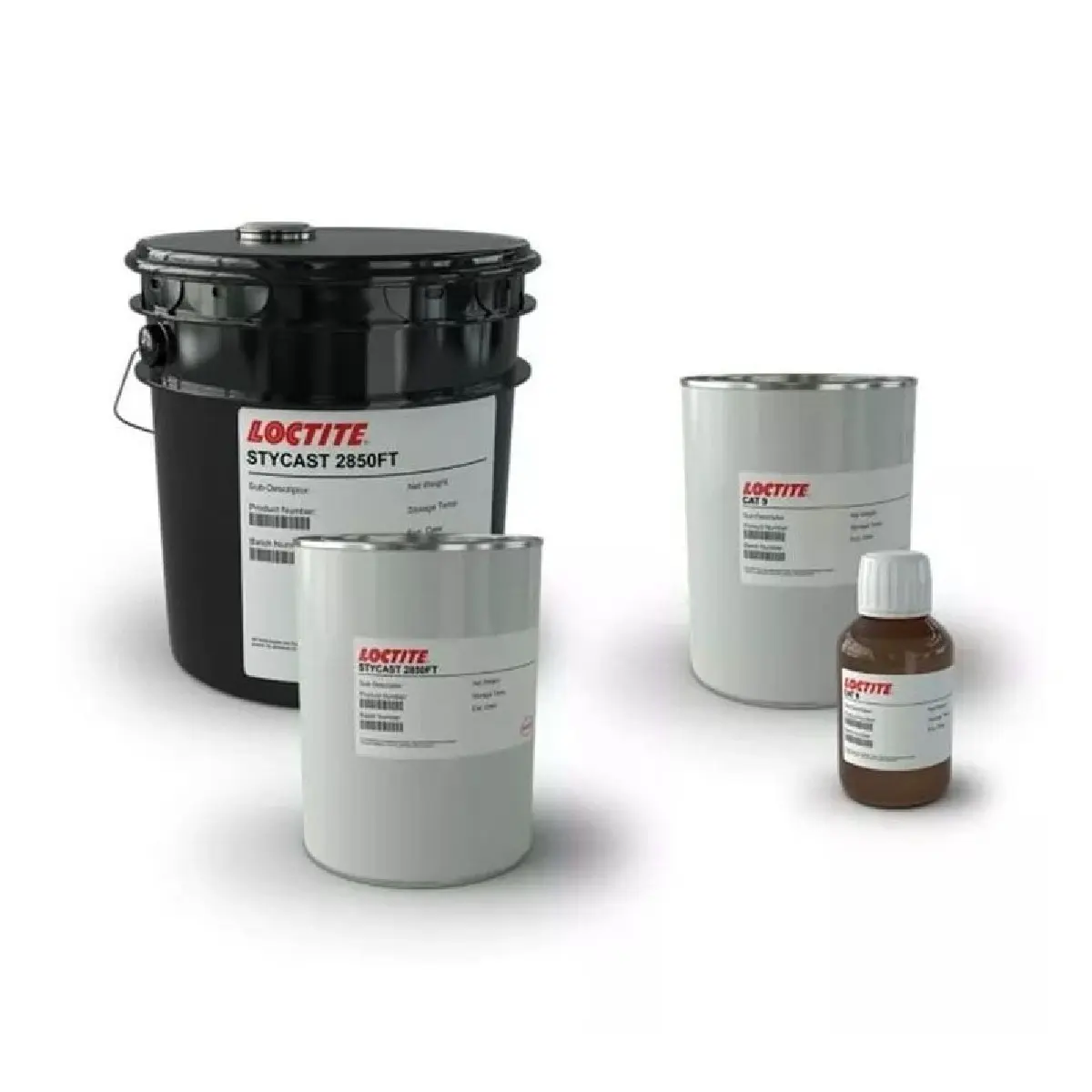
Product code: STYCAST 2850FT
Thermally conductive black epoxy for encapsulating components that need heat dissipation and thermal shock resistance. Cures at room temperature with LOCTITE CAT 9.
LOCTITE
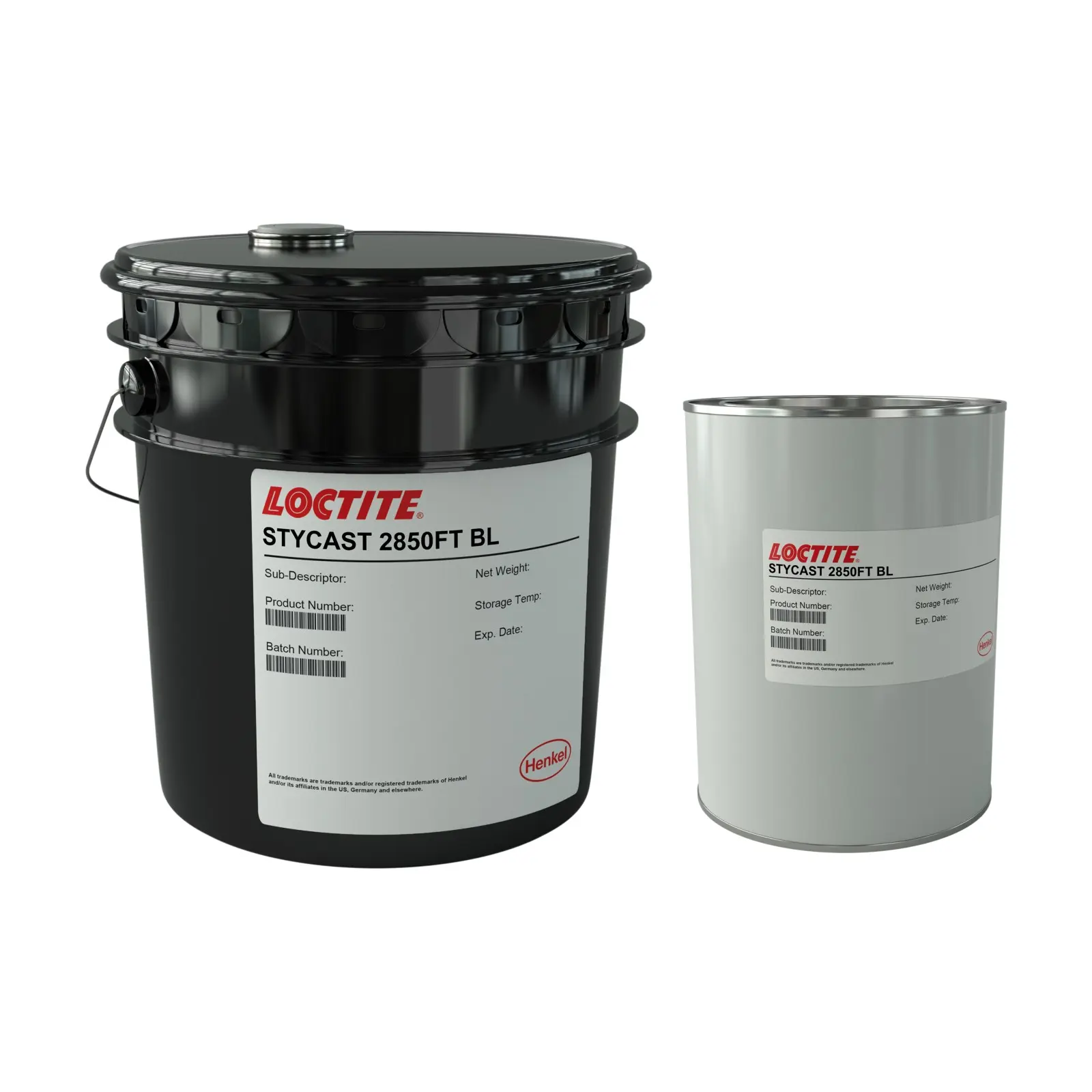
Product code: STYCAST 2850FT BL
Blue thermally conductive epoxy encapsulant for high voltage parts such as power supplies, transformers, bushings and insulators. Heat cures with LOCTITE CAT 11.
LOCTITE
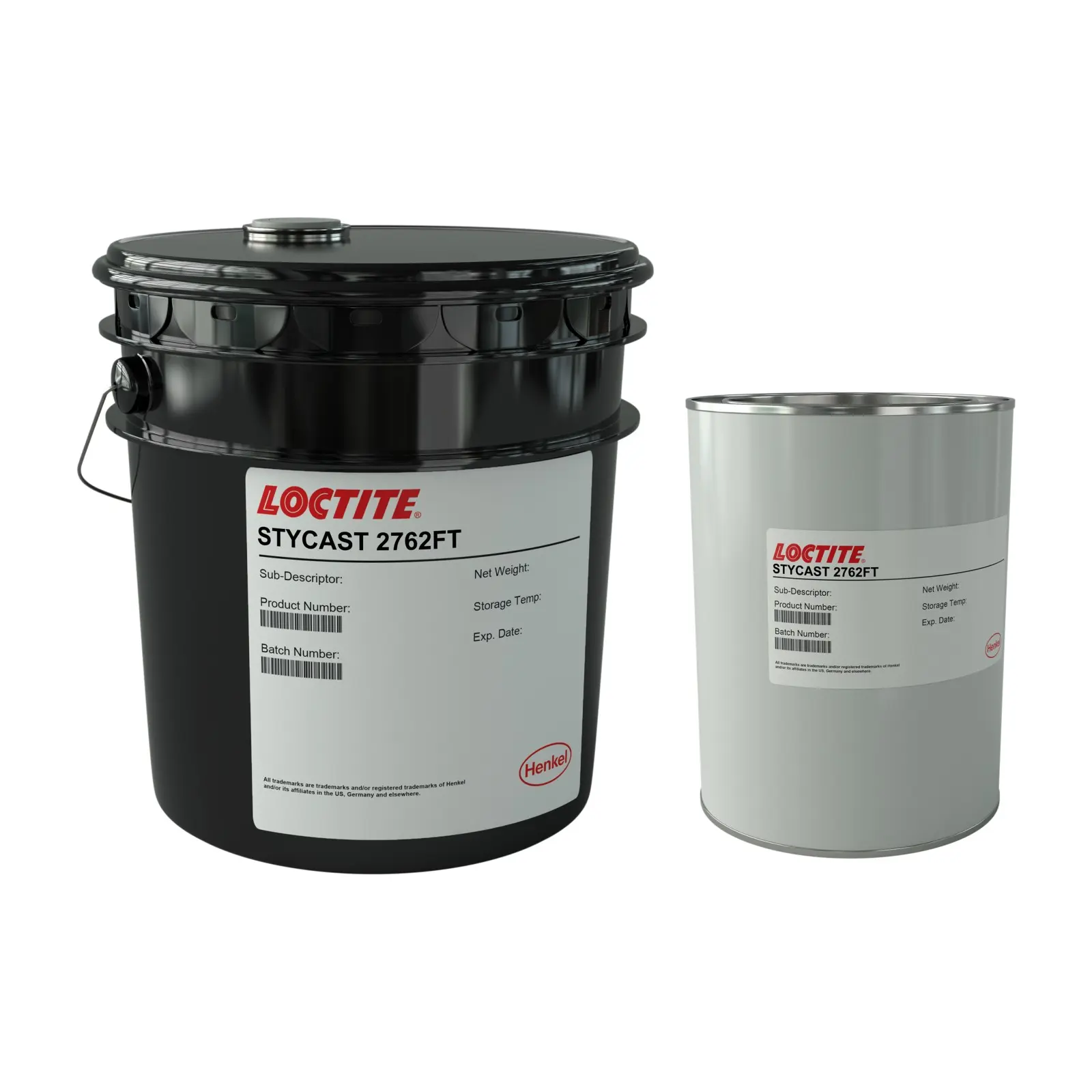
Product code: STYCAST 2762FT
Two-part thermally conductive epoxy for potting electronic components in harsh environments and for large castings that must withstand high temperature.
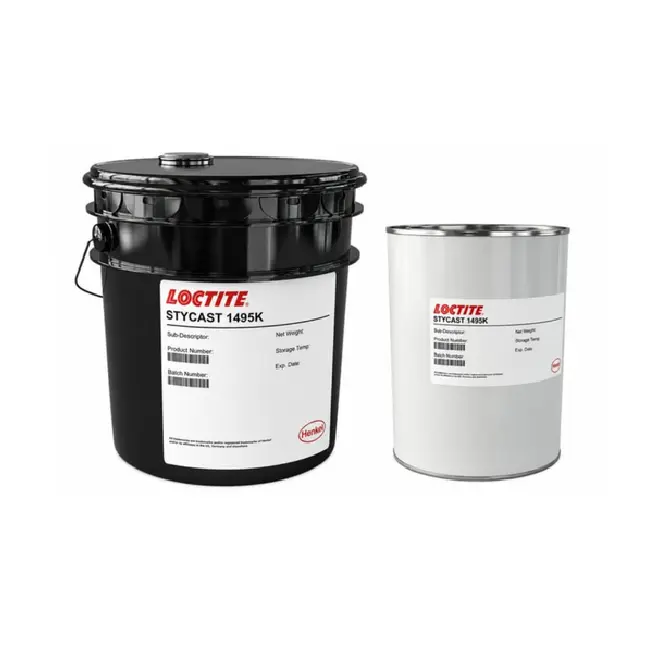
LOCTITE
Product code: STYCAST 1495K
Black, thermally conductive epoxy for potting transformers, sensors and electronic assemblies that need heat dissipation. Used with Catalyst 9 at 100:4.5.
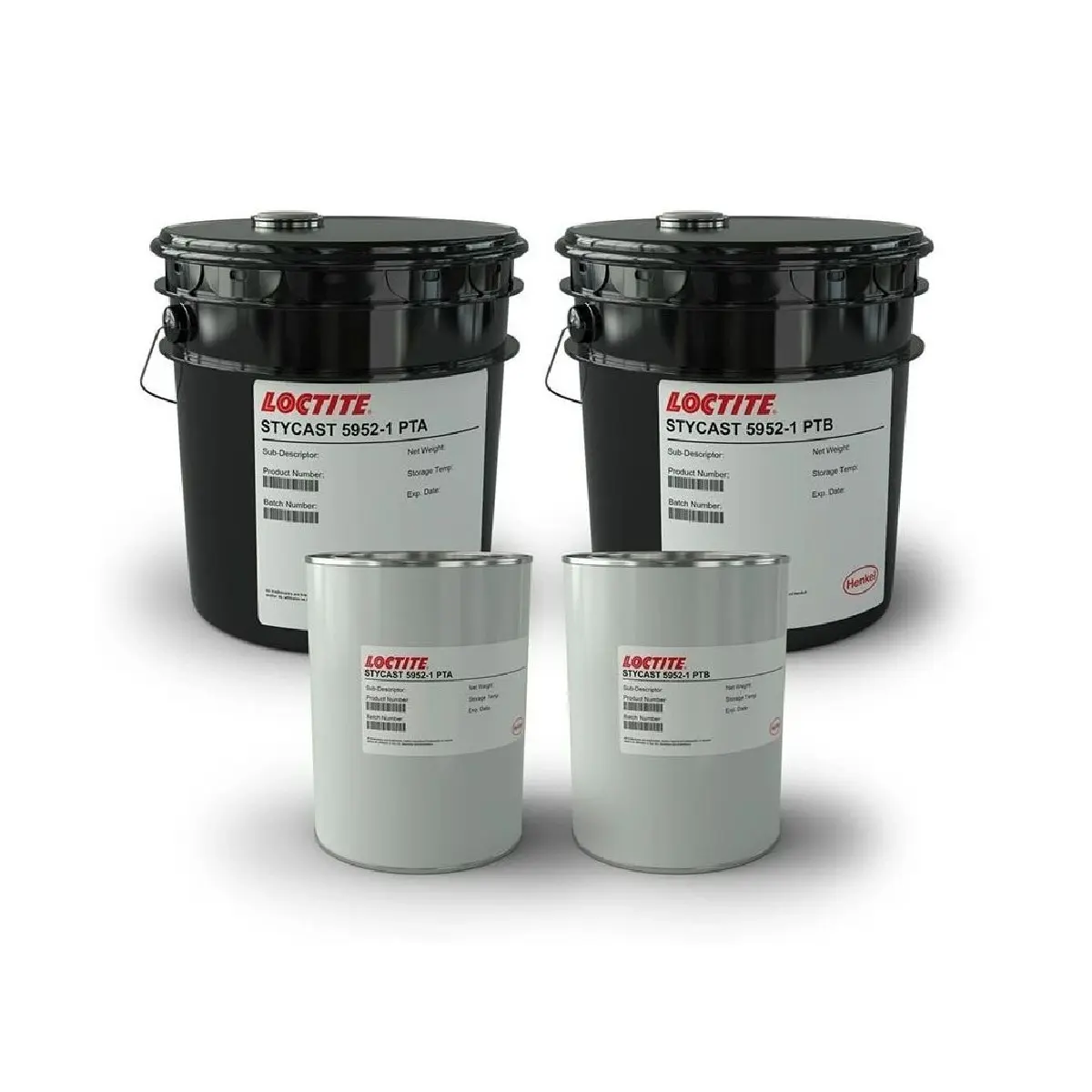
LOCTITE
Product code: STYCAST 5952 1
Two-part thermally conductive silicone for encapsulating heat-generating devices such as transformers, rectifiers and power supplies. Mixes 1:1 and cures with heat.
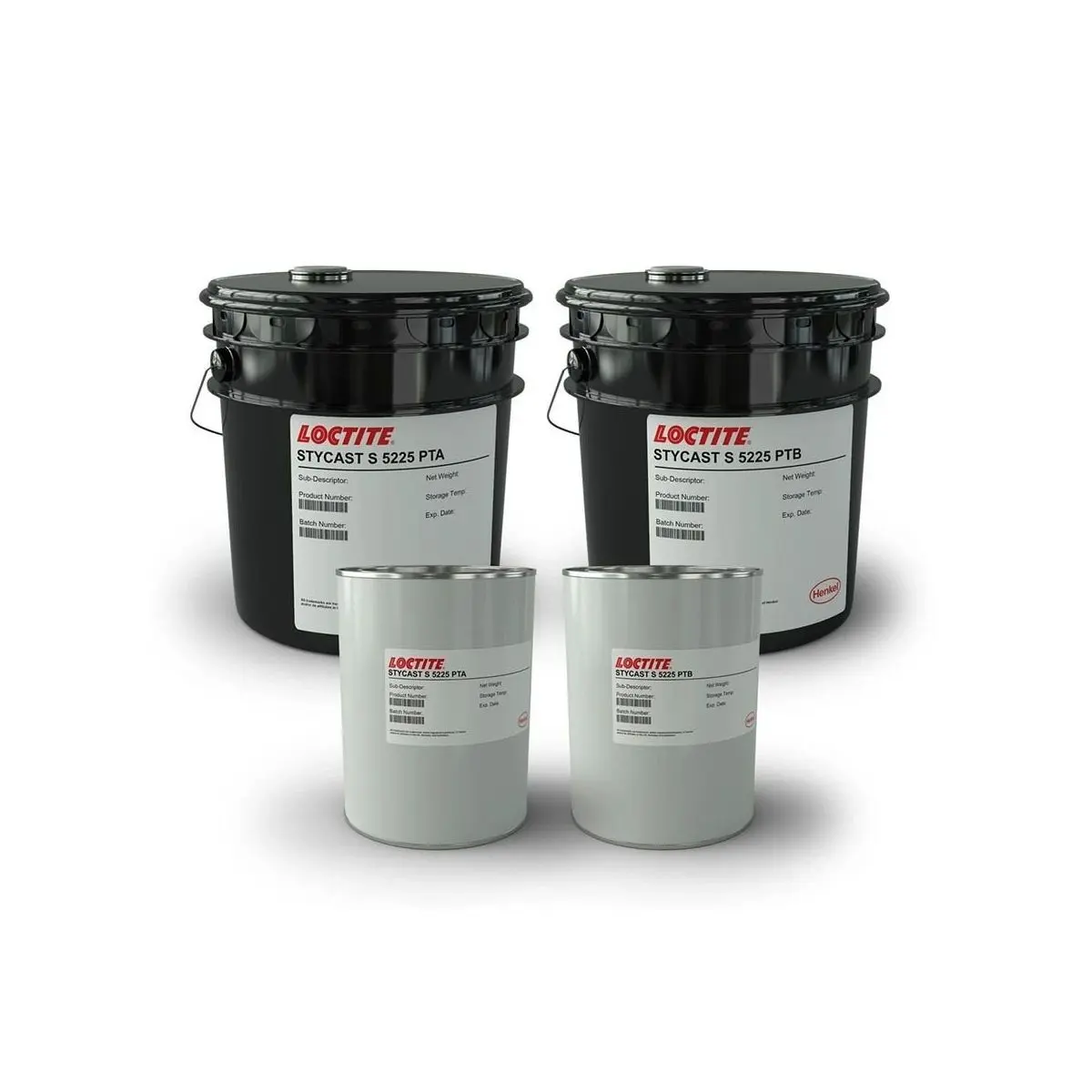
LOCTITE
Product code: STYCAST S 5225
Very low-viscosity two-part silicone for potting small, tightly packed electronic devices such as sensors, relays and power supplies.
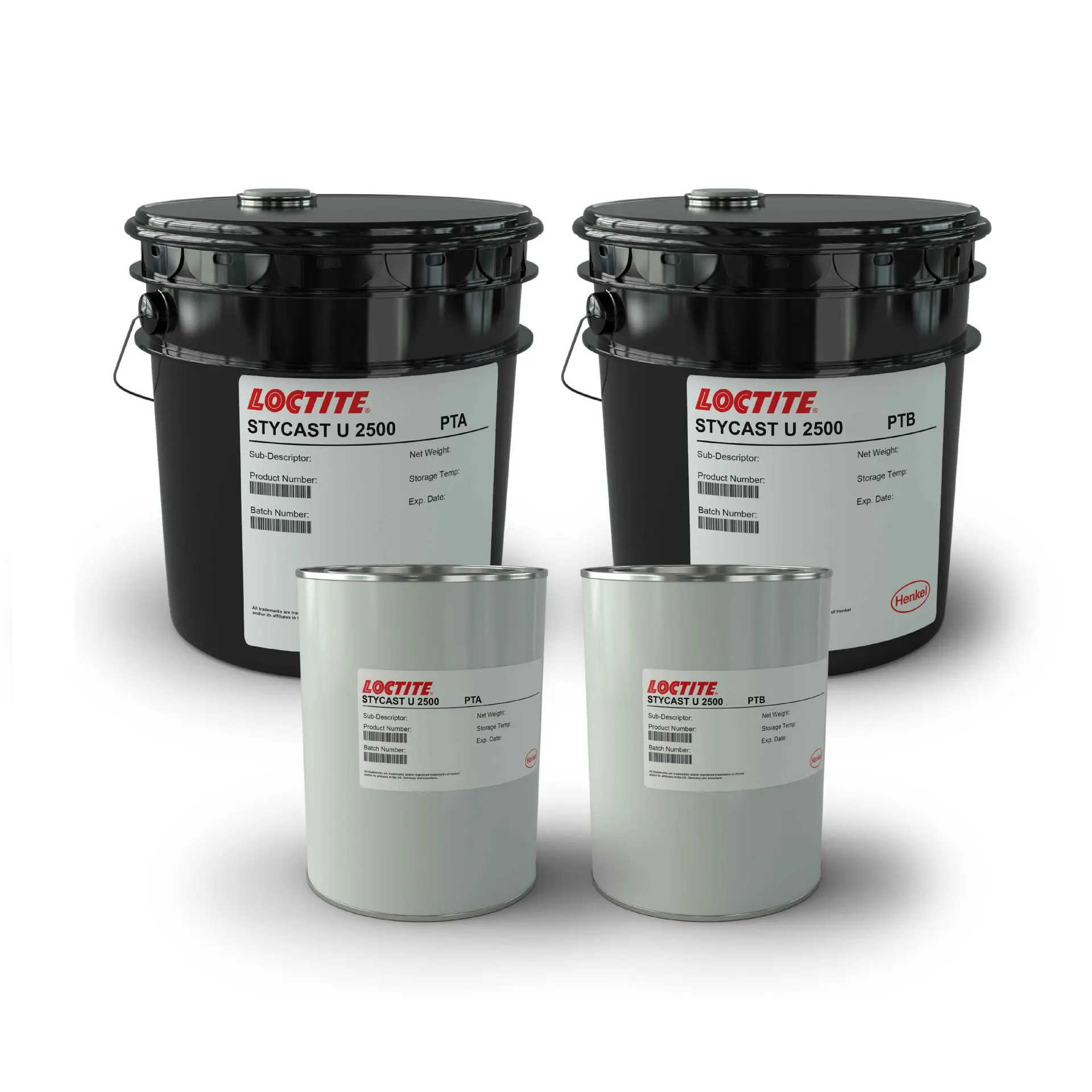
LOCTITE
Product code: STYCAST U 2500
Two-part flexible polyurethane encapsulant for transformers and PCBs. Its low viscosity fully impregnates wound coils, and it cures at room temperature.
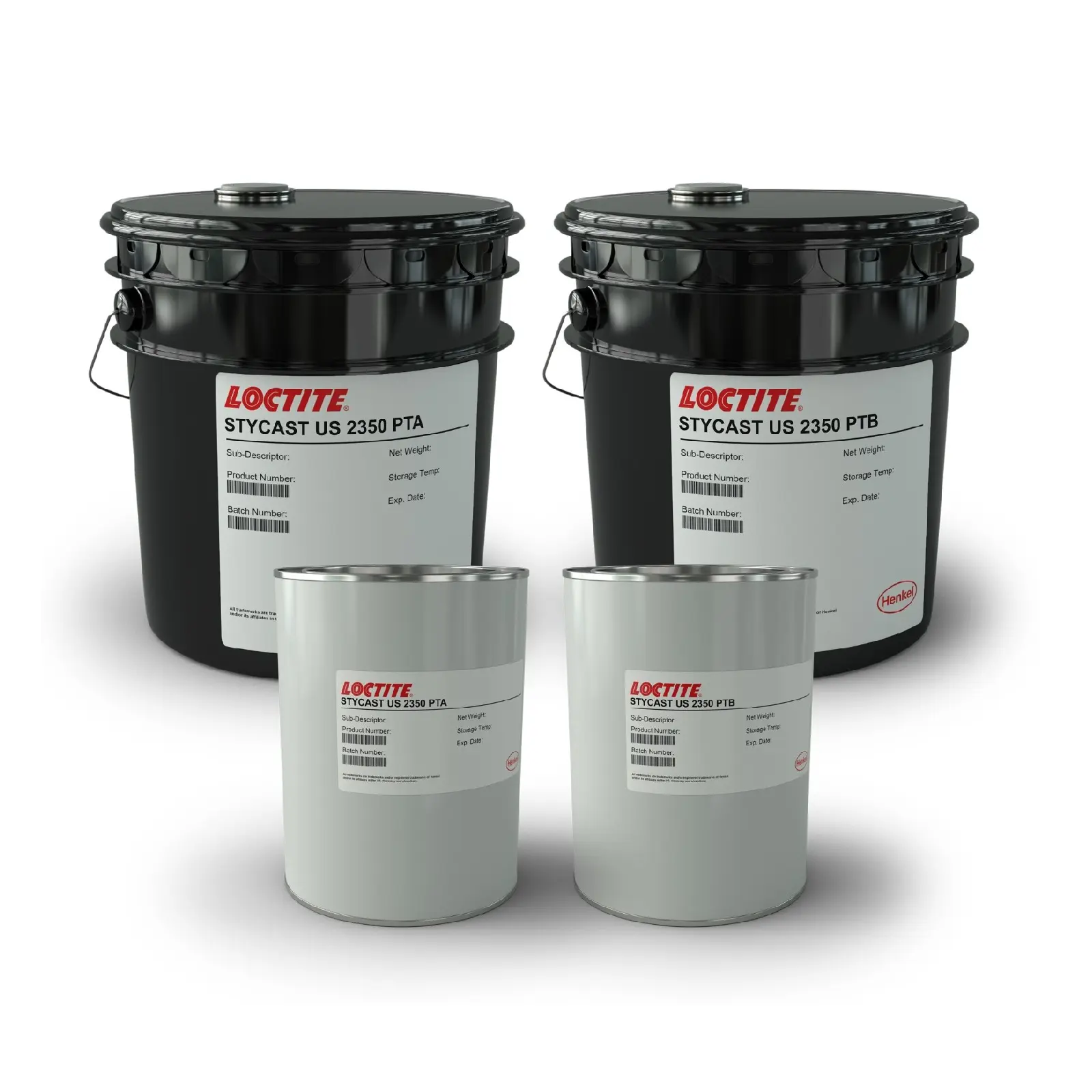
LOCTITE
Product code: STYCAST US 2350
Two-part flexible, mineral-filled urethane for potting and encapsulating electronics. Low viscosity, long work life and room-temperature cure.
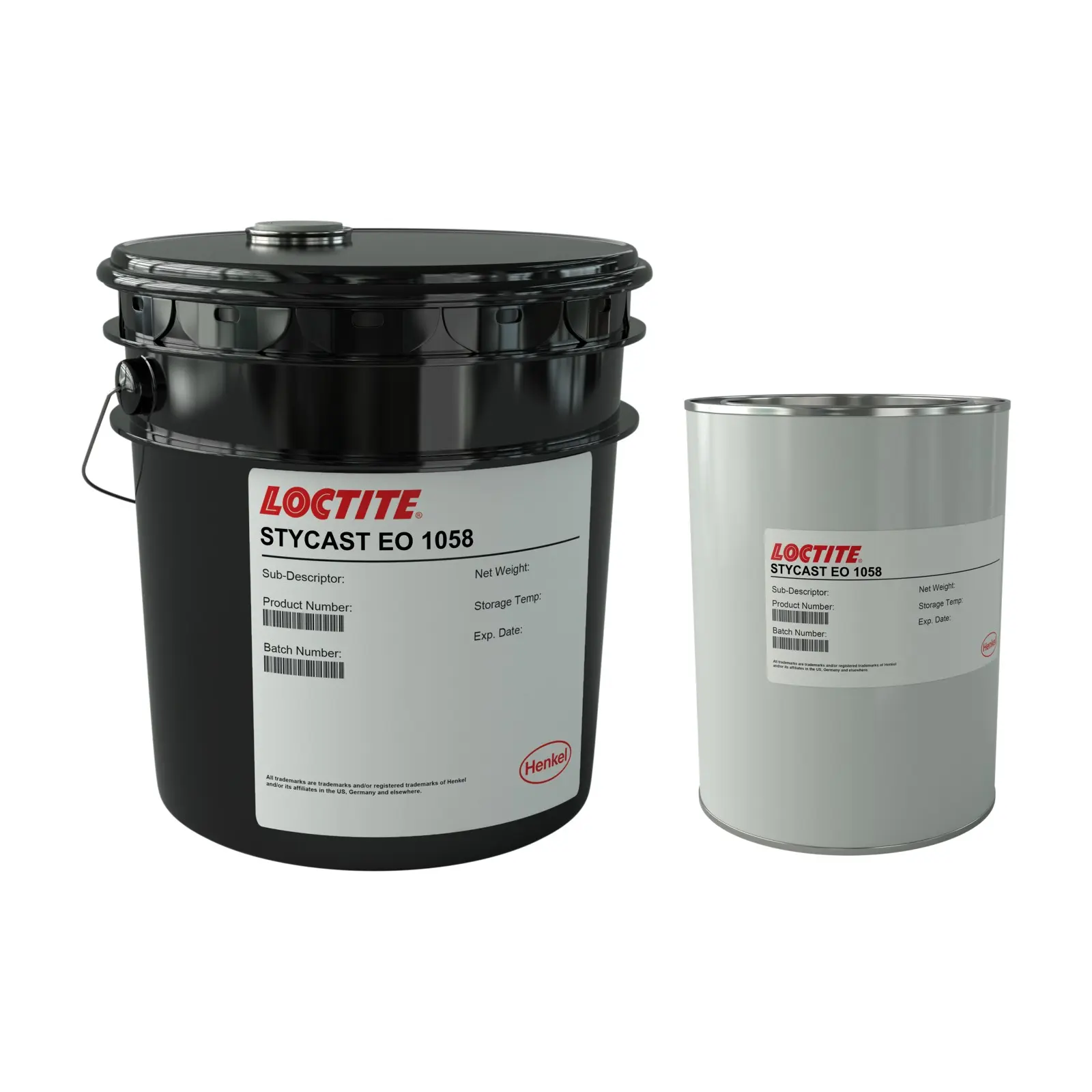
LOCTITE
Product code: STYCAST EO 1058
One-part black epoxy for potting and encapsulating sensors in harsh environments such as automotive applications. Cures in 3 hours at 125 °C.
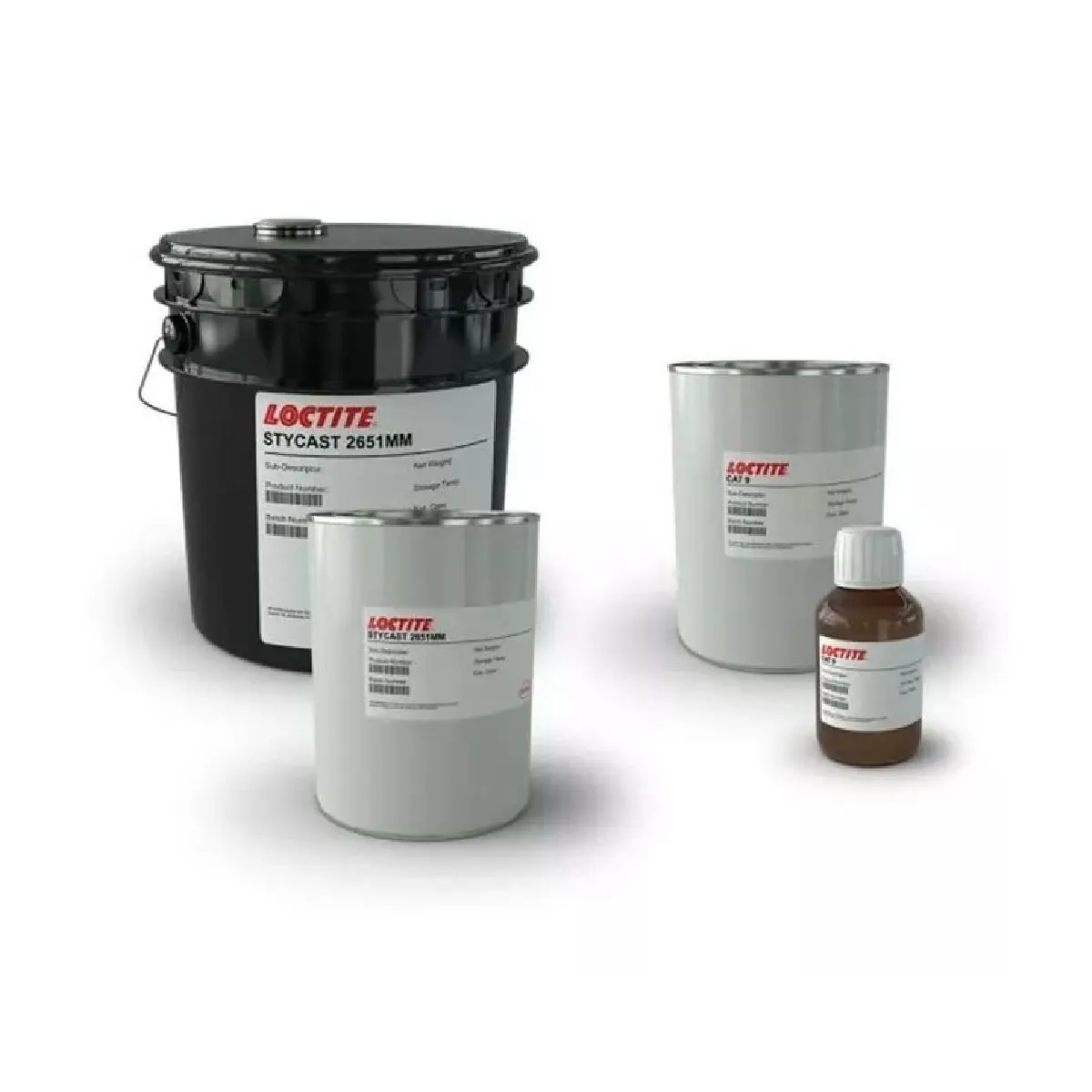
LOCTITE
Product code: STYCAST 2651MM CAT 9
Black two-part epoxy encapsulant with Catalyst 9 for meter-mix machine dispensing and parts that are machined after molding. Mix 100:7 by weight.
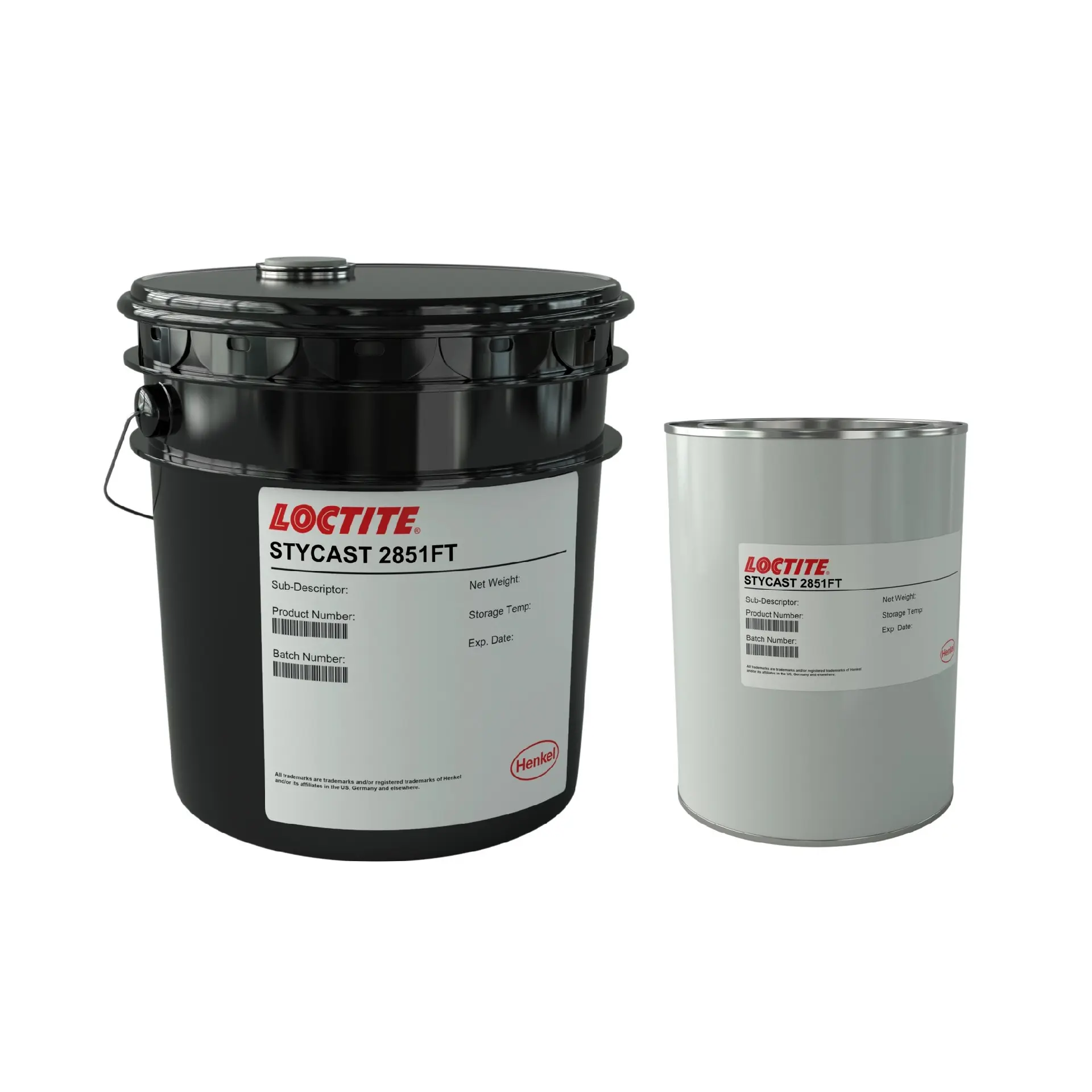
LOCTITE
Product code: STYCAST 2851FT
One-part black epoxy encapsulant for components that need heat dissipation and thermal shock resistance. No mixing; cures in 2 hours at 110 °C.
Protects bare die and wire bonds from moisture, contamination and mechanical damage
A thin polymer film that follows the board contour and shields circuits from moisture, dust and chemicals.
Dispensed thermal interface that fills uneven gaps between hot components and the heat sink
Encapsulates a PCB or connector in hot-melt polyamide in seconds, with no housing and no cure oven.
Send us your housing drawing, component list, temperature range and reliability targets. ADVANCE will recommend suitable grades, provide TDS and SDS, and arrange samples for a trial on your own assemblies. Request an RFQ or samples today.
Not sure which product fits? Ask our assistant
Type the job, the material or a spec. It searches our published products and TDS values — no external AI.