
BERGQUIST
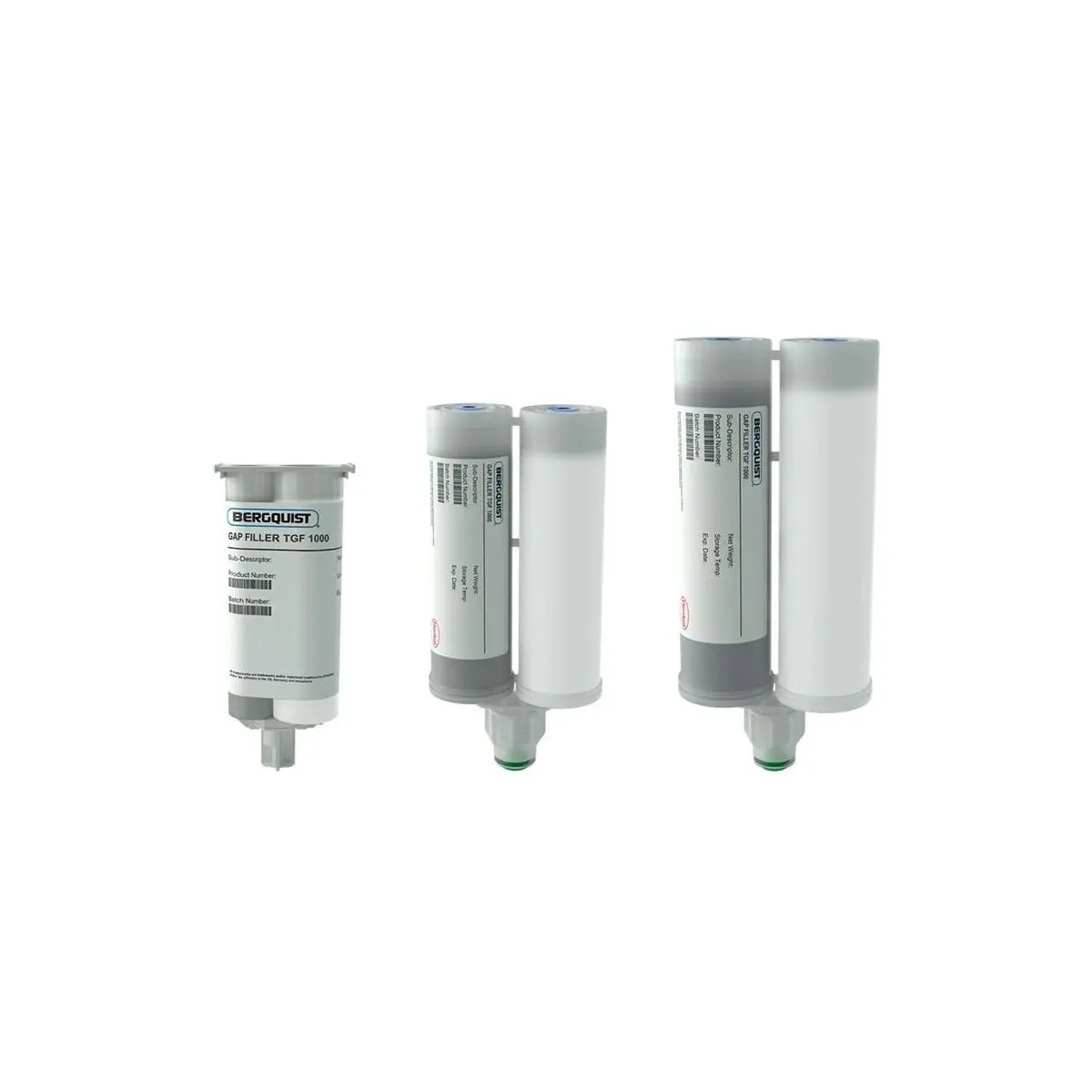
BERGQUIST GAP FILLER TGF 1000
Product code: GAP FILLER TGF 1000
Two-part silicone liquid gap filler, 1.0 W/(m·K), that cures at room temperature or with heat into a soft elastomer for fragile, low-stress assemblies.
PCB materials
Liquid gap fillers are dispensable thermal interface materials that flow into the gap between a heat-generating component and a housing or heat sink, then cure into a soft, thermally conductive layer. They replace cut thermal pads where gaps vary, surfaces are uneven or volumes are high.
A liquid gap filler is a paste-like thermal interface material (TIM) dispensed in its uncured state onto a component, a board or a housing. When the assembly is closed the material spreads under low force, conforms to every surface and fills the full gap, then cures at room temperature or with mild heat into a soft elastomer that keeps a stable thermal path for the life of the product.
Gap fillers are used wherever heat must cross a gap of varying width between a board and a metal surface. Typical gaps range from a few tenths of a millimeter to several millimeters, set by component height tolerances, housing draft angles and board warpage, and the dispensed material tolerates all of these at once.
Air is a poor thermal conductor, so even a thin air gap between a power device and its heat sink can dominate the total thermal resistance. A gap filler replaces that air with a material of far higher conductivity, lowering junction temperature without transferring clamping force to solder joints or fragile components.
The binder is usually silicone or a silicone-free polymer such as polyurethane, filled with ceramic particles such as alumina, aluminum hydroxide or boron nitride that provide the conductivity. Two-part grades are mixed 1:1 at the dispensing head and cure at room temperature, which makes them the standard for high-volume automotive and battery lines; one-part grades cure with heat or moisture and simplify equipment at the cost of an oven step or a longer cure.
Thermal conductivity is the headline number, but bond line thickness, contact resistance and whether the gap was actually filled matter just as much. General-purpose gap fillers typically sit around 1 to 3 W/mK and high-performance grades around 3 to 7 W/mK, and higher conductivity almost always brings higher viscosity, more abrasive filler and higher cost.
Two-part gap fillers are supplied in cartridges, pails or drums and dispensed through a meter-mix system and static mixer at the robot head; because the fillers are abrasive, pumps and wear parts need a maintenance schedule. The bead pattern is programmed per location so that its volume equals the gap volume plus a small overfill, and the housing is closed within the open time while the material is still fully flowable.
A nominal gap of about 0.5 to 2 mm with a defined tolerance stack lets the bead spread fully without squeezing out; very thin gaps raise contact resistance and very large gaps waste material. Vent paths and overflow pockets give displaced air and surplus material somewhere to go, and keep-out zones protect connectors and test pads from squeeze-out.
The defect that matters most is incomplete fill: air pockets under a component that are invisible from outside and raise its temperature, caused by too little volume, a pattern that traps air, late closing or a gap larger than designed. Incomplete cure of two-part materials almost always traces back to mix ratio, a gelled mixer, air in a cartridge or cure inhibition by nearby materials.
A good selection balances the thermal target against the gap, the equipment and the environment. Start with the power to be dissipated and the maximum component temperature, then the measured gap range, the surfaces on each side and whether electrical insulation is required. ADVANCE will match these to candidate grades, provide the TDS and SDS, and supply cartridges for a fill and thermal trial on your actual housing.
BERGQUIST
Product code: GAP FILLER TGF 1000
Two-part silicone liquid gap filler, 1.0 W/(m·K), that cures at room temperature or with heat into a soft elastomer for fragile, low-stress assemblies.
BERGQUIST
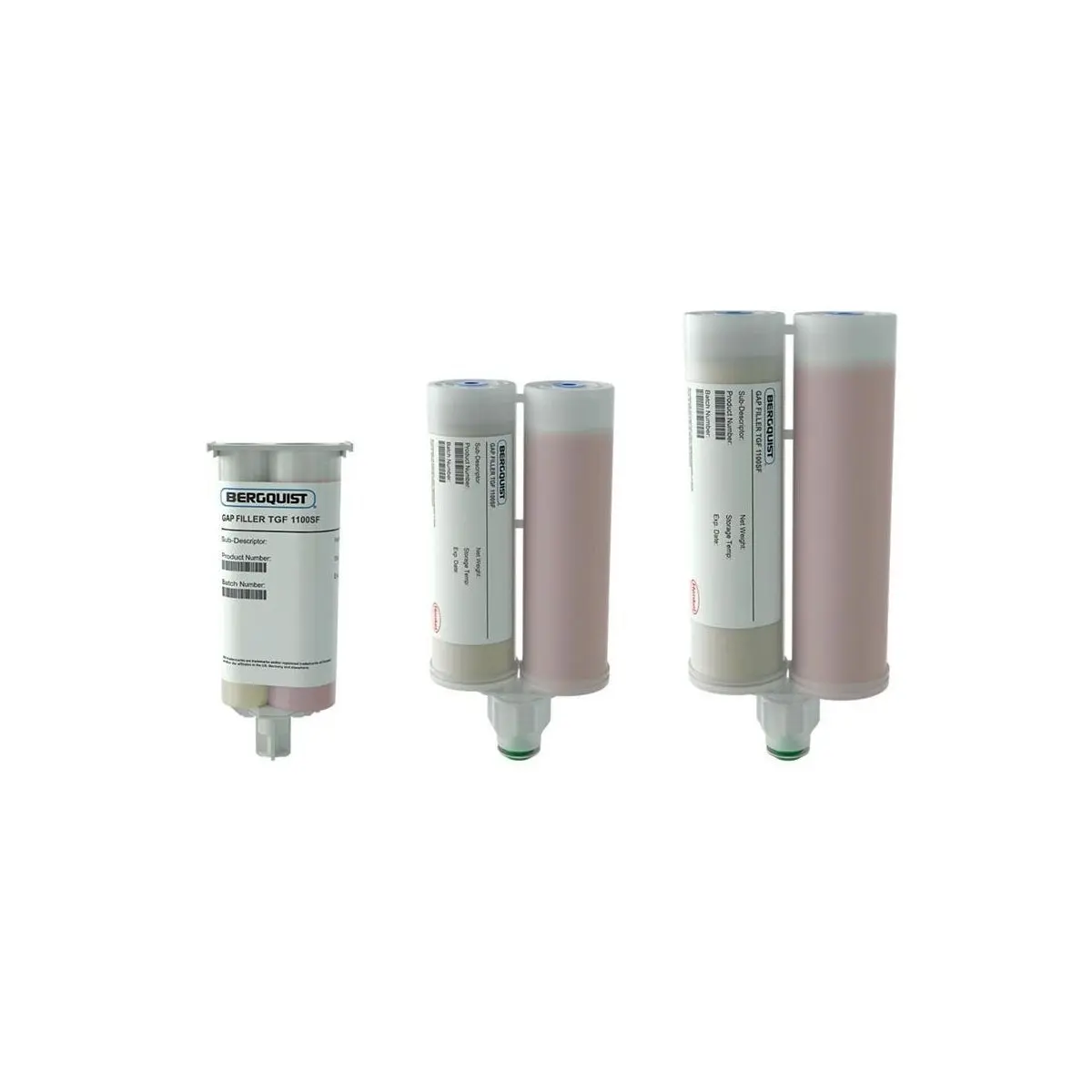
Product code: GAP FILLER TGF 1100SF
Silicone-free two-part liquid gap filler, 1.1 W/(m·K), for hard disk drives, relays, optics and other silicone-sensitive electronics, in fast and slow cure versions.
BERGQUIST
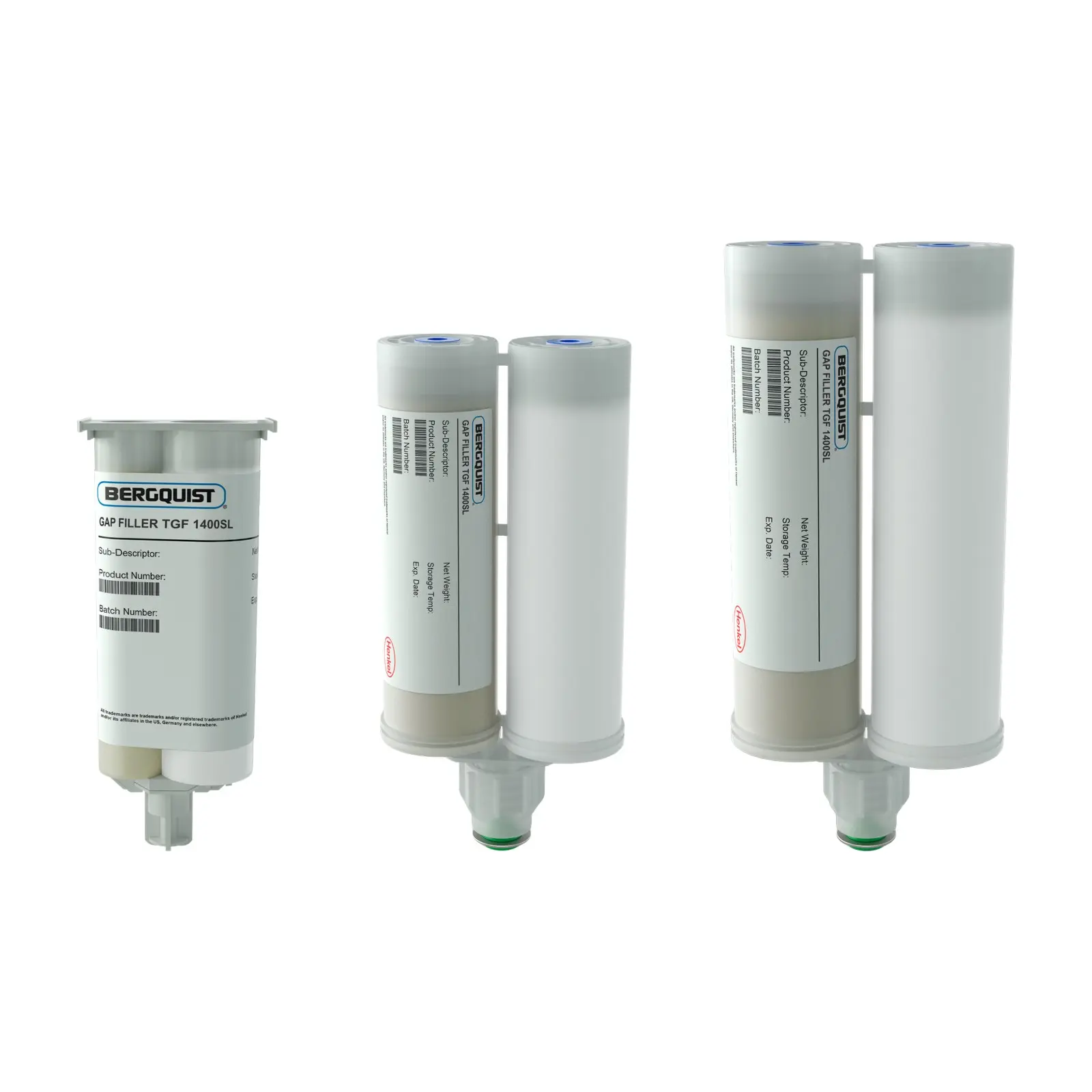
Product code: GAP FILLER TGF 1400SL
Self-leveling two-part silicone liquid gap filler with 5000 mPa·s mixed viscosity and 1.4 W/(m·K), for encapsulating semiconductors and magnetic components.
BERGQUIST
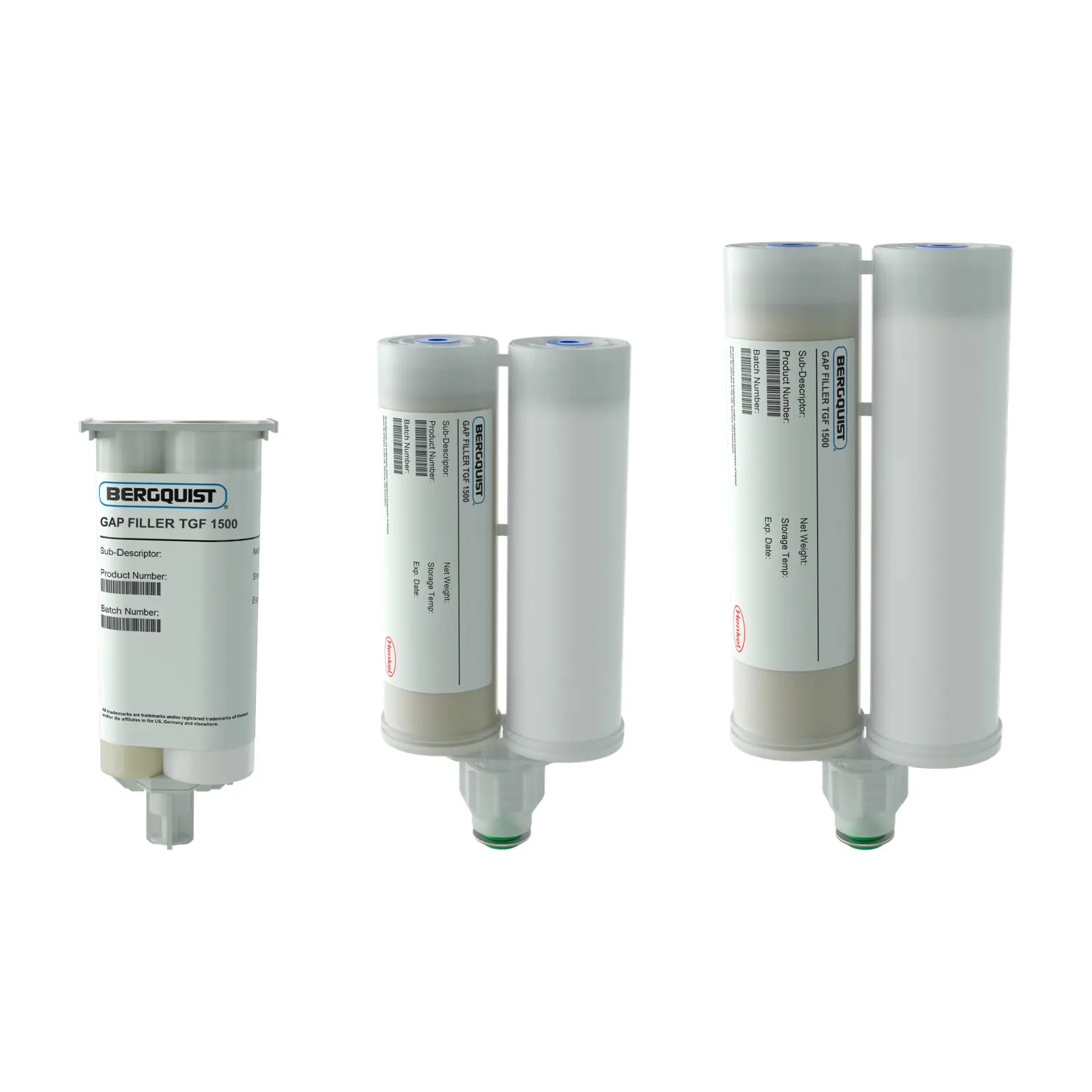
Product code: GAP FILLER TGF 1500
Two-part silicone liquid gap filler, 1.8 W/(m·K), with shear thinning flow for easy dispensing and high slump resistance once in place.
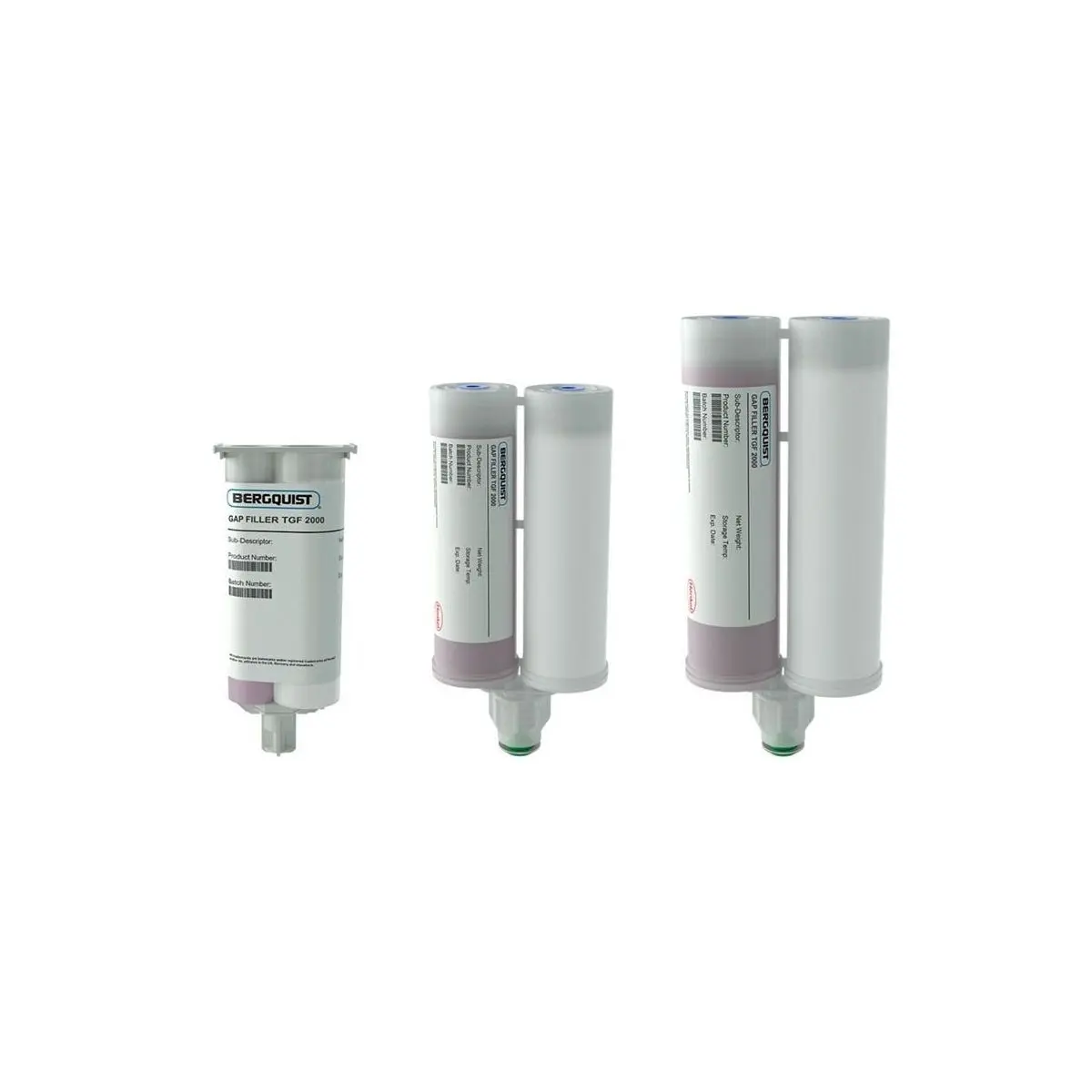
BERGQUIST
Product code: GAP FILLER TGF 2000
Two-part silicone liquid gap filler, 2.0 W/(m·K), that flows like a grease before cure and becomes a soft, dry-to-touch elastomer that does not pump out under thermal cycling.
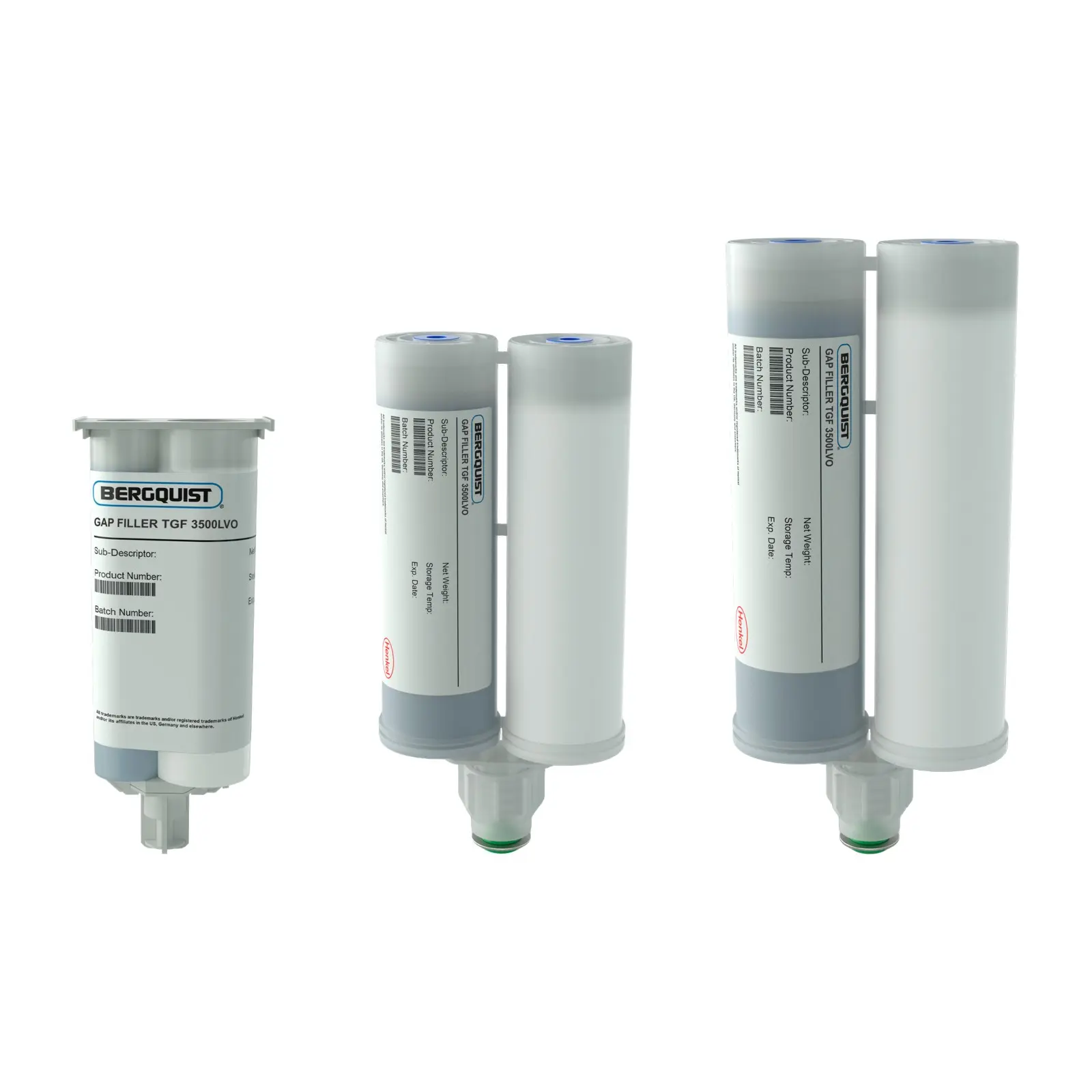
BERGQUIST
Product code: GAP FILLER TGF 3500LVO
Two-part silicone liquid gap filler with 3.5 W/(m·K) thermal conductivity and low outgassing, for lighting, in-cabin automotive, medical and industrial electronics.
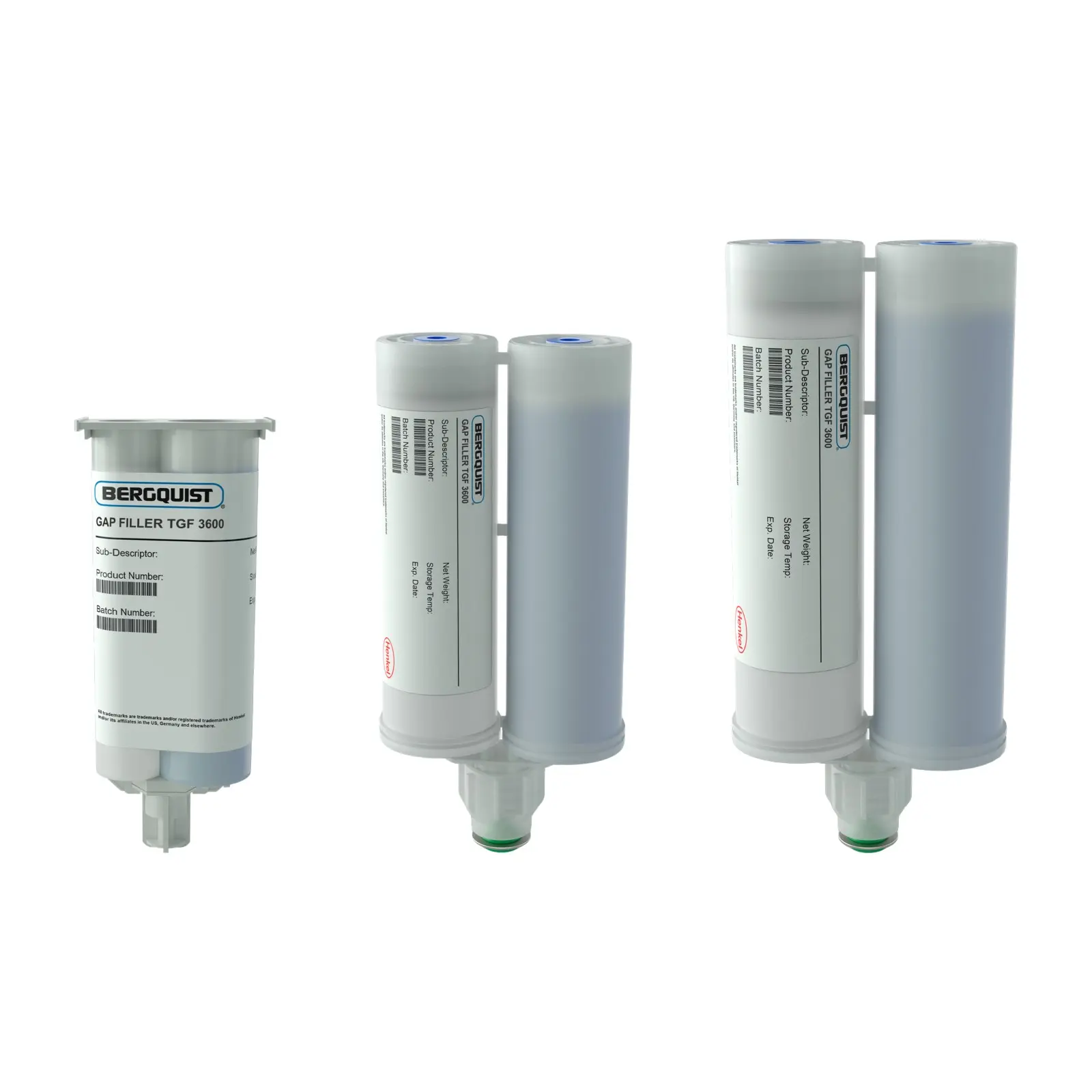
BERGQUIST
Product code: GAP FILLER TGF 3600
Two-part, thixotropic silicone liquid gap filler with 3.6 W/(m·K) thermal conductivity, for joining circuit boards and components to housings in automotive and telecom electronics.
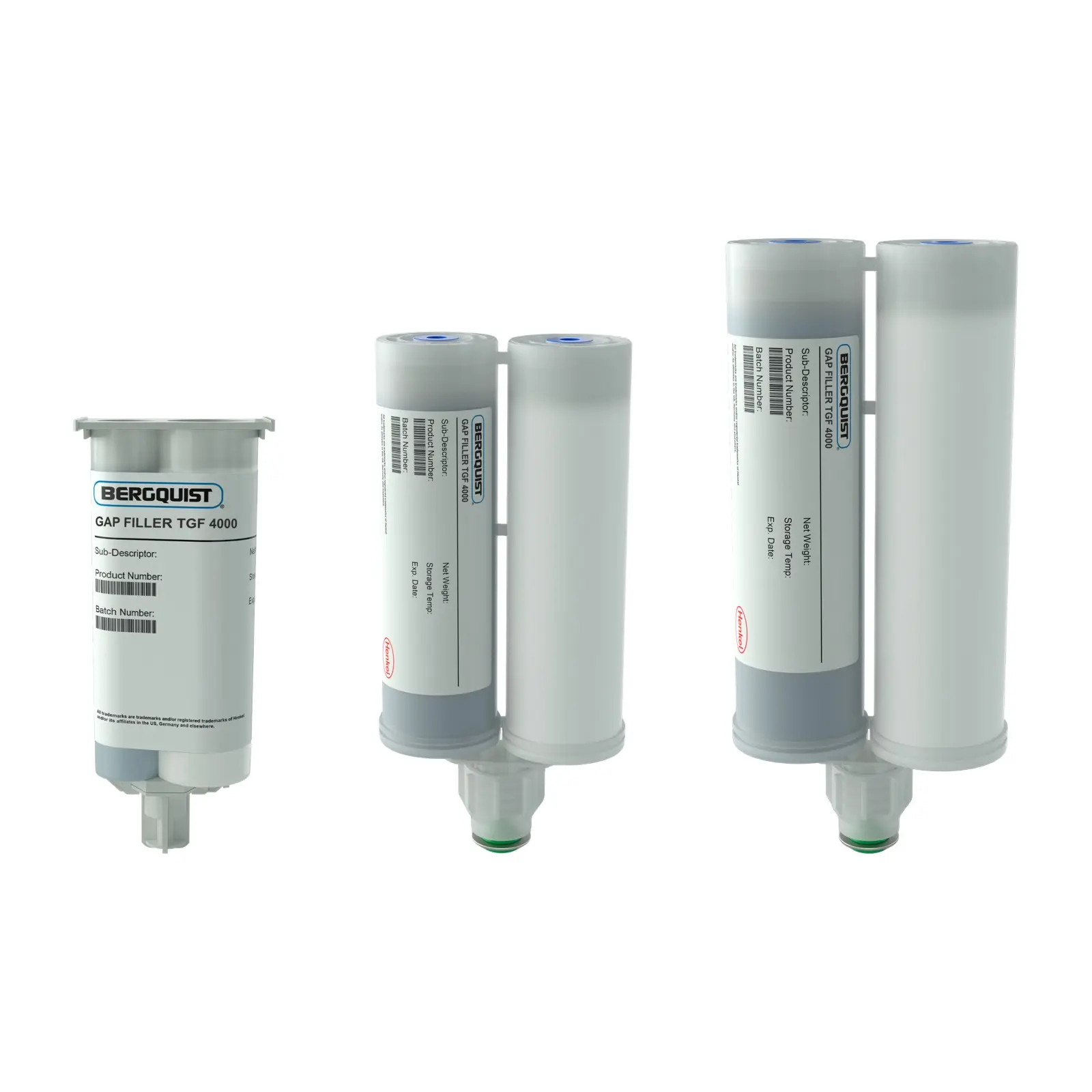
BERGQUIST
Product code: GAP FILLER TGF 4000
Two-part silicone liquid gap filler with 4.0 W/(m·K) thermal conductivity and a 240 minute working time, for semiconductors to heat sinks in automotive, telecom and computer electronics.
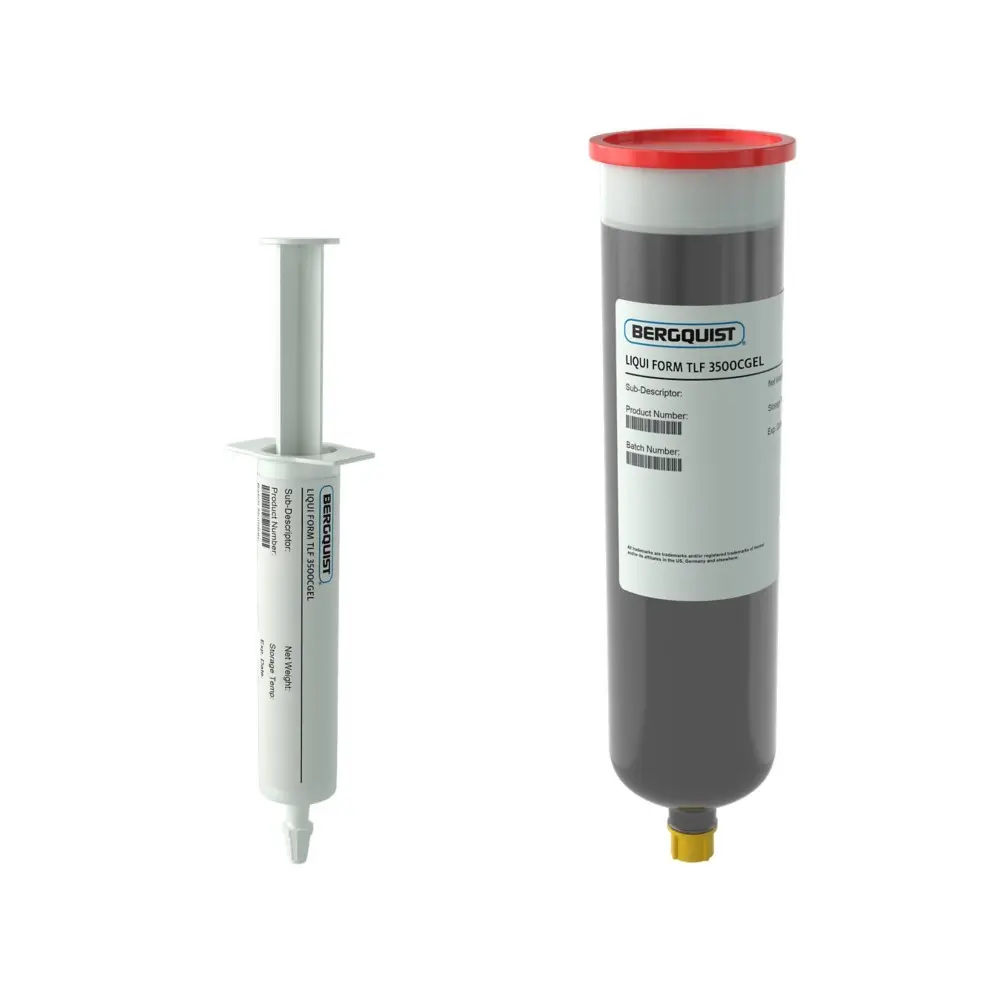
BERGQUIST
Product code: LIQUI FORM TLF 3500CGEL
One-part silicone curable gel, 3.5 W/(m·K), dispensed from cartridges into gaps. It stays in place on vertical surfaces and cures to a soft elastomer.
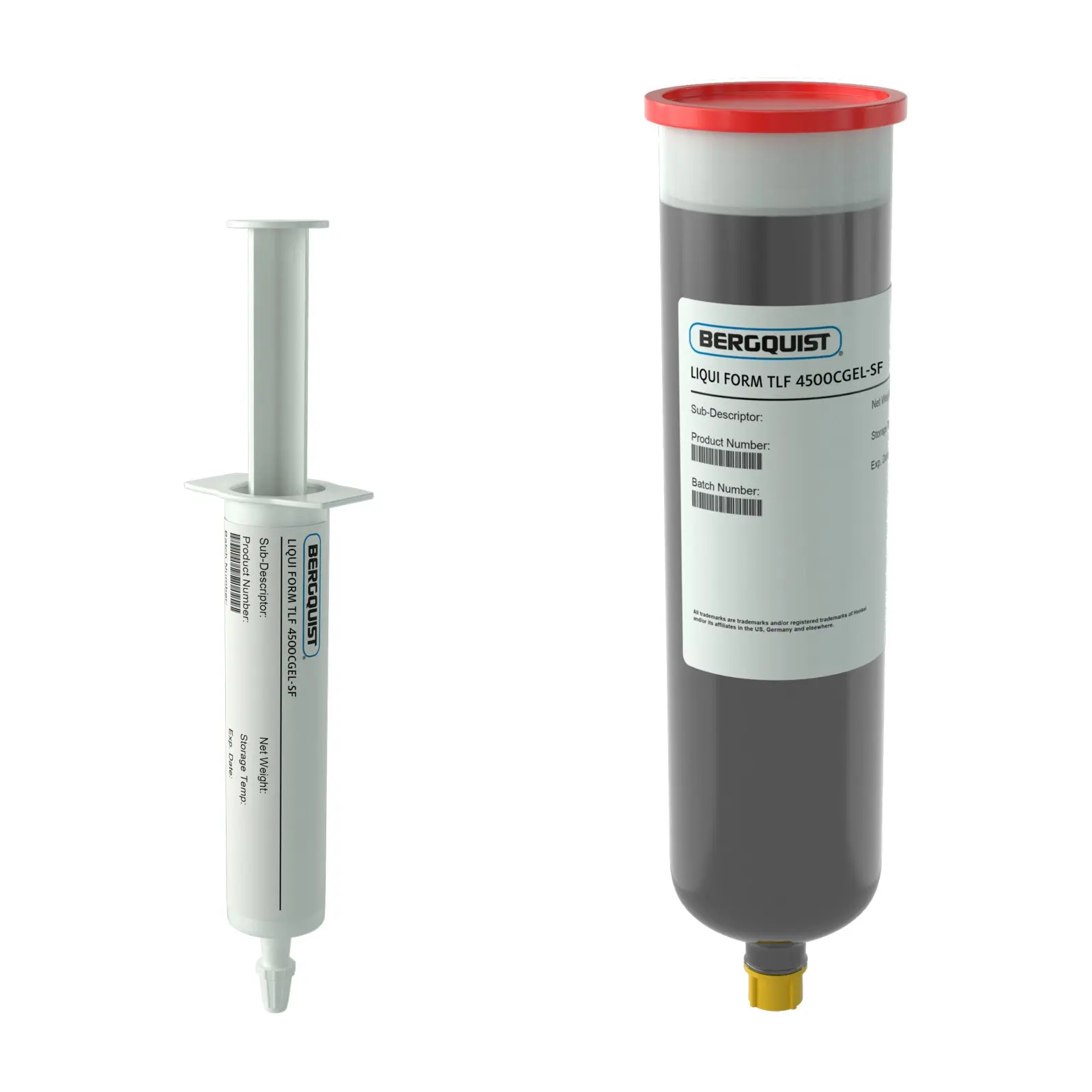
BERGQUIST
Product code: LIQUI FORM TLF 4500CGEL SF
Silicone-free, one-part moisture-cure thermal gel, 4.5 W/(m·K), for silicone-sensitive electronics. Dispenses fast, stays in vertical gaps, cures soft.
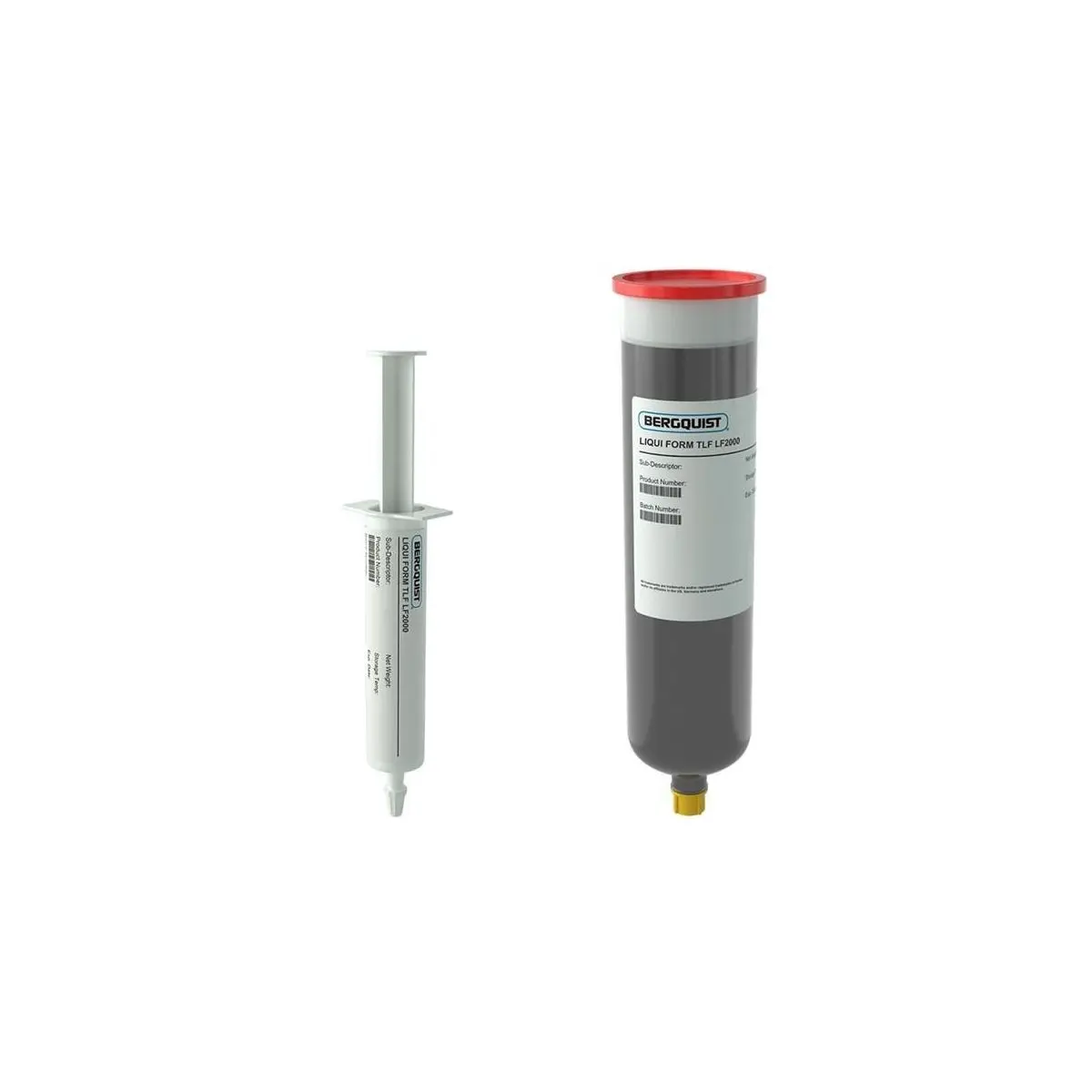
BERGQUIST
Product code: LIQUI FORM TLF LF2000
Non-curing, one-part liquid formable thermal material, 2.0 W/(m·K), for bare die and BGA packages. Very low force on components and easy rework.
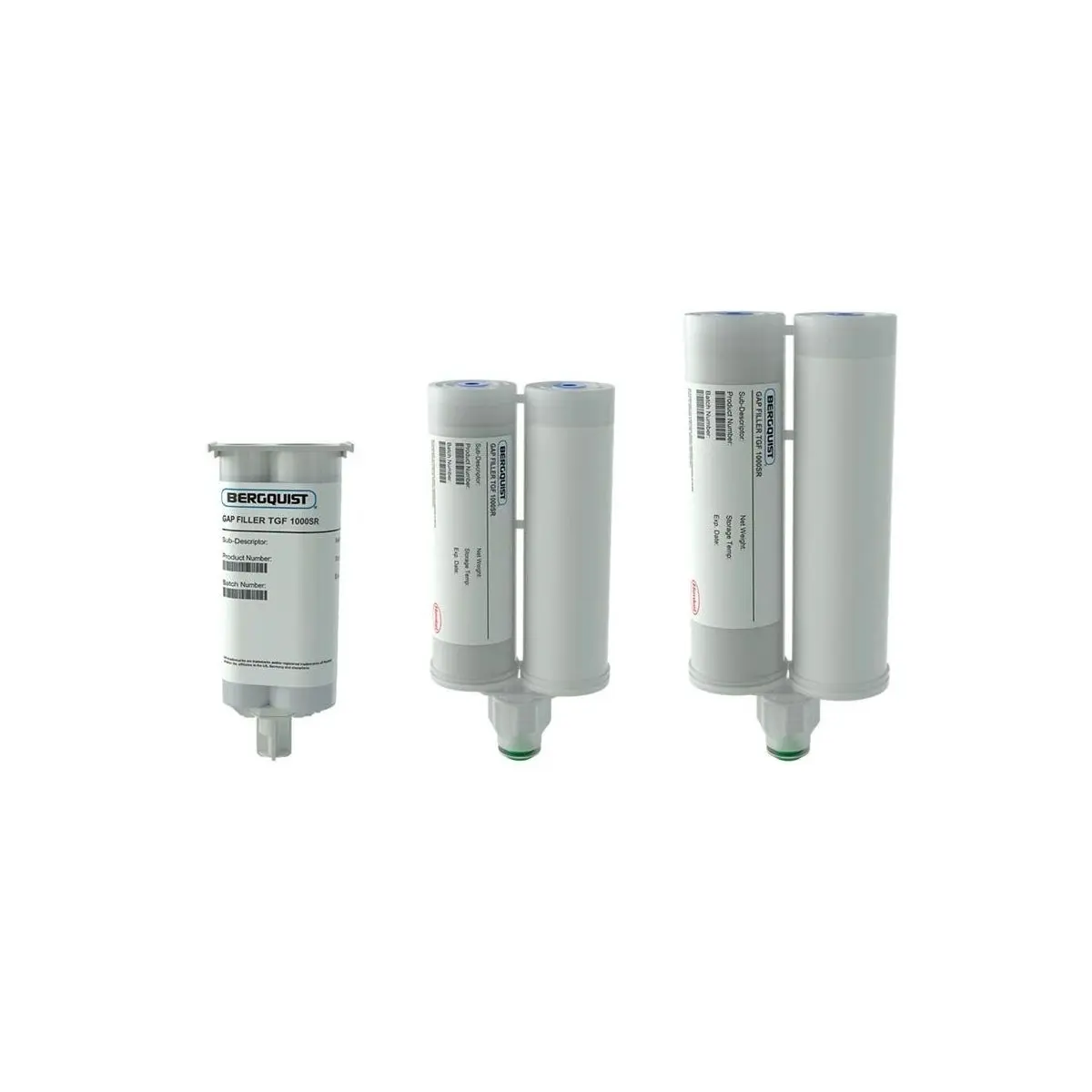
BERGQUIST
Product code: GAP FILLER TGF 1000SR
Two-part silicone liquid gap filler with high slump resistance, so it stays where dispensed, 1.0 W/(m·K), cures at room temperature or with heat.
Soft, die-cut interface pads that bridge the gap between hot components and a heatsink or housing.
Bonds heat-generating components to heatsinks and housings while carrying heat away from the junction.
Thin thermal interface that fills the micro-gaps between a hot package and its heatsink so heat can actually cross.
Fully encases a PCB or module in cured resin to block moisture, damp vibration and spread heat.
Send ADVANCE your heat load, measured gap range, surfaces, temperature profile and dispensing equipment. We will propose suitable grades, share the TDS and SDS, and arrange cartridge samples for a fill and thermal trial on your own housing.
Not sure which product fits? Ask our assistant
Type the job, the material or a spec. It searches our published products and TDS values — no external AI.