
ADVANCE

Electronics solutions

Underfill Encapsulants for Flip-Chip, CSP and BGA Reliability

Underfills fill the narrow gap between selected semiconductor packages and the circuit board. They help redistribute mechanical stress around solder interconnections and support package reliability under thermal and mechanical loading.

Underfill Encapsulants for Flip-Chip, CSP and BGA Reliability

What It Is and Its Role

Underfill is a polymer-based encapsulating material applied to fill the narrow gap beneath selected semiconductor packages. It is commonly considered for flip-chip, CSP and BGA assemblies where solder interconnections may experience thermal cycling and mechanical stress. After curing, the material forms a reinforcing layer that helps distribute stress across the package-to-board interface.

Unlike glob-top encapsulation, which covers exposed features on top of a component, capillary underfill flows beneath the package through the gap between the package and PCB. Its primary purpose is to reinforce the interconnections.

Where It Is Used

Underfills are used where semiconductor solder joints need additional mechanical support. The selected technology depends on package geometry, interconnect spacing, board design and service environment.

  • Flip-chip packages mounted on printed circuit boards.
  • Chip Scale Package (CSP) assemblies.
  • Ball Grid Array (BGA) packages requiring additional reinforcement.
  • High-density assemblies with narrow package-to-board gaps.
  • Applications exposed to bending, vibration, drop or thermal cycling.

Problems It Solves

Package, solder and PCB materials may expand at different rates as temperature changes. Underfill helps distribute stress over a larger area and reduce stress concentration at individual solder joints. The result depends on package geometry, material properties and filling quality.

  • Solder fatigue during thermal cycling → review CTE, Tg and cured modulus.
  • Mechanical damage during bending or vibration → assess reinforcement requirements.
  • Voids beneath package → review flow, gap geometry and dispense conditions.
  • Inconsistent reliability → investigate process repeatability and cure conditions.

Underfill Technologies and Product Types

Underfill systems differ in how material enters the package interface and when it is applied. Common options are capillary flow underfills, edge bonds and corner bonds for selected package applications. Reworkability, curing method and flow behavior should be checked for the exact grade.

Capillary Flow Underfills

  • Dispensed along a mounted package edge, the material flows into the narrow gap through capillary action. It must fill the intended area while limiting voids.

Reworkable and Non-Reworkable Systems

  • Reworkable systems are considered where package removal or board repair may be required. Non-reworkable systems prioritize permanent reinforcement. Confirm the exact removal process and limitations.

EdgeBonds

  • Applied along selected package edges to reinforce the package-to-board assembly. Application and cure requirements depend on the product.

CornerBonds

  • Applied at selected package corners for additional mechanical reinforcement. Some systems may be designed to cure during a normal solder reflow cycle; verify the exact grade and process sequence.

Key Properties to Specify

Underfill selection balances flow, mechanical reinforcement and thermal reliability. The material must fill the intended gap while providing suitable cured properties for the package and board. Compare grade-specific values using the current TDS and actual package geometry.

  • Viscosity and flow through the actual package gap.
  • Coefficient of thermal expansion (CTE).
  • Glass transition temperature (Tg) and cured modulus.
  • Filler loading and particle size relative to gap geometry.
  • Cure method, temperature and process time.
  • Adhesion to package materials, solder mask and PCB surfaces.
  • Reworkability, ionic cleanliness and environmental reliability.

Application and Curing Process

Capillary underfill is typically dispensed along one or more edges after the package has been mounted and solder interconnections have been formed. Capillary action draws the material beneath the package. After filling and inspection, the assembly follows the specified cure process. EdgeBond and CornerBond use different application sequences and must follow their product instructions.

  • Confirm package cleanliness and surface condition.
  • Verify package gap, edge access and flow direction.
  • Dispense the specified volume at the approved location.
  • Allow the material to fill the gap and inspect for voids.
  • Follow the cure schedule and validate the completed assembly.

Design and Process Considerations

Package-to-board clearance, package dimensions and solder-joint geometry influence underfill flow. Material and dispense conditions must match the available flow path. Consider rework requirements early because a highly reinforced assembly may need a different repair strategy.

  • Confirm package gap and minimum flow clearance.
  • Consider component layout and dispensing access.
  • Evaluate CTE mismatch between package, solder and PCB.
  • Define whether package removal or board rework may be required.
  • Confirm cure-temperature compatibility with the complete assembly.

Common Defects and How to Avoid Them

Common defects include incomplete flow, air entrapment, poor adhesion and stress after curing. Compare the defect location with package geometry, dispense path and cure conditions. Validate material changes using representative package designs.

  • Incomplete filling → review viscosity, gap, dispense location and flow time.
  • Voids → examine dispense sequence, material conditioning and package geometry.
  • Poor adhesion → review surface cleanliness and substrate compatibility.
  • Cracking after thermal cycling → assess CTE mismatch, Tg and modulus.
  • Damage during rework → verify that the selected grade supports the intended removal method.

How to Select and What to Tell ADVANCE

Start with the package type, package-to-board gap and reliability issue to be addressed. ADVANCE can help review capillary underfill, edge-bond and corner-bond options when assembly geometry, process sequence and rework needs are known.

  • Package type, dimensions and package specification.
  • Package-to-board gap, pitch and solder-joint geometry.
  • PCB material, solder mask and surface finish.
  • Required method: capillary underfill, edge bond or corner bond.
  • Cure temperature, process time and production equipment.
  • CTE, Tg, modulus and mechanical reliability requirements.
  • Rework expectations and available qualification results.

Products to consider

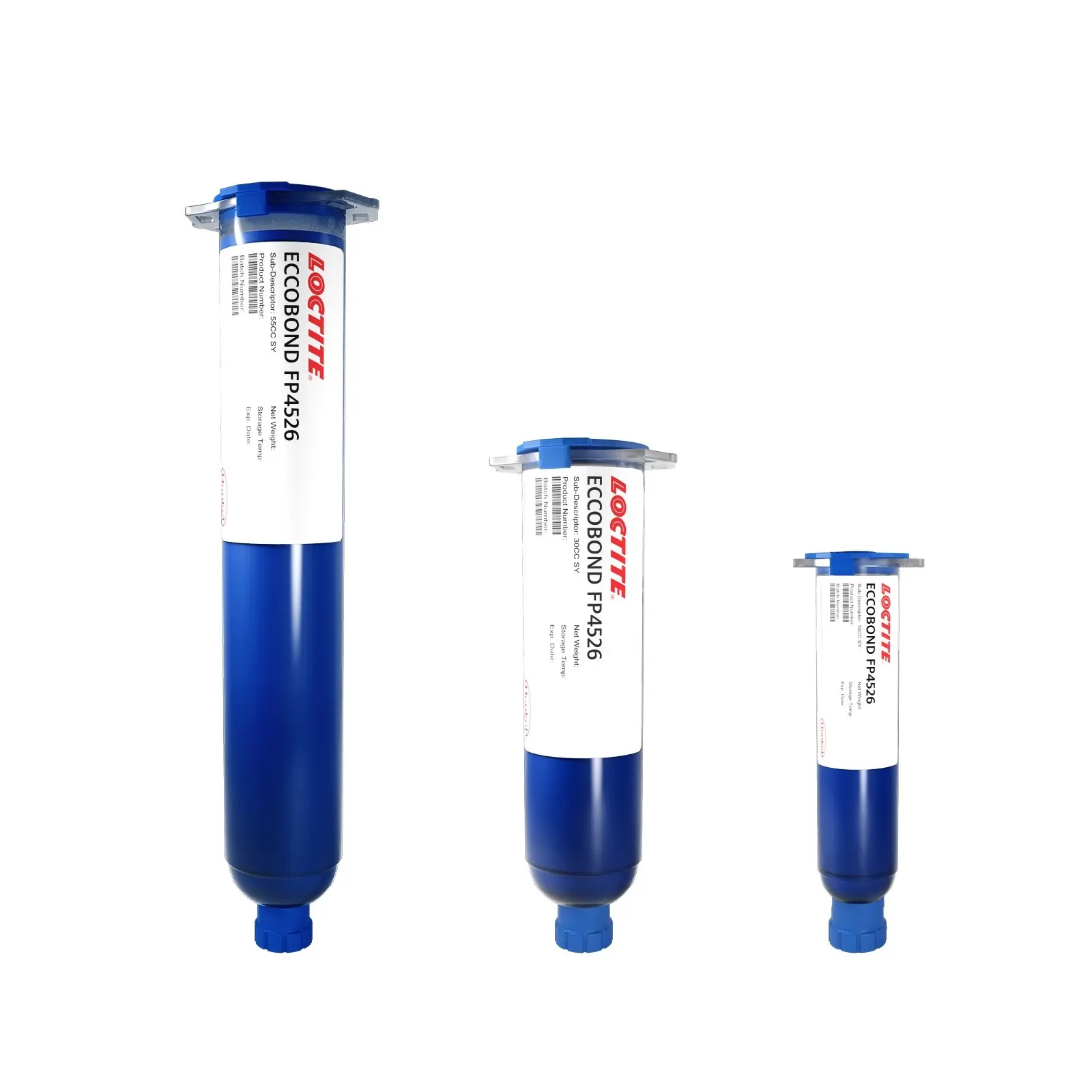
  • LOCTITE ECCOBOND FP4526

    LOCTITE

    LOCTITE ECCOBOND FP4526

    Product code: ECCOBOND FP4526

    Blue low-viscosity epoxy capillary underfill for flip chips on ceramic packages and flex. Fast cure, 15 minutes at 165 °C on a hot plate.
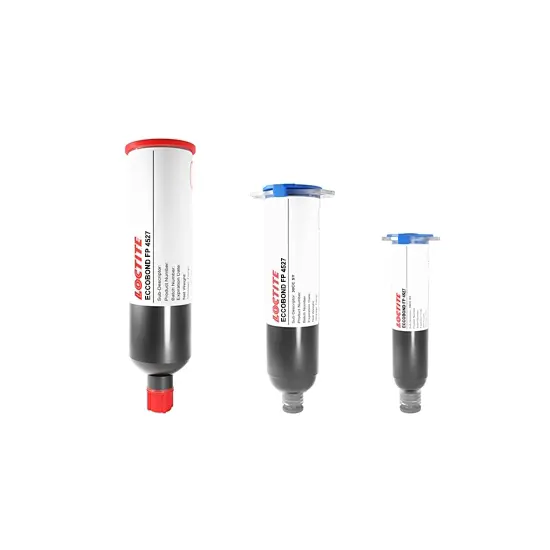
  • LOCTITE ECCOBOND FP4527

    LOCTITE

    LOCTITE ECCOBOND FP4527

    Product code: ECCOBOND FP4527

    Blue low-viscosity liquid epoxy capillary underfill for flip chip devices. Cures in 15 minutes at 165 °C on a hot plate.
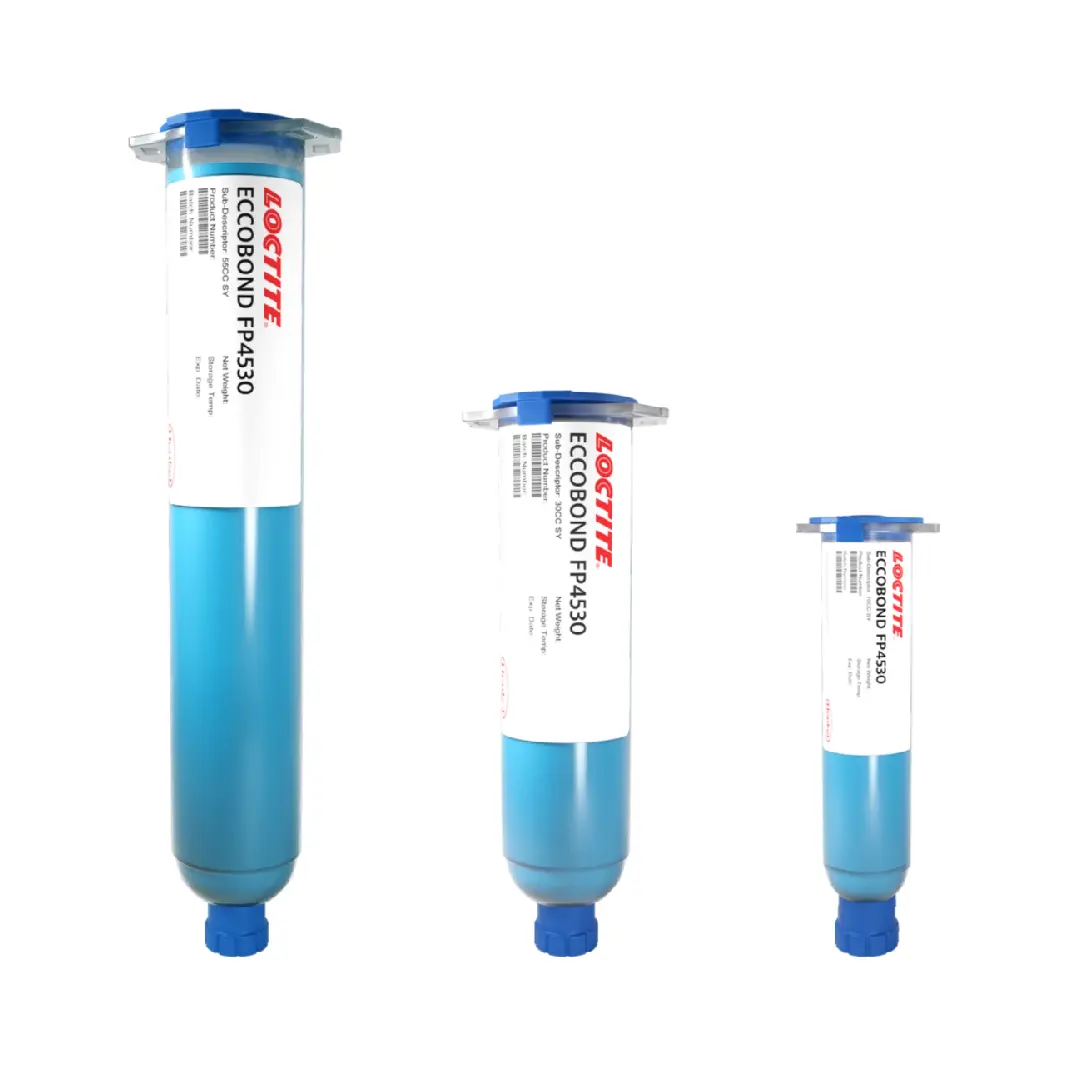
  • LOCTITE ECCOBOND FP4530

    LOCTITE

    LOCTITE ECCOBOND FP4530

    Product code: ECCOBOND FP4530

    Blue snap-cure epoxy underfill for flip chip on flex with a 25 µm gap. It flows fast into small gaps and turns green when cured.
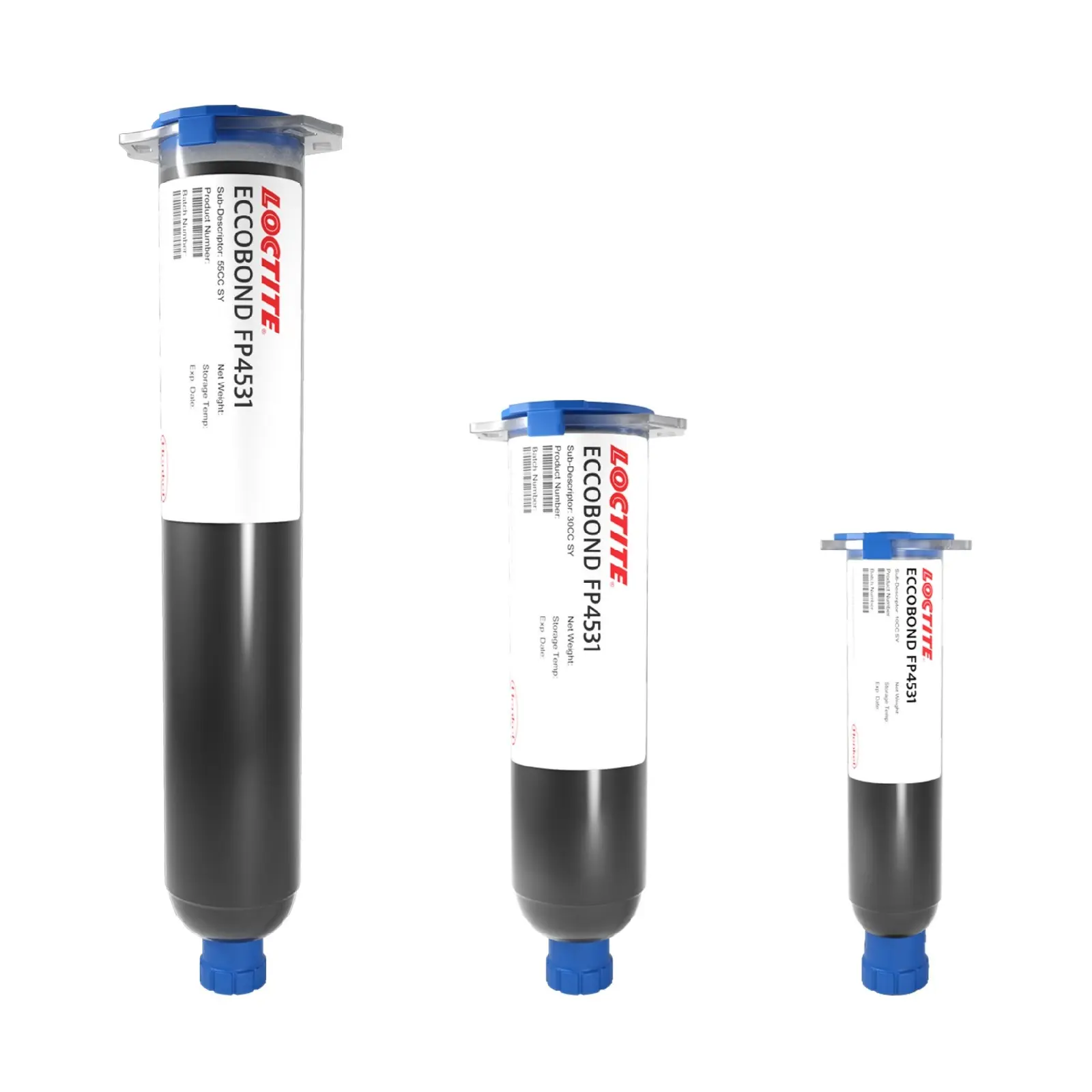
  • LOCTITE ECCOBOND FP4531

    LOCTITE

    LOCTITE ECCOBOND FP4531

    Product code: ECCOBOND FP4531

    Black one-part snap-cure epoxy underfill for flip chip on flex with a 1 mil gap. Cures in 7 minutes at 160 °C.
  • LOCTITE ECCOBOND FP4549

    LOCTITE

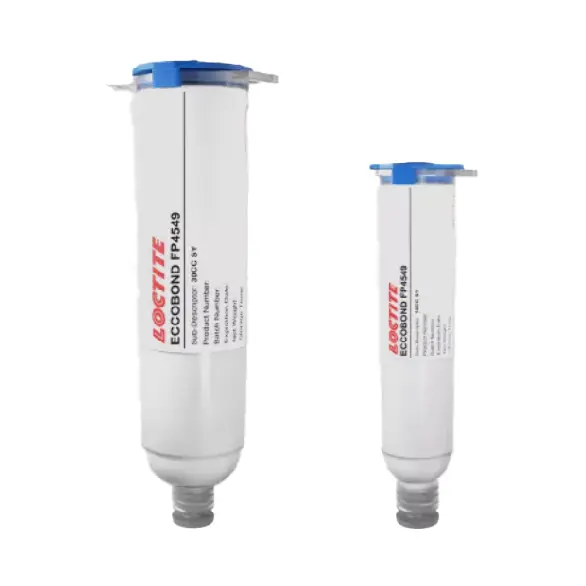
    LOCTITE ECCOBOND FP4549

    Product code: ECCOBOND FP4549

    White liquid epoxy underfill for flip chips that bonds well to IC passivation and underfills gaps as small as 1/2 mil at 90 to 110 °C.
  • LOCTITE ECCOBOND E-1172 A

    LOCTITE

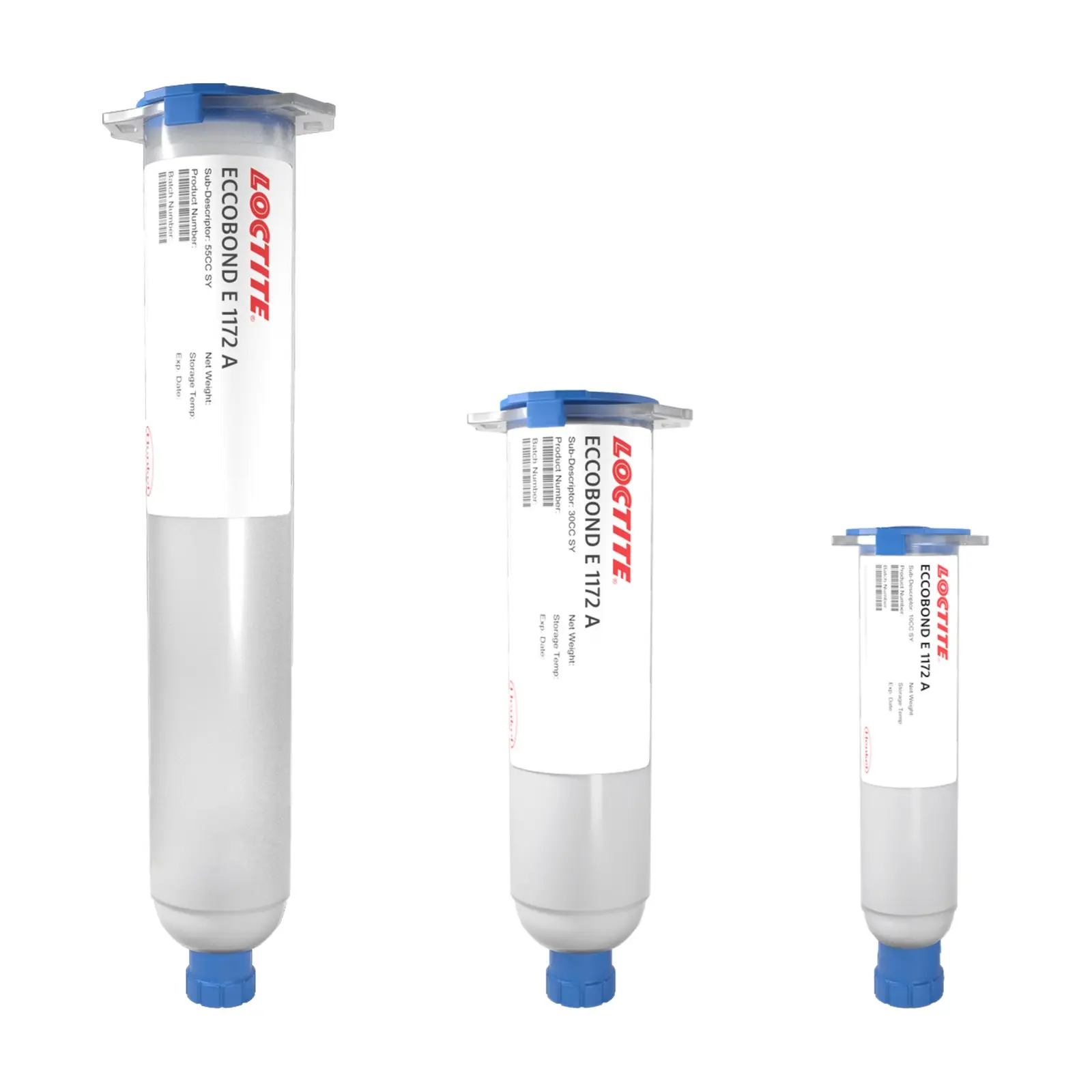
    LOCTITE ECCOBOND E-1172 A

    Product code: ECCOBOND E-1172 A

    One-part tan epoxy capillary underfill for very fine area array and flip chip devices, with fast cure at low temperature and long pot life.
  • LOCTITE ECCOBOND UF 8830S

    LOCTITE

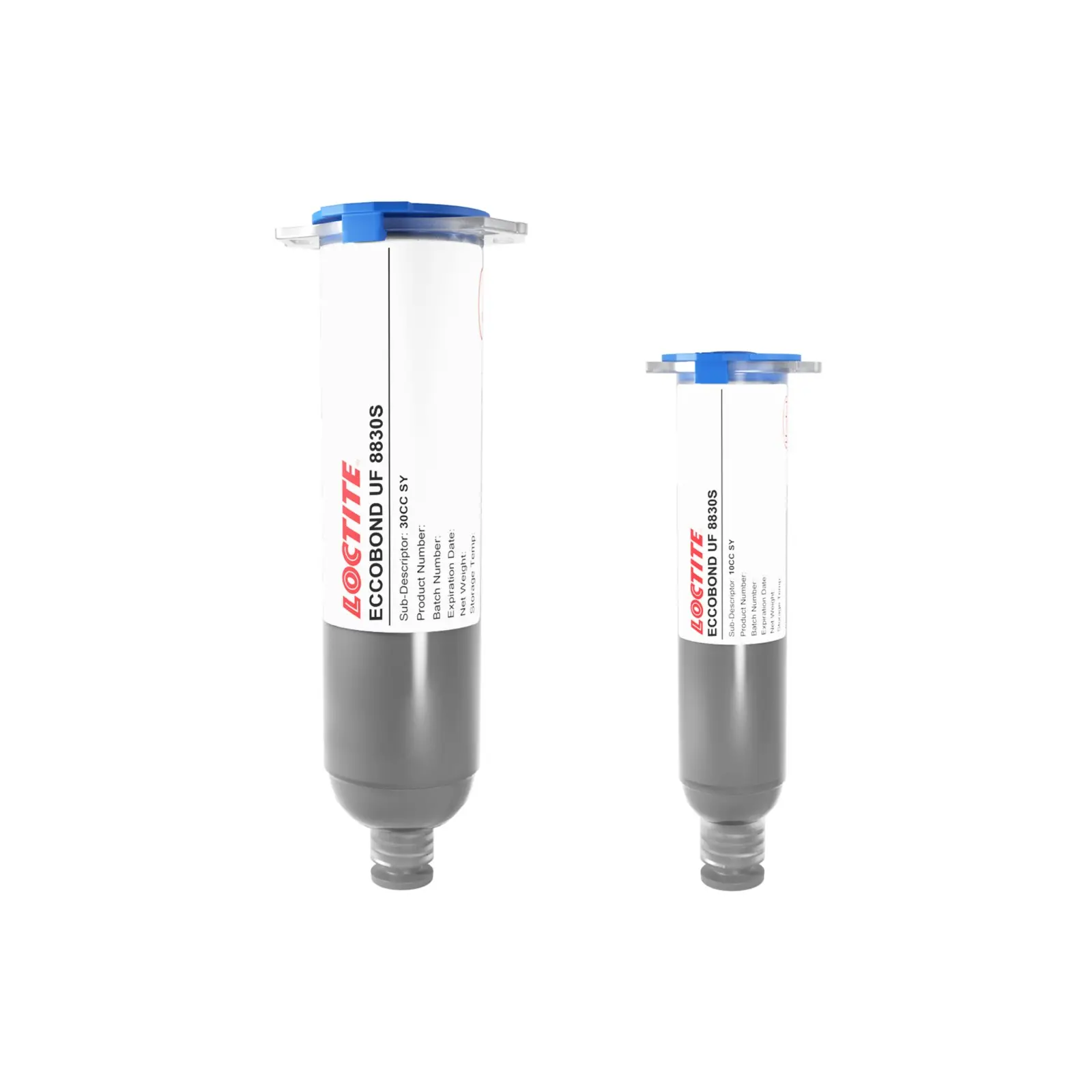
    LOCTITE ECCOBOND UF 8830S

    Product code: ECCOBOND UF 8830S

    Grey epoxy underfill paste for flip chip BGA with tight bump pitch and narrow gaps. It flows with self-filleting and is formulated to resist cracking.
  • LOCTITE ECCOBOND UF 4550HTC

    LOCTITE

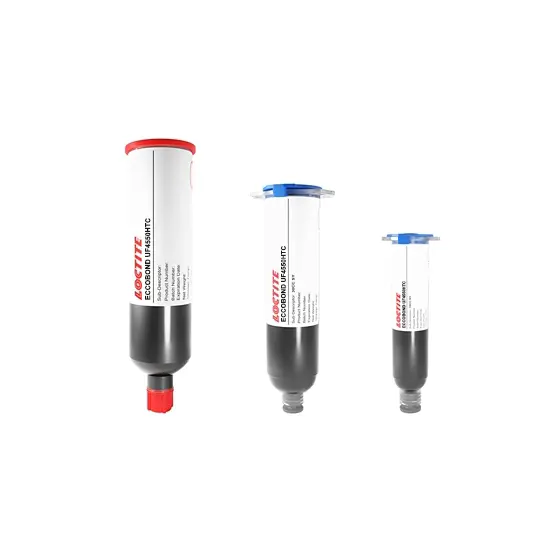
    LOCTITE ECCOBOND UF 4550HTC

    Product code: ECCOBOND UF 4550HTC

    Thermally conductive capillary underfill for flip chip devices and flexible circuits on circuit boards. Alumina-filled epoxy with a fast heat cure at 160 °C.
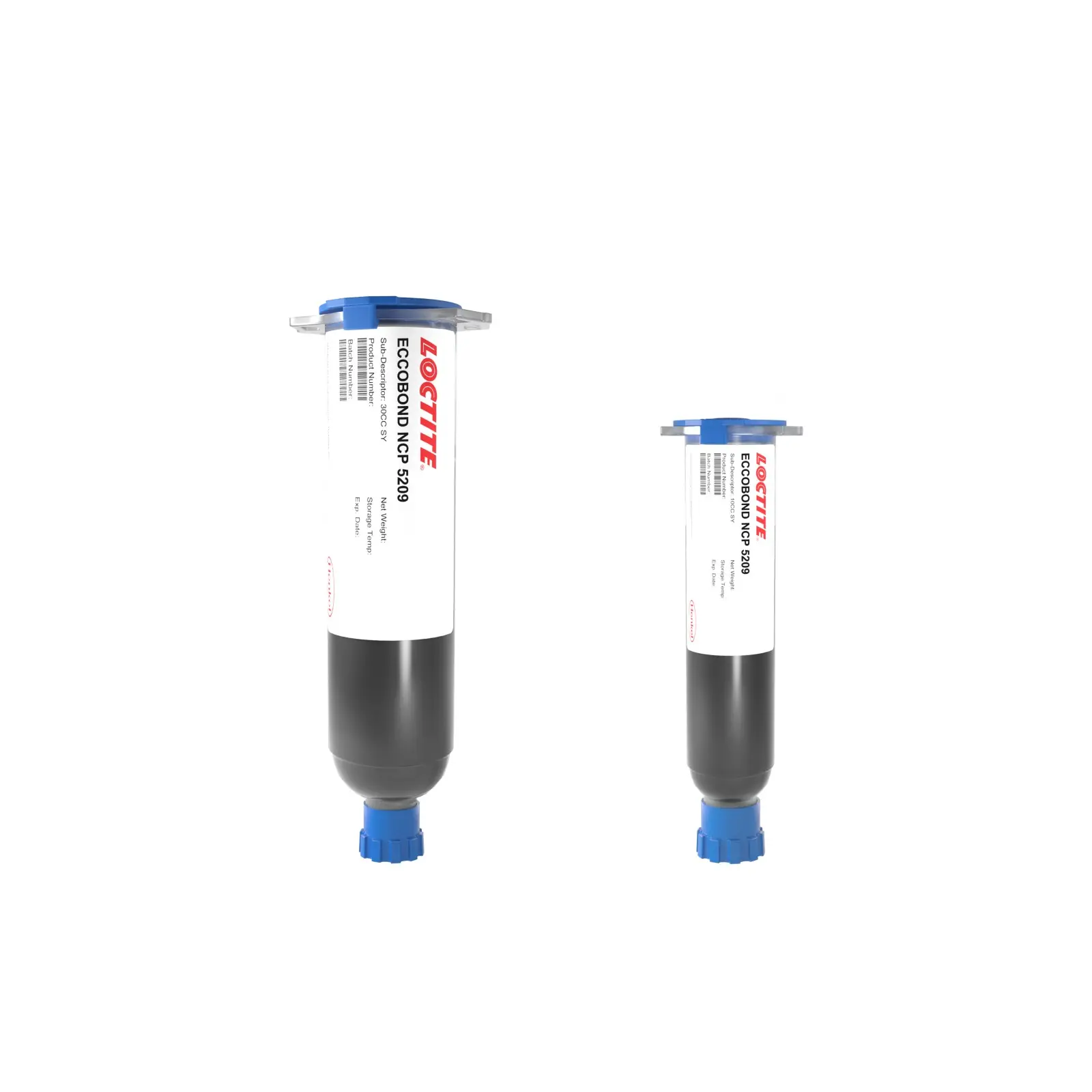
  • LOCTITE ECCOBOND NCP 5209

    LOCTITE

    LOCTITE ECCOBOND NCP 5209

    Product code: ECCOBOND NCP 5209

    Non-conductive paste, pre-applied underfill for thermal compression bonding of Cu pillar flip chip to laminate, with fluxing activity.
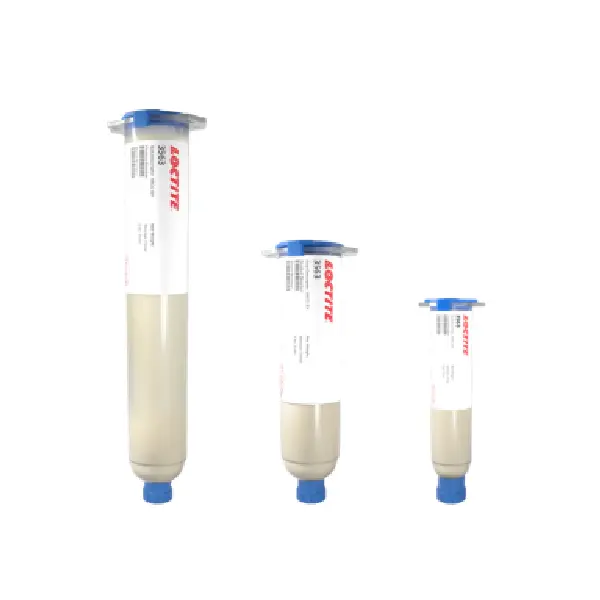
  • LOCTITE 3563

    LOCTITE

    LOCTITE 3563

    Product code: 3563

    One-part fast-flowing epoxy capillary underfill for flip chip, CSP and BGA. It penetrates gaps as small as 25 µm and is not reworkable.
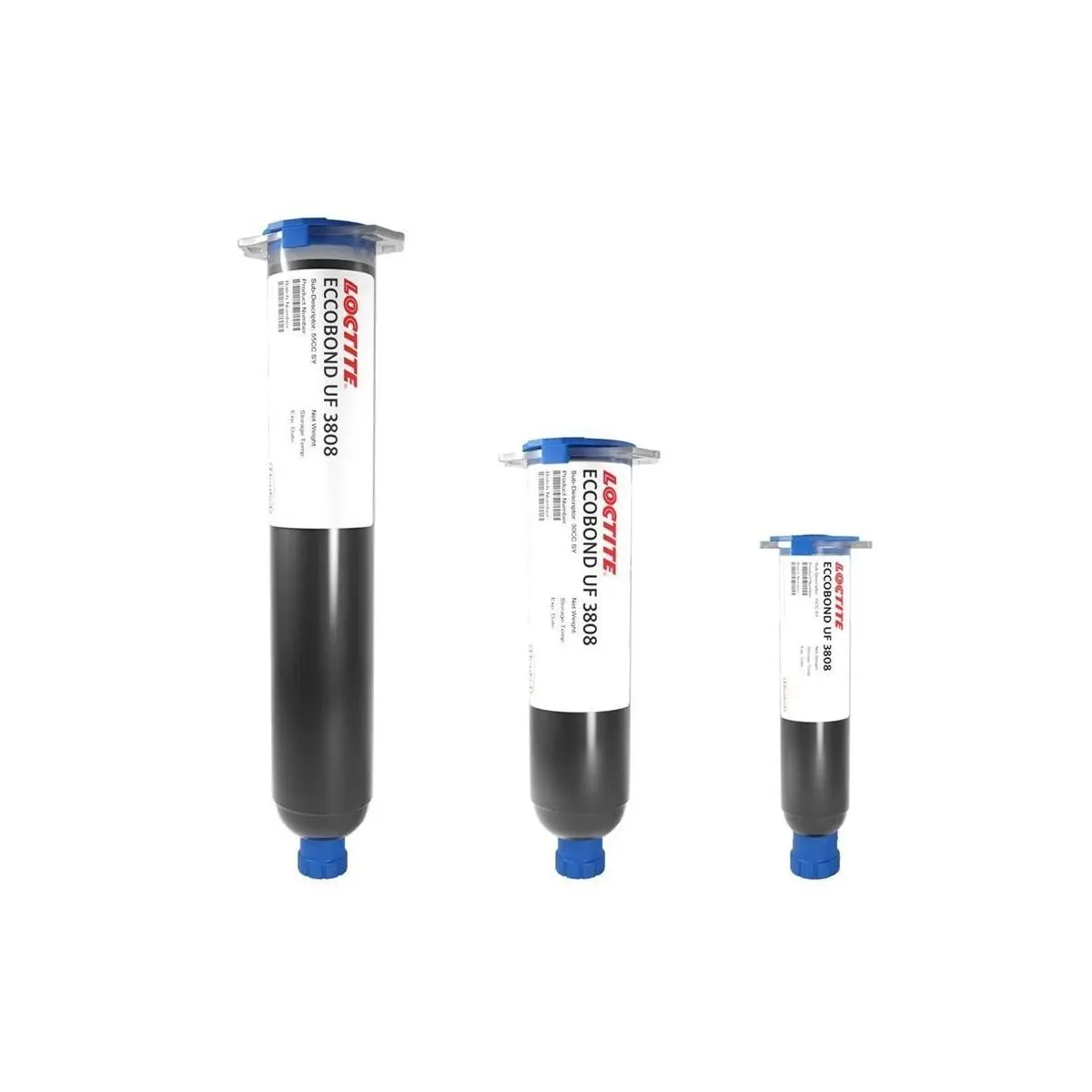
  • LOCTITE ECCOBOND UF 3808

    LOCTITE

    LOCTITE ECCOBOND UF 3808

    Product code: ECCOBOND UF 3808

    Reworkable one-part epoxy capillary underfill for CSP and BGA. Flows at room temperature and cures fast at low temperature, Tg 113 °C.
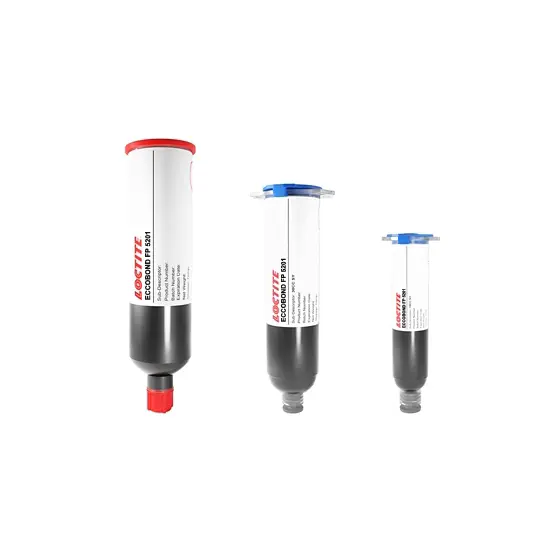
  • LOCTITE ECCOBOND FP 5201

    LOCTITE

    LOCTITE ECCOBOND FP 5201

    Product code: ECCOBOND FP 5201

    One-part BMI/acrylate underfill for thermal compression bonding of flip chips to fine-pitch laminate, with gold, solder or copper pillar bumps.

View all 70 Underfills, Encapsulants & Potting →

Frequently asked questions

What is the difference between underfill and glob-top encapsulation?
Underfill fills the gap beneath a semiconductor package to reinforce solder interconnections. Glob-top is dispensed over exposed components and wire bonds to form a protective cover. They serve different functions.
What is capillary flow underfill?
It is dispensed along a mounted package edge and flows into the narrow package-to-board gap through capillary action. Performance depends on viscosity, gap geometry, surface condition and process settings.
What is the difference between reworkable and non-reworkable underfill?
Reworkable systems are designed to support specified removal or repair procedures. Non-reworkable systems prioritize permanent reinforcement and may be difficult or unsuitable to remove. Verify the method with the exact product instructions.
Can underfill improve BGA and CSP reliability?
A suitable underfill can redistribute mechanical stress and reinforce selected package-to-board interconnections. The improvement depends on package design, material properties and process quality, and should be confirmed through application-specific reliability tests.

Related solutions

  • Black encapsulant flowing over a die and its wire bonds on a circuit board

    Chip-on-Board (COB) Encapsulants

    Protect exposed semiconductor dies and wire bonds with suitable encapsulants.

  • Dispensing needle placing amber paste on a component on a circuit board

    Assembly Paste Adhesives

    Select conductive, insulating or thermally conductive pastes for electronic assemblies.

  • Heatsink, thermal pad and a syringe of thermal grease beside a circuit board

    Thermal Management Materials

    Improve heat transfer between electronic components, thermal spreaders and heatsinks.

Need Help Selecting an Underfill Material?

Share the package type, package-to-board gap, PCB materials and reliability requirements. ADVANCE can help review capillary underfills, edge bonds or corner bonds and the technical checks needed for evaluation.

Not sure which product fits? Ask our assistant

Type the job, the material or a spec. It searches our published products and TDS values — no external AI.