
LOCTITE
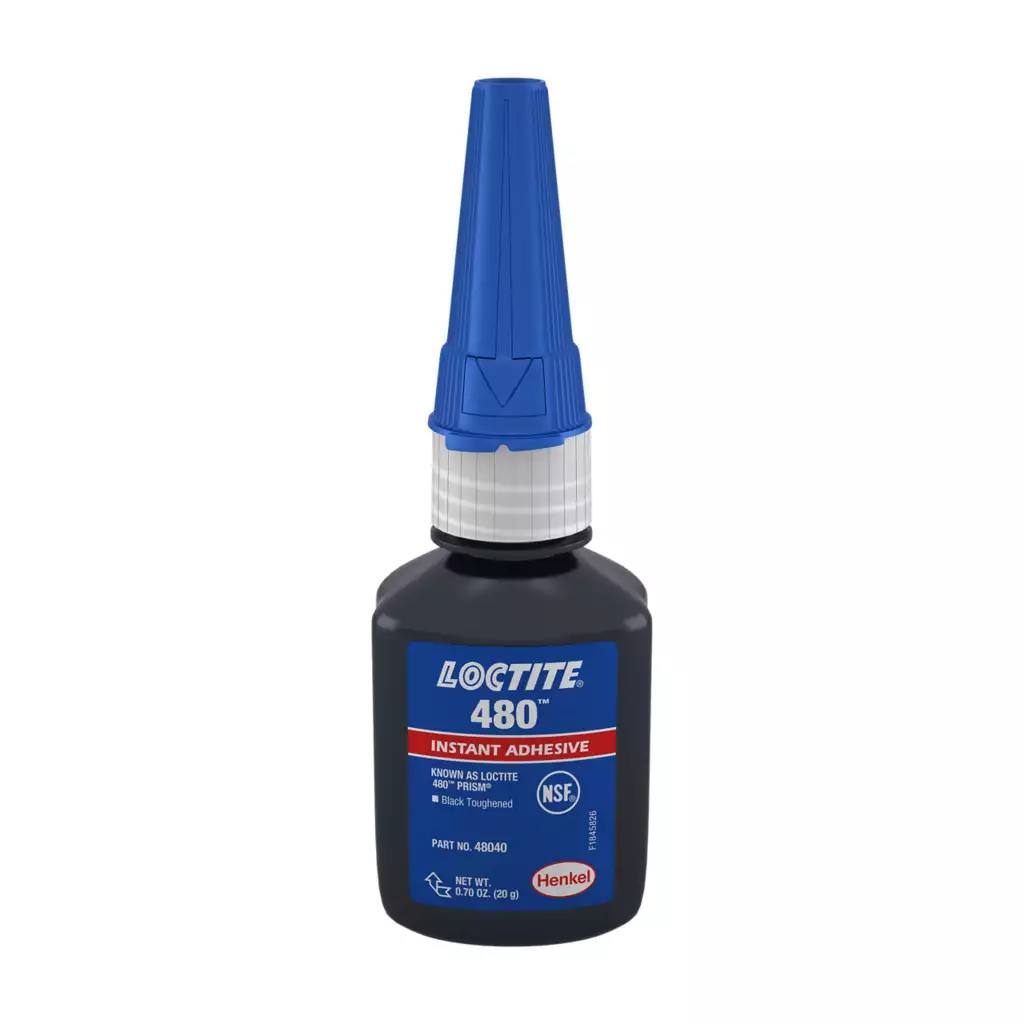
LOCTITE 480
Product code: 480
LOCTITE 480 is a black, rubber-toughened instant adhesive for close-fitting parts that face shock or peel loads, with added flexibility on metals, plastics and rubbers.
Comparison
Both families bond metal to metal at room temperature without mixing. The decision between them comes down to the gap between the parts, the load the joint carries and how the line fixtures. This comparison sets LOCTITE 480 and 496 against AA 326 and AA 331.
Cyanoacrylates cure in seconds from surface moisture and want close-fitting parts: 496 is a very low-viscosity grade for metal substrates and very tight gaps, and 480 is a rubber-toughened black grade with strong peel, impact and shear performance on metals, plastics and rubbers. Structural acrylics cure at room temperature across a real gap: AA 326 is a high-viscosity acrylic activated with LOCTITE SF 7649 for high shear strength on metal, ferrite and magnets, and AA 331 is a toughened one-part paste for DC motor assembly, magnet bonding and pre-coated sheet metal.
| Criterion | LOCTITE 496 | LOCTITE 480 | LOCTITE AA 326 | LOCTITE AA 331 |
|---|---|---|---|---|
| Family | Cyanoacrylate | Toughened cyanoacrylate | Structural acrylic | Toughened structural acrylic |
| Viscosity and form | Very low-viscosity liquid | Low-viscosity black liquid | High-viscosity thixotropic | Medium-viscosity paste |
| Gap | Very tight gaps, close-fitting parts | Close-fitting parts | Bond gaps up to 0.5 mm | Not stated; see the TDS |
| Load character | Shear on thin films | Peel, impact and shear; shock loads | High shear strength | High shear and impact strength |
| Cure path | Surface moisture, seconds | Humidity cure at room conditions | Activator SF 7649 on one surface, fast RT cure | One-part rapid RT cure; details per TDS |
| Substrates named | Metals; rubbers and plastics | Metal to metal, metal to rubber, magnets | Metal to metal, ferrites, magnets | Metal to metal, magnets, pre-coated sheet |
| Choose when | Small tight metal parts, speed first | Tight parts that see shock or peel | Real gap, shear load, line process | Gap plus impact, coated or painted metal |
The cyanoacrylate is the simpler process: one product, no activator, fixture in seconds, best when the parts fit and the bond area is small.
The structural acrylic is the process for a joint that carries load as a design element. It costs an activator step or a longer fixture, and buys gap tolerance and toughness.
All four are one-component products that cure at room temperature with no mixing and no oven, and all four bond metal to metal with surface preparation as the deciding factor: oil, oxide and plating films defeat any of them, so the cleaning step is identical. Where a bond fails, the fracture face tells the same story for both families; see the page on reading a failed bond.
The family follows from gap and load; the grade is confirmed against the numbers before the bench trial.
LOCTITE
Product code: 480
LOCTITE 480 is a black, rubber-toughened instant adhesive for close-fitting parts that face shock or peel loads, with added flexibility on metals, plastics and rubbers.
LOCTITE
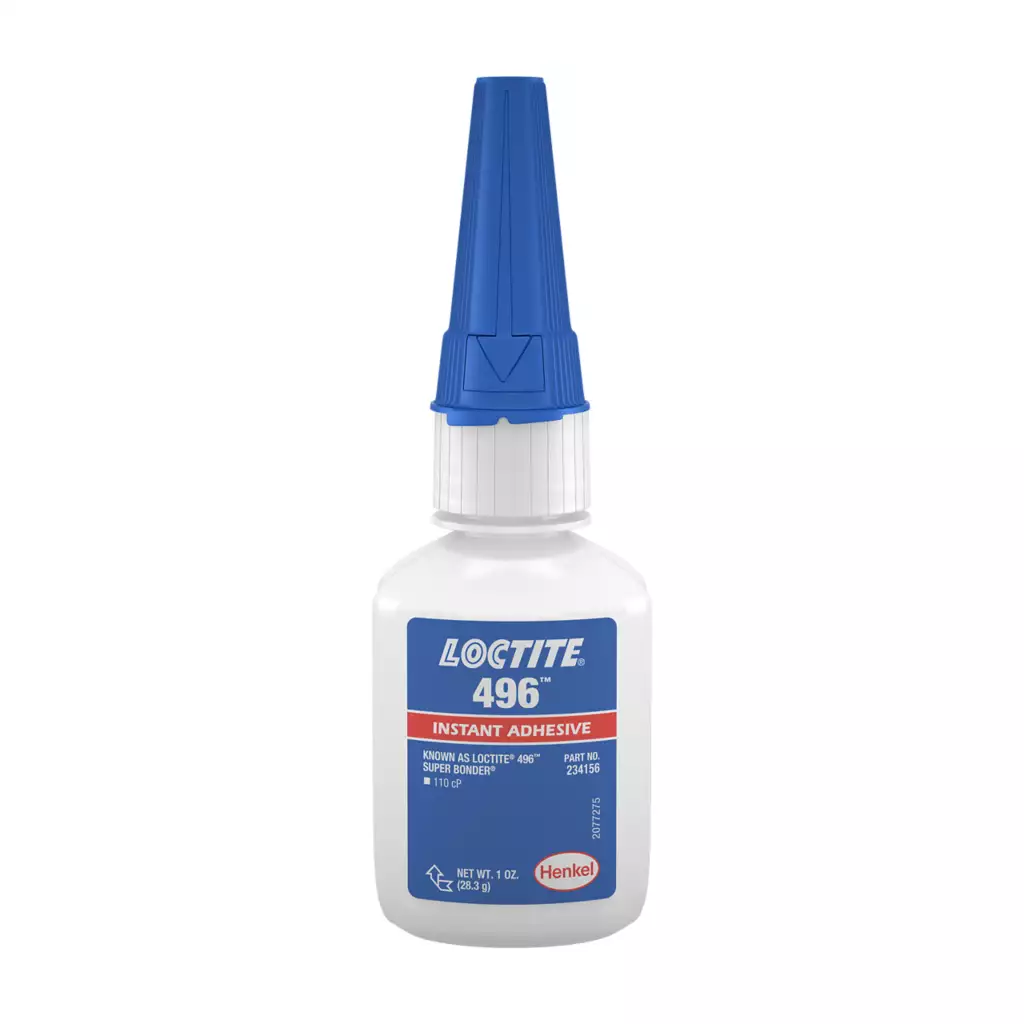
Product code: 496
Methyl cyanoacrylate instant adhesive for bonding metal and close-fitting parts, with low viscosity for very tight gaps. Also bonds rubbers and plastics.
LOCTITE
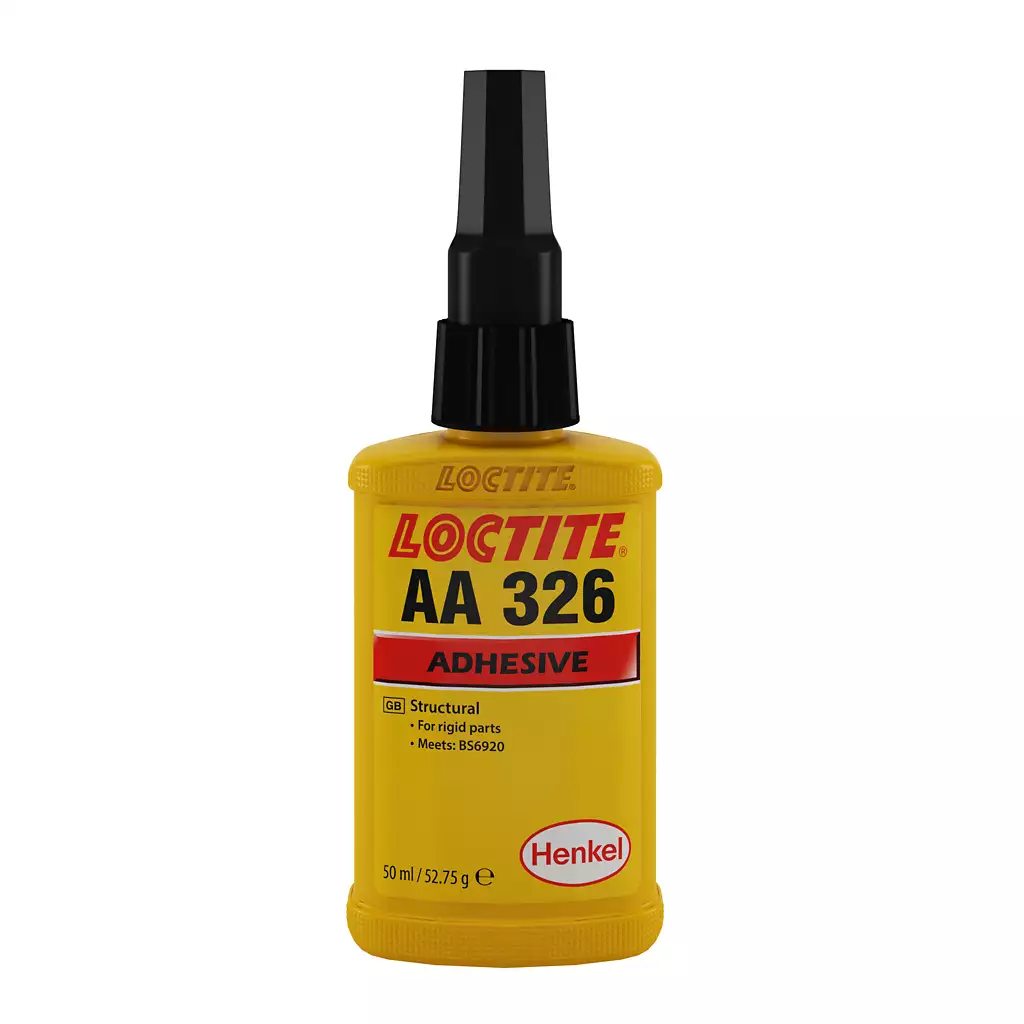
Product code: AA 326
LOCTITE AA 326 is a high-viscosity structural acrylic used with LOCTITE SF 7649 activator for fast metal bonding, such as ferrites on plated parts in electric motors.
LOCTITE
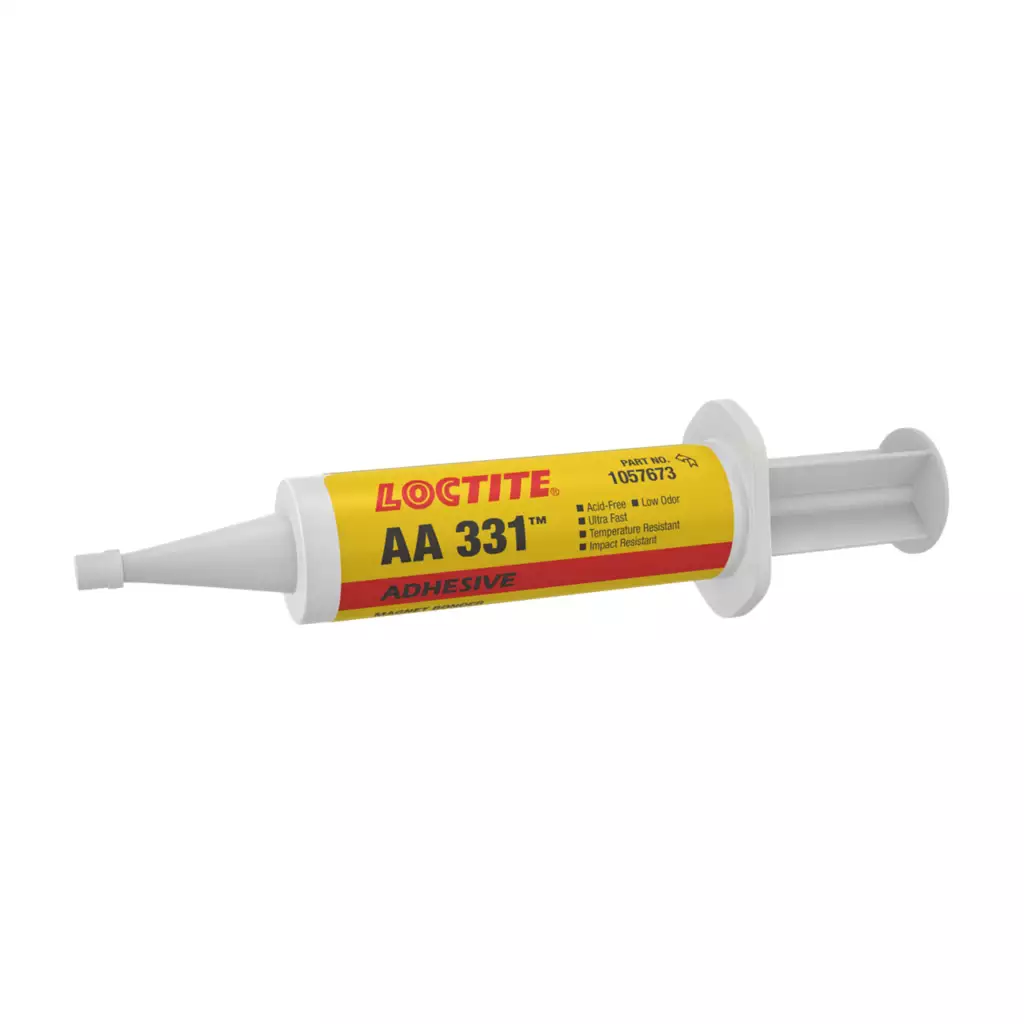
Product code: AA 331
LOCTITE AA 331 is a toughened, medium-viscosity acrylic paste used with LOCTITE SF 7387 activator for metal bonding in DC motors, magnets and pre-coated sheet metal.
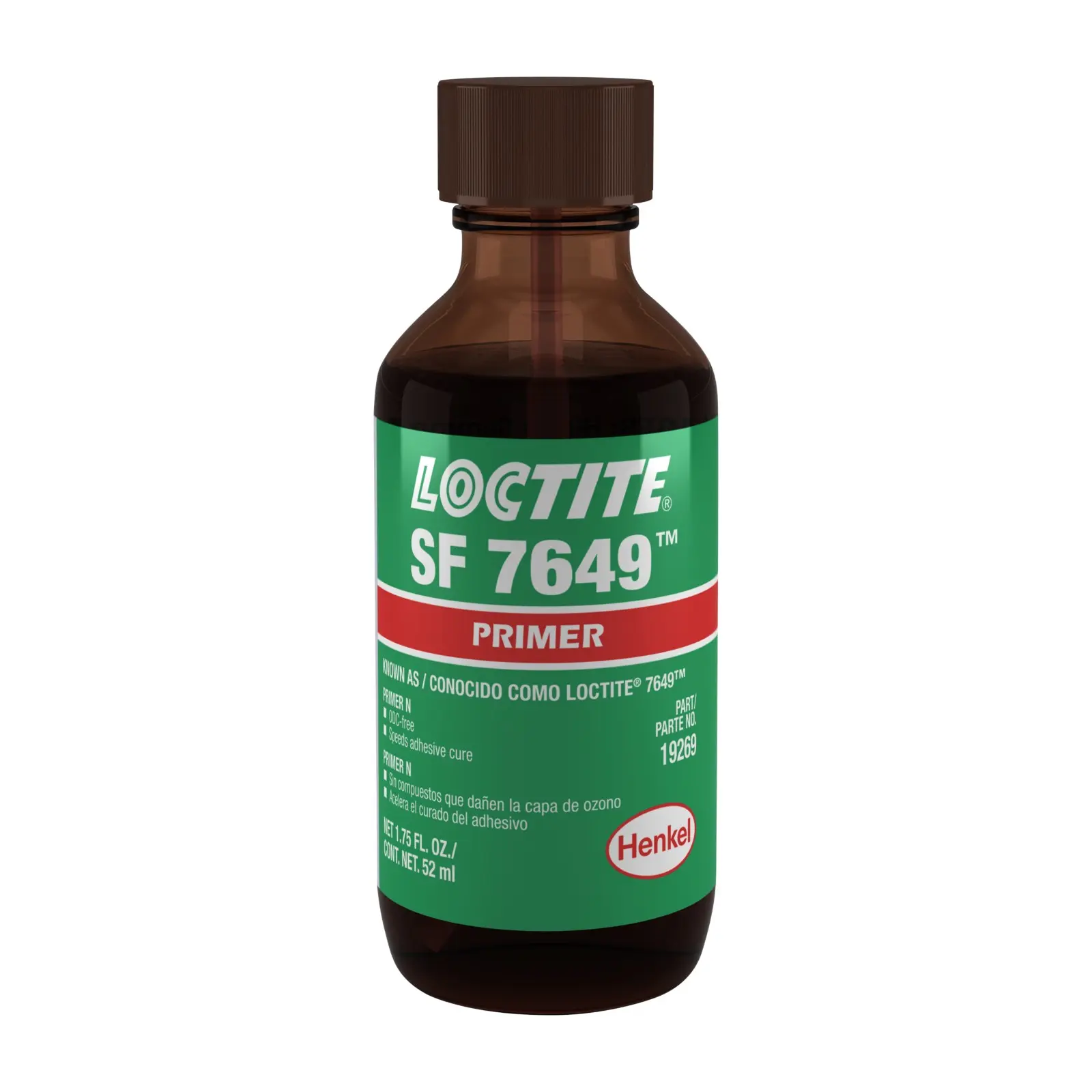
LOCTITE
Product code: SF 7649
Green activator for anaerobic adhesives and sealants, for passive metals, large bond gaps and temperatures below 15 °C. Stays active on the part for 30 days.
Where structural acrylics fit between instant adhesives and heavy systems, and how the activator process runs.
How cyanoacrylates cure, and how to pick among the 19 LOCTITE grades by viscosity, substrate and special need.
The broken faces say whether to fix the surface, the adhesive, the cure or the design. Learn to read them.
Tell us the substrates, the measured gap, the load direction and the takt time. We will review the TDS of both families with you and recommend a bench trial.
Not sure which product fits? Ask our assistant
Type the job, the material or a spec. It searches our published products and TDS values — no external AI.