
LOCTITE
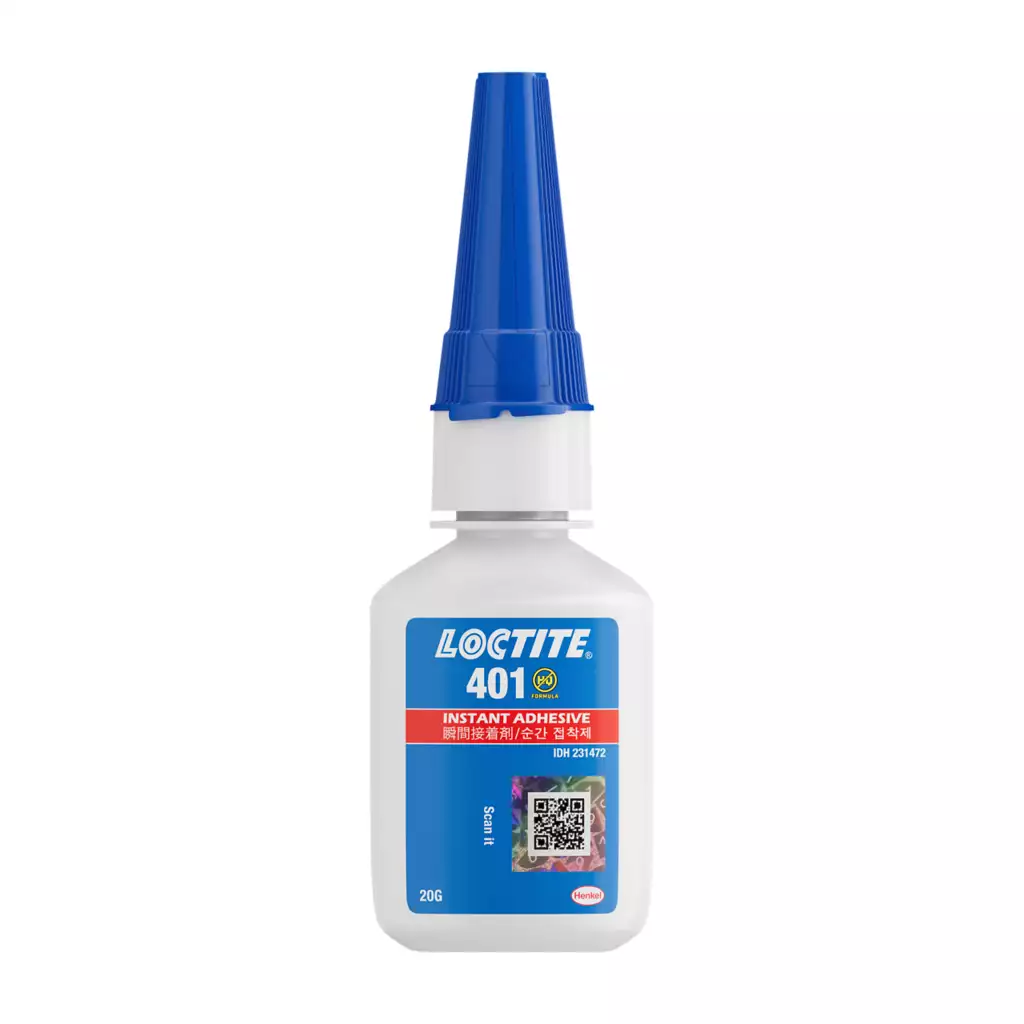
LOCTITE 401
Product code: 401
LOCTITE 401 is a general-purpose instant adhesive for fast assembly of close-fitting parts and repairs on metals, plastics, rubber and porous materials.
Technical guide
The ADVANCE catalog carries 19 LOCTITE cyanoacrylate instant adhesives, and most of them look identical in the bottle. The differences are viscosity, what they are formulated to bond, and one or two special properties. This guide explains how the chemistry cures and then walks through the three choices that pick the right grade.
A cyanoacrylate is a one-part liquid that polymerizes when it meets the trace of moisture present on almost every surface. The reaction starts at the surface and works inward through the adhesive film, which is why a thin bond line between close-fitting parts fixtures in seconds while a thick drop stays liquid for minutes. Humidity in the room, the chemistry of the surface and the gap all change the speed.
Three practical rules follow. Use as little adhesive as will wet the joint, because excess cures slowly and the vapor from it settles as a white haze, known as blooming. Match viscosity to the gap, because the product cannot cure through a gap it was not formulated for. And help the surface where it needs help: a primer for low-energy plastics, an activator for slow or dry surfaces.
Viscosity decides where the adhesive goes and how large a gap it can bridge. The very low viscosity grades wick into a joint that is already assembled; the gels stay on a vertical face and fill visible gaps. Between them sit the general-purpose liquids that most assembly work uses. Measure the gap on real parts, then read the class from the table.
| Viscosity class | Gap and joint | Products |
|---|---|---|
| Very low, wicking | Close-fitting parts, capillary flow into assembled seams, ultra-thin films | LOCTITE 406, 420, 496 |
| Low | General close-fitting parts, thin bond lines, fast fixture | LOCTITE 380, 401, 404, 414, 435, 460, 480, 495 |
| Medium | Small gaps, slightly rough faces, less run-off on placement | LOCTITE 403, 416, 444, 498 |
| Gel, high viscosity | Visible gaps, vertical and overhead faces, porous materials | LOCTITE 382, 454, 499 |
Within a viscosity class, the substrate narrows the list. For plastics and rubber, the options are LOCTITE 404 for O-rings and elastomers, LOCTITE 406 for plastics and elastomers including EPDM, and LOCTITE 414 as a general-purpose plastic bonder. For metal, LOCTITE 496 is particularly suited to metal substrates and close-fitting parts, and LOCTITE 480 for metal-to-metal and metal-to-rubber joints under shock or peel.
Polypropylene, polyethylene and PTFE are the exception to everything above. Their surface energy is too low for any cyanoacrylate to wet, and LOCTITE 495, 496, 498 and several other grades bond these plastics with LOCTITE SF 770 primer. Porous or acidic surfaces such as wood, leather, paper or some rubbers favor the surface-insensitive grades: LOCTITE 401, 435 and 454 are described for porous materials, and 435 for acidic surfaces.
Several grades exist for one property that the general-purpose products do not have. If the joint sees impact, peel, heat or a cosmetic surface, or if it lives on a circuit board, start from this table instead and then check the viscosity fits.
| Special need | Products | Catalogue description |
|---|---|---|
| Impact, peel and shock loads | LOCTITE 380, 435, 480 | Rubber-toughened for peel, impact and shear; 380 and 480 are black, 435 is clear |
| Low odor, low bloom | LOCTITE 403, 460 | Alkoxyethyl chemistry for cosmetic joints and where vapor control matters |
| Heat resistance, thermal cycling | LOCTITE 498, 499 | General-purpose grades where heat resistance is required; 499 is a gel for vertical faces |
| Electronics: wire tacking, standoffs, stiffeners | LOCTITE 382, 444 | Formulated for circuit-board work; 382 is a gel, 444 a medium-viscosity liquid |
| EPDM and tight elastomer joints | LOCTITE 406 | Exceptionally low viscosity for plastics and elastomers including EPDM |
| Low-strength fastener locking, tamperproofing | LOCTITE 425 | Low-strength grade for metal and plastic fasteners, screw and potentiometer heads |
| Faster fixture, slow or dry surfaces | LOCTITE SF 712 | Solvent-based activator that accelerates cure of LOCTITE cyanoacrylates |
| Removal, debonding, equipment cleaning | LOCTITE SF 768 | Solvent cleaner for cured cyanoacrylate; confirm plastic compatibility |
LOCTITE SF 712 is the catalog’s cyanoacrylate activator: a solvent-based product that accelerates the cure and supports rapid fixturing in electronics and industrial assembly. Use it when the surface is dry, acidic or inactive, when the gap slows the cure, or when the line cannot wait for the natural fixture time. It changes the cure, so test the finished joint with and without it, and follow the TDS on which face it goes on and how long it stays active.
LOCTITE SF 768 is the very low viscosity solvent cleaner for the other end of the process: removing cured cyanoacrylate from surfaces, debonding parts assembled with instant adhesive, and cleaning dispensing equipment. Thin layers are wiped away after application; thick beads or bonded parts need re-application or soaking. Confirm its compatibility with the plastics in the assembly before use.
Work through the choices in this order and the shortlist is usually one or two grades.
Cyanoacrylate complaints almost always come from the way the product was used, not the grade. These are the usual ones.
LOCTITE
Product code: 401
LOCTITE 401 is a general-purpose instant adhesive for fast assembly of close-fitting parts and repairs on metals, plastics, rubber and porous materials.
LOCTITE
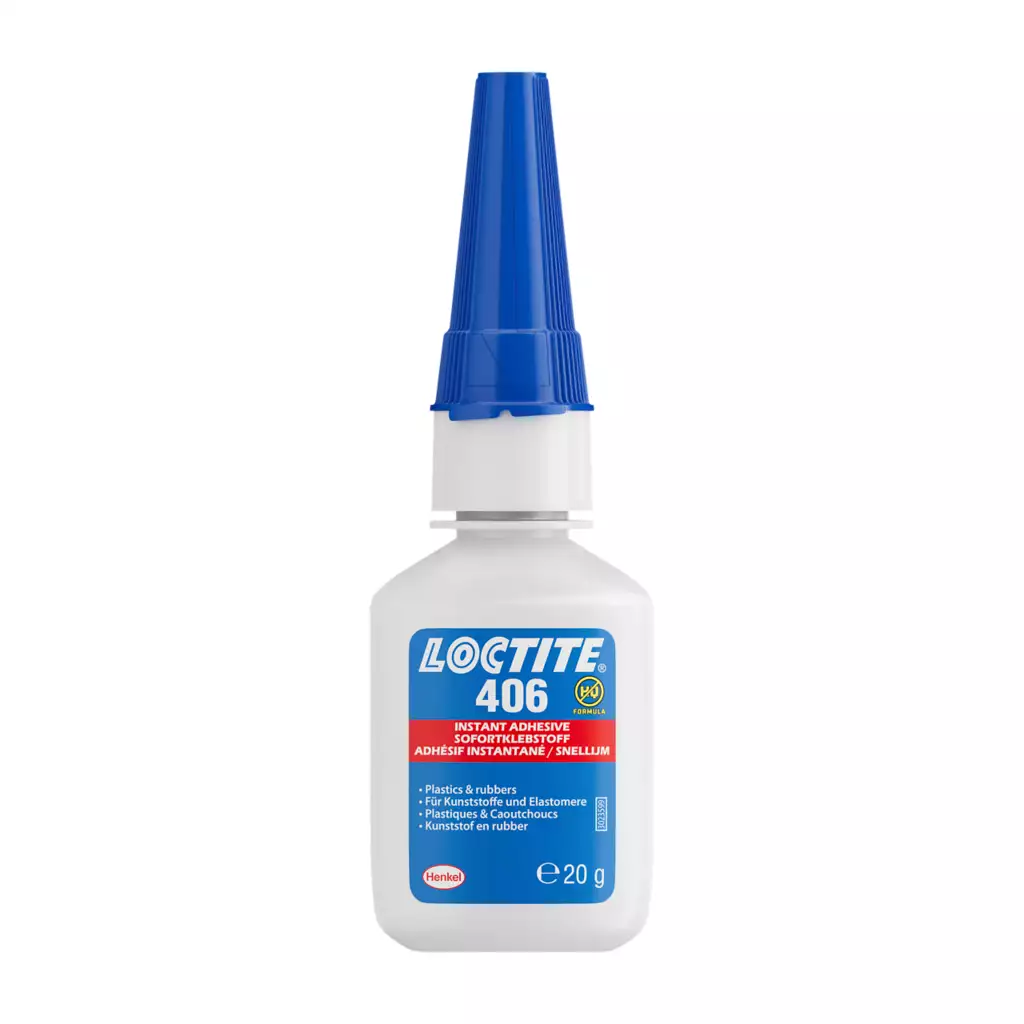
Product code: 406
LOCTITE 406 is a very low-viscosity instant adhesive for fast bonding of plastics and rubbers, including EPDM, forming an ultra-thin film in tight joints.
LOCTITE
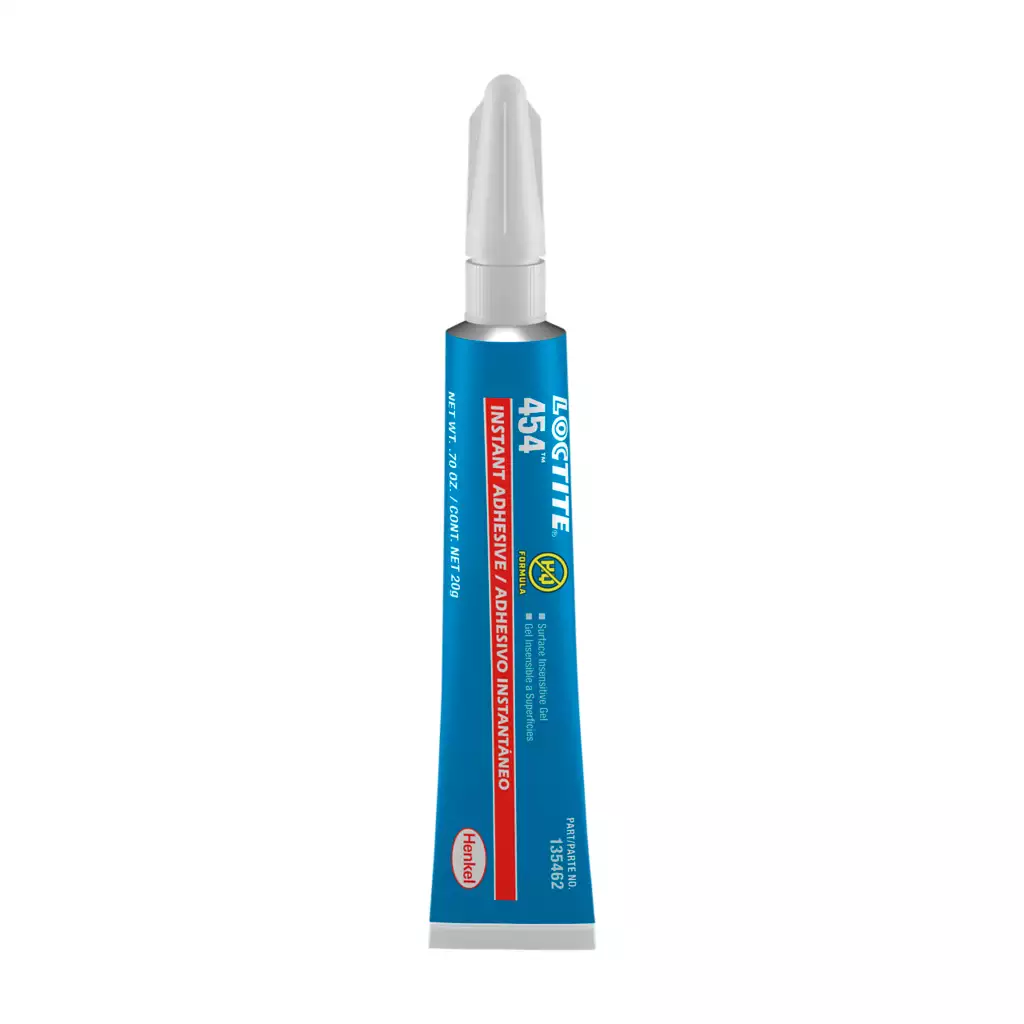
Product code: 454
LOCTITE 454 is a cyanoacrylate gel for vertical and overhead bonding, large gaps and quick repairs on metals, plastics, elastomers and porous materials.
LOCTITE
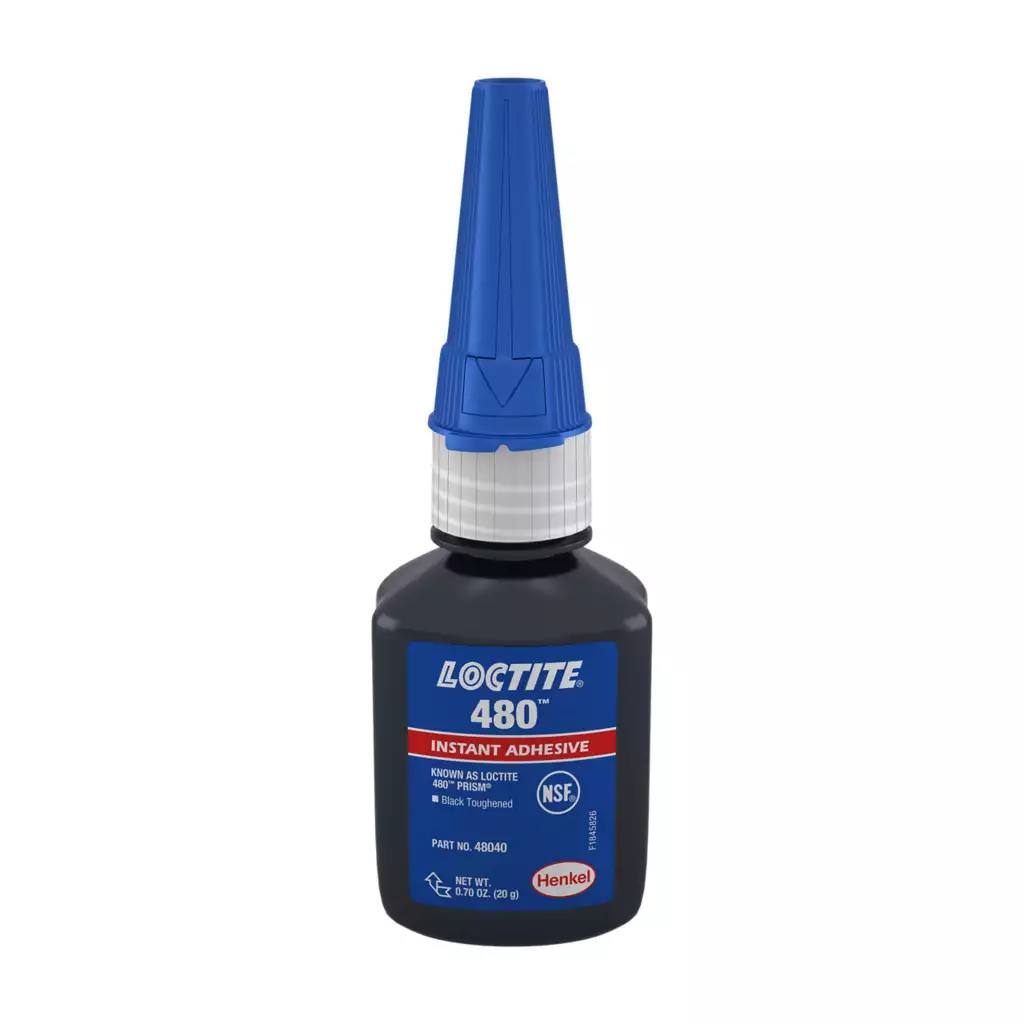
Product code: 480
LOCTITE 480 is a black, rubber-toughened instant adhesive for close-fitting parts that face shock or peel loads, with added flexibility on metals, plastics and rubbers.
LOCTITE
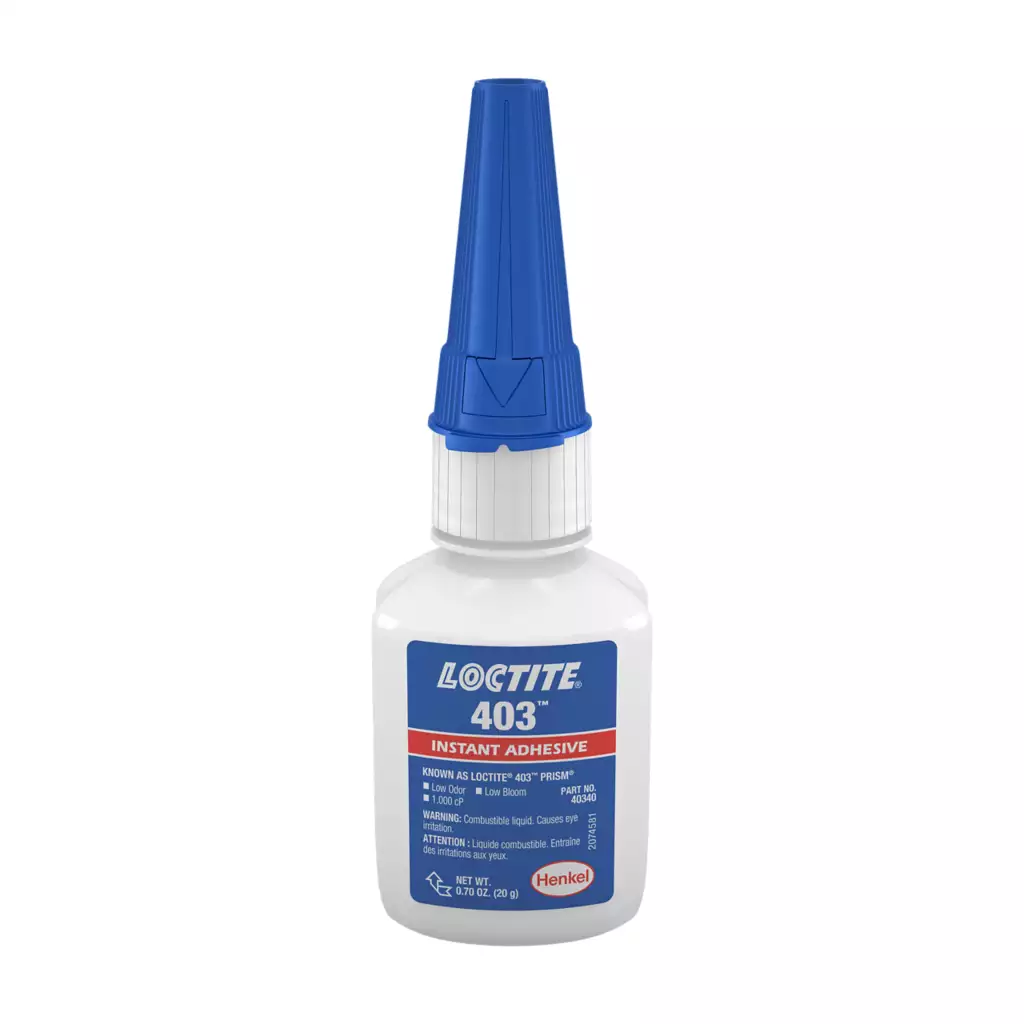
Product code: 403
LOCTITE 403 is a low-odor, low-bloom instant adhesive for cosmetic assemblies and work areas where vapor control is difficult, on metals, plastics and porous materials.
LOCTITE
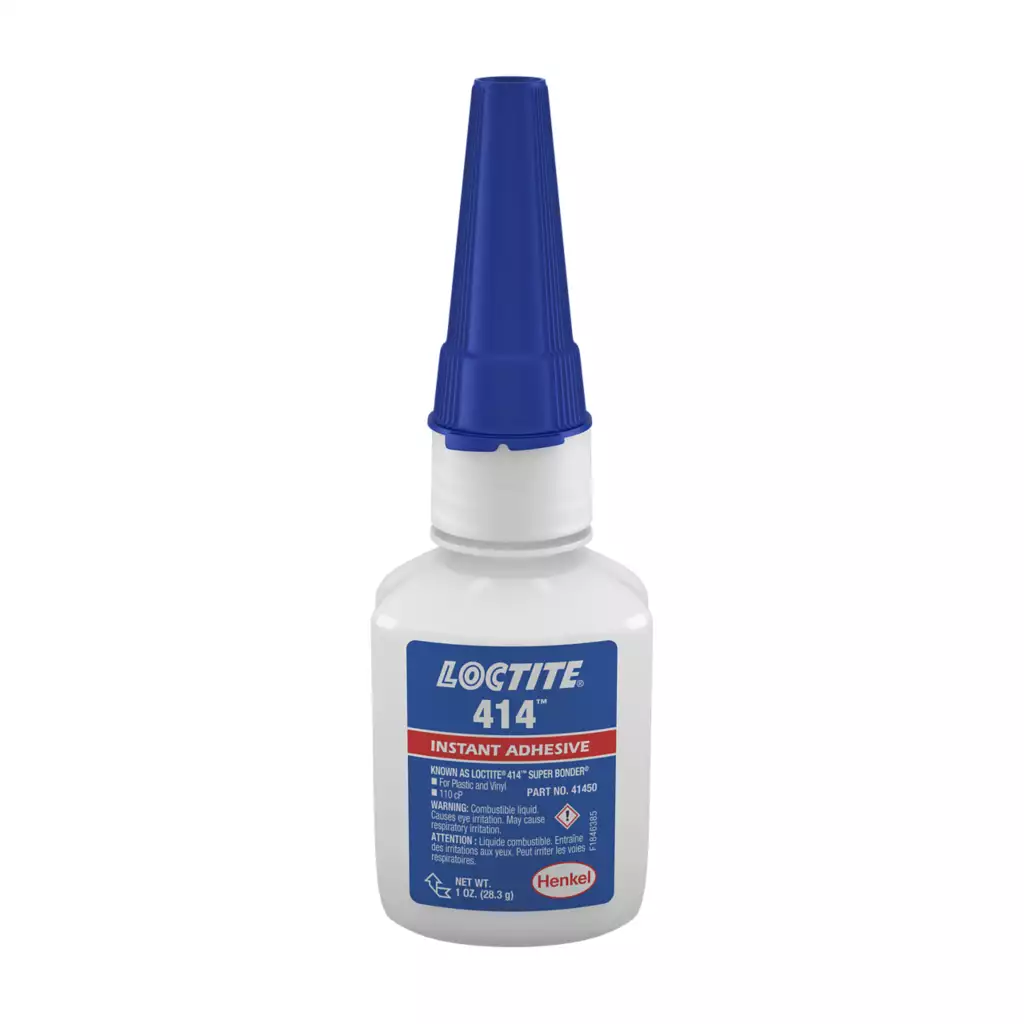
Product code: 414
LOCTITE 414 is a general-purpose, low-viscosity instant adhesive used mainly for bonding plastics, and it also works on rubbers and metals.
LOCTITE
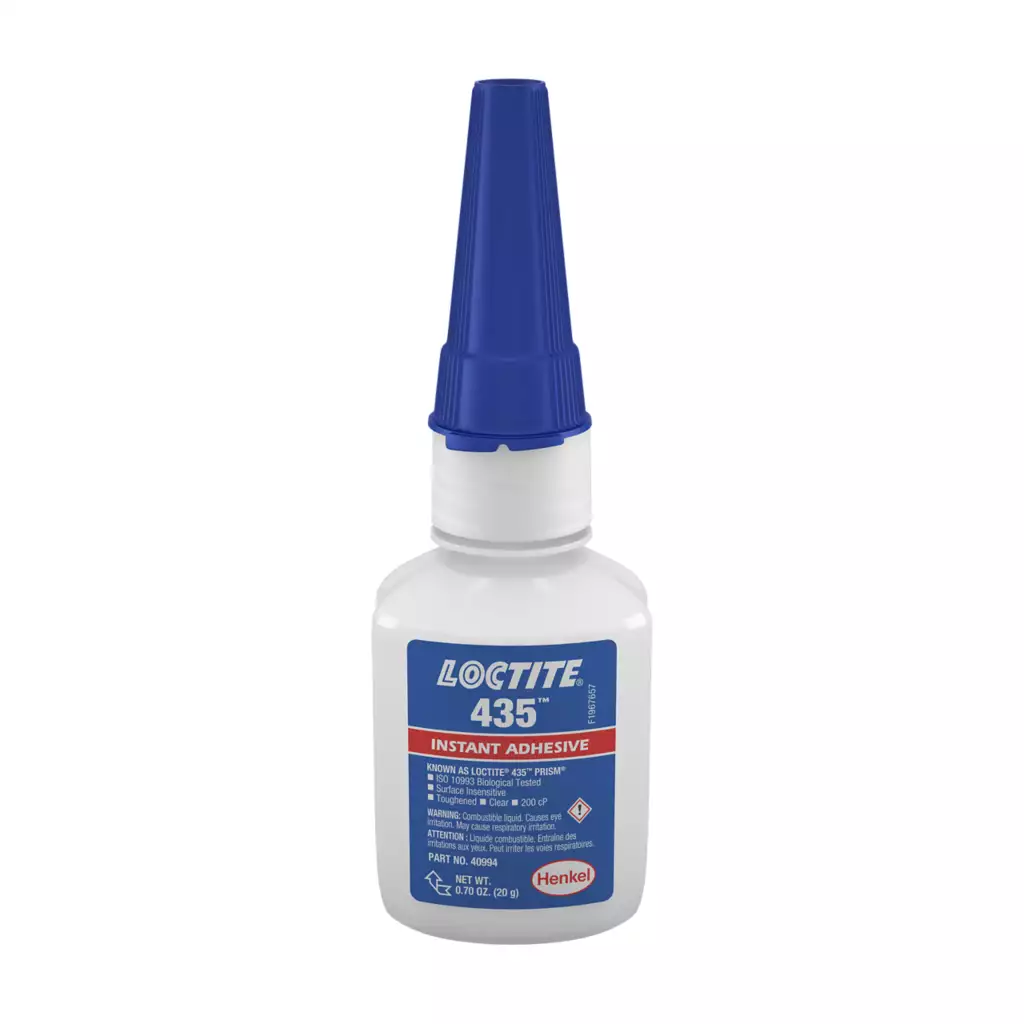
Product code: 435
LOCTITE 435 is a rubber-toughened instant adhesive for parts under impact and shock, bonding metals, plastics, rubber, magnets and porous or acidic surfaces.
LOCTITE
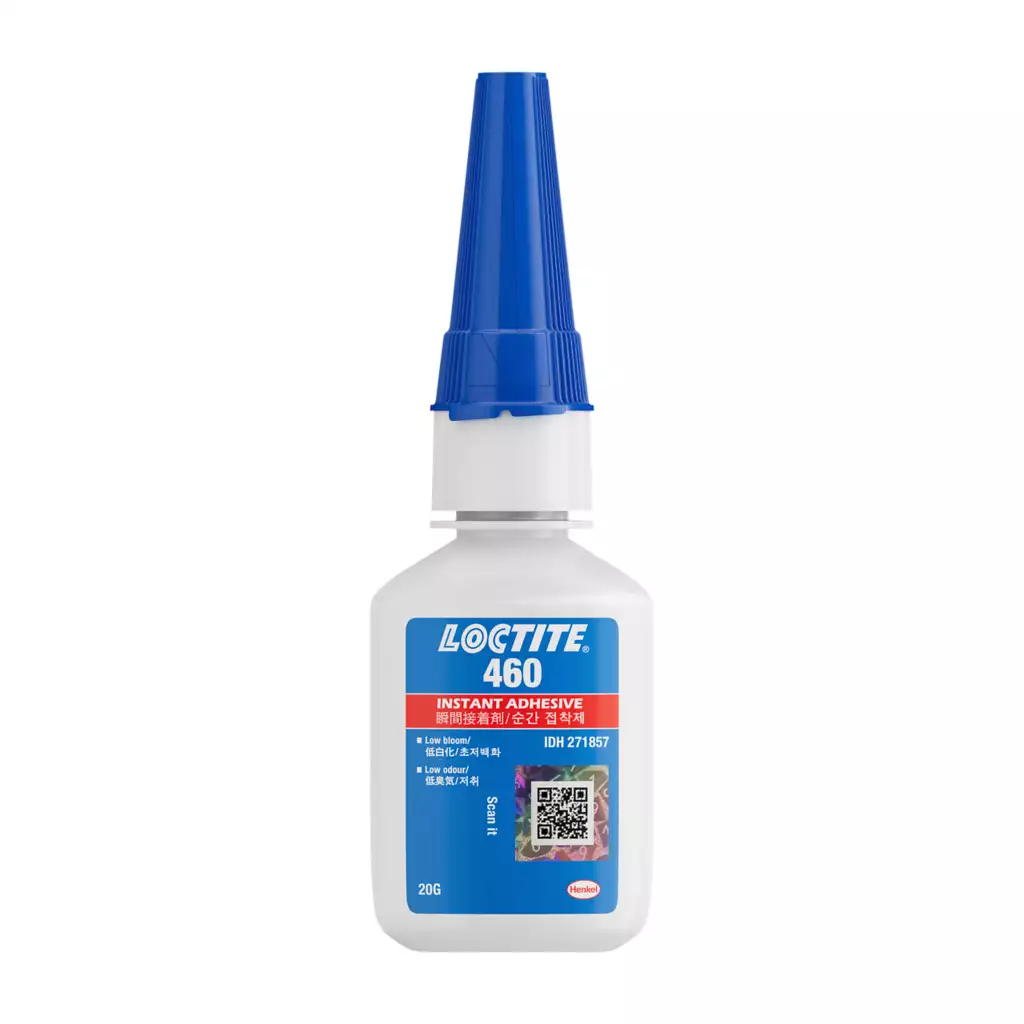
Product code: 460
LOCTITE 460 is a low-odor, low-bloom, low-viscosity instant adhesive for close-fitting parts where fumes or surface haze are a concern and vapor control is difficult.
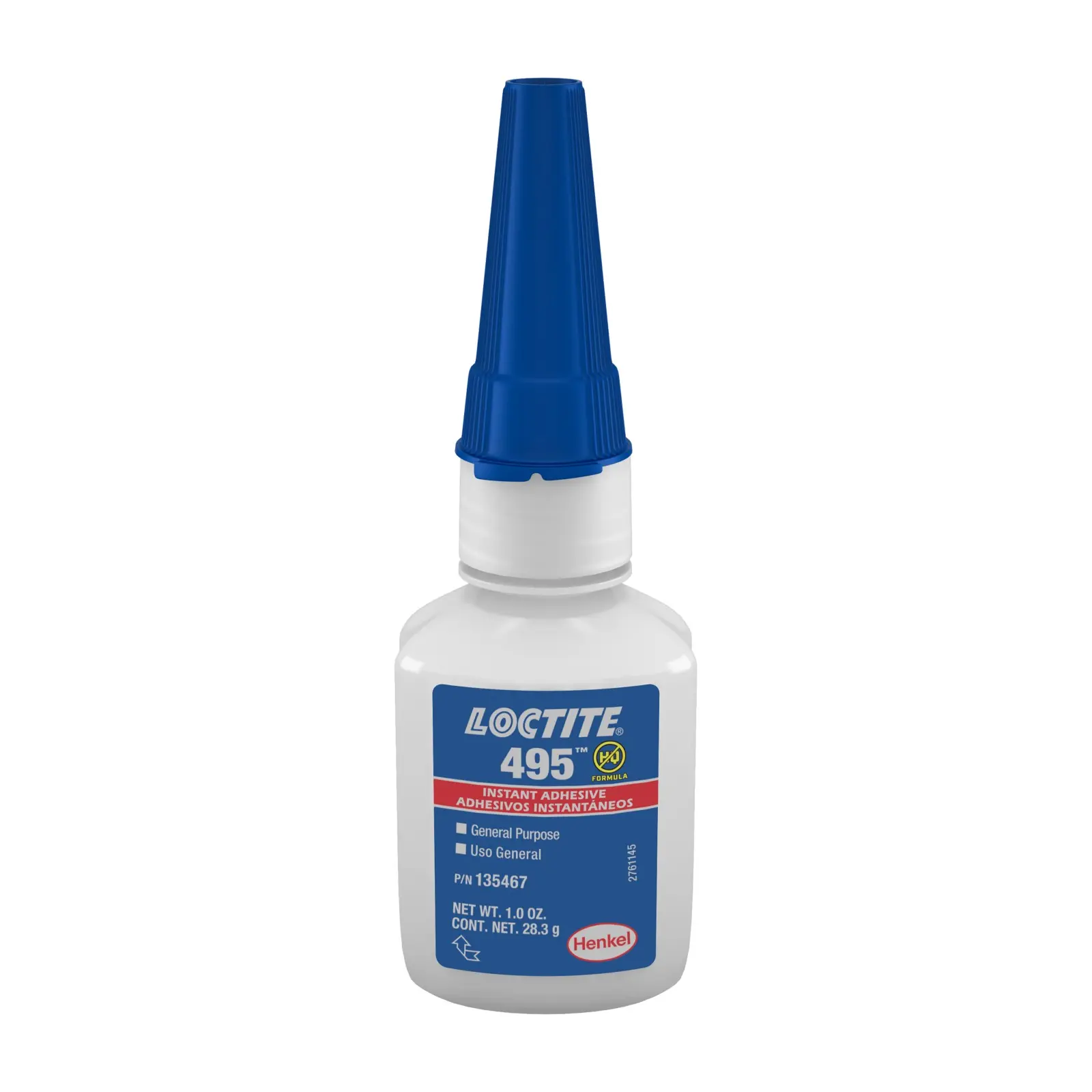
LOCTITE
Product code: 495
LOCTITE 495 is a low-viscosity, general-purpose instant adhesive for fast bonding and quick repairs on plastics, rubbers and metals, fixturing in seconds.
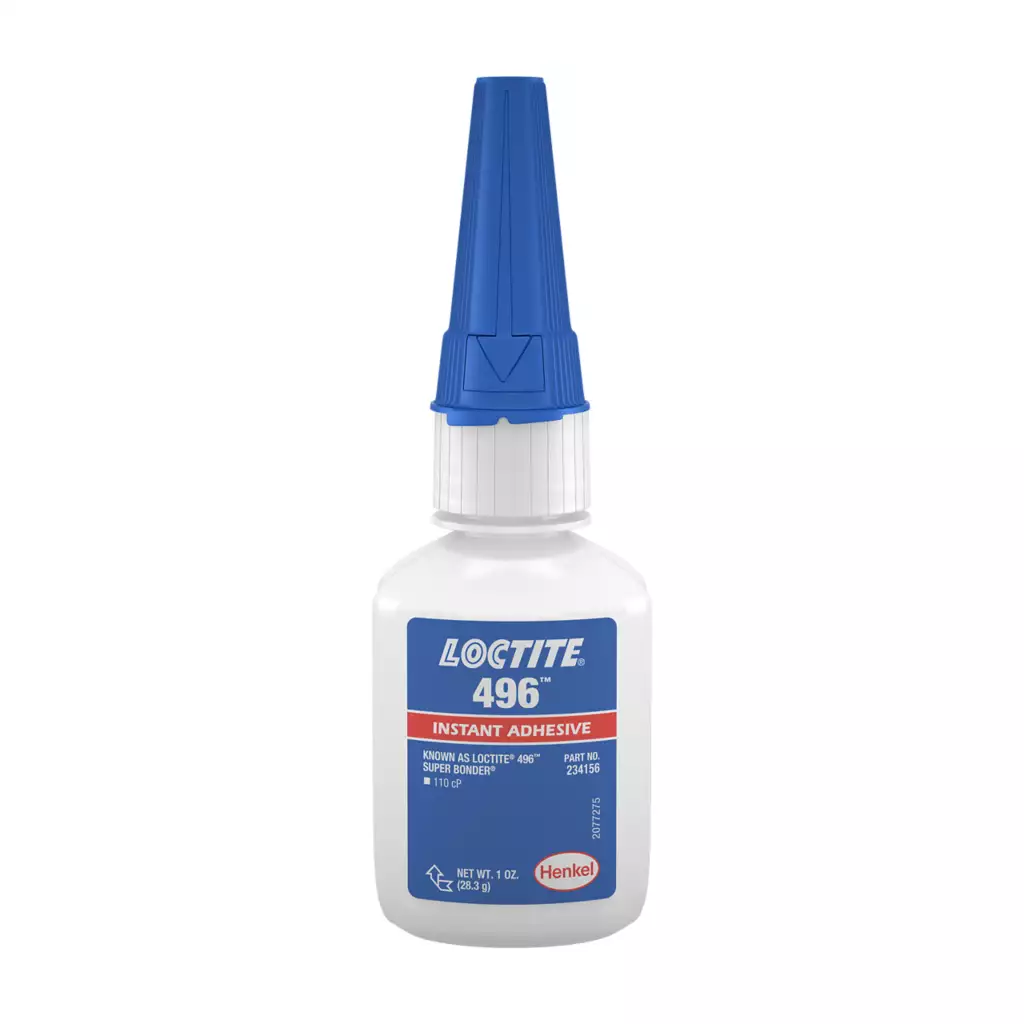
LOCTITE
Product code: 496
Methyl cyanoacrylate instant adhesive for bonding metal and close-fitting parts, with low viscosity for very tight gaps. Also bonds rubbers and plastics.
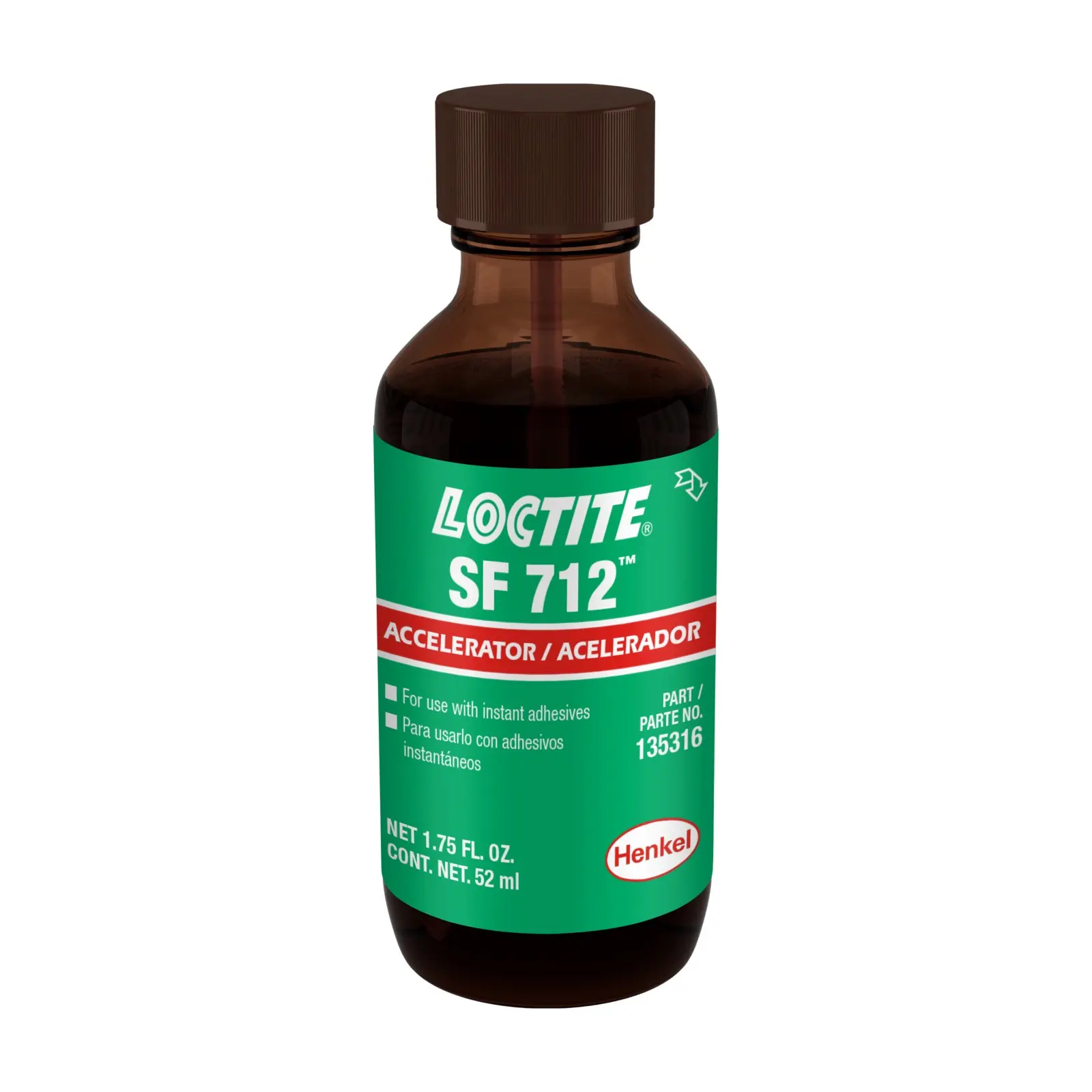
LOCTITE
Product code: SF 712
Solvent-based Activator that speeds the cure of LOCTITE cyanoacrylate adhesives, applied before or after bonding. Used for securing wires or coils to PCBs.
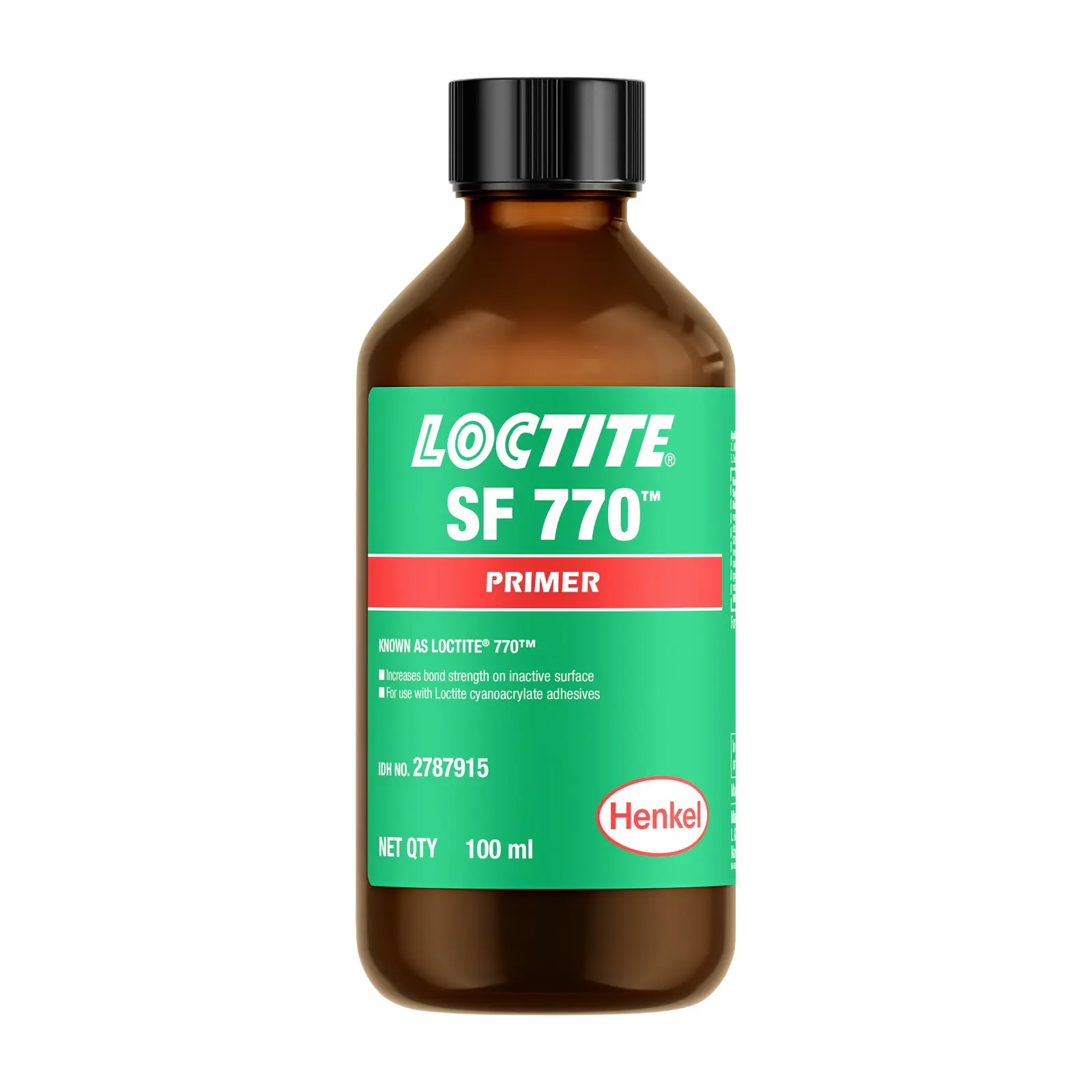
LOCTITE
Product code: SF 770
Primer that makes polyolefins and other low energy surfaces bondable with cyanoacrylate adhesives, including PE, PP, PTFE and thermoplastic rubber.
Blooming, slow cure, brittle joints, PP and PE that will not bond, heat failures: the cause and fix for each.
Thin, thinnest and gel: how viscosity decides gap, substrate, position and porous parts for three grades.
How to prepare steel, aluminum, plated metal, plastics, rubber and glass, and which LOCTITE helpers to use.
Cyanoacrylates 480 and 496 versus structural acrylics AA 326 and AA 331: gap, load, cure path and process.
Tell us the two materials, the gap and what the joint must survive. We will shortlist the grades and review their TDS with you.
Not sure which product fits? Ask our assistant
Type the job, the material or a spec. It searches our published products and TDS values — no external AI.