
LOCTITE
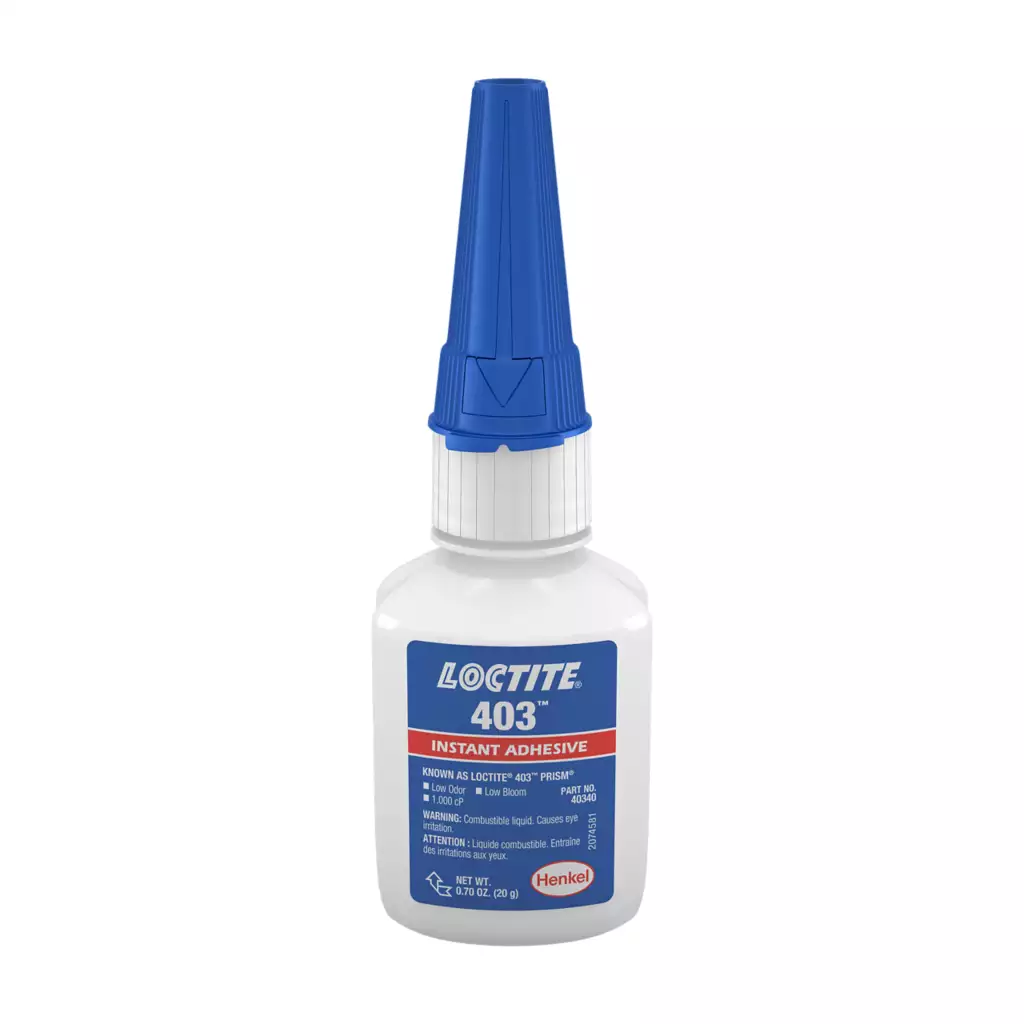
LOCTITE 403
Product code: 403
LOCTITE 403 is a low-odor, low-bloom instant adhesive for cosmetic assemblies and work areas where vapor control is difficult, on metals, plastics and porous materials.
Troubleshooting
Cyanoacrylate instant adhesives are fast and simple, which is why their failures look mysterious: a white haze appears overnight, a joint that fixtured in seconds never got hard, a part that held in the hand shatters at the first knock. Each symptom has a specific chemical cause and a specific fix.
Sort the complaint into one of the groups below before changing anything. They overlap, because the conditions that slow cure also encourage blooming, but the first fix differs.
Blooming is cyanoacrylate monomer that evaporated from the joint, met moisture in the air and polymerized as a white dust wherever it landed. It is not a cure failure and does not weaken the bond; it is a cosmetic problem. It gets worse with anything that leaves liquid monomer exposed longer: squeeze-out, slow cure, still air and closed housings where the vapor cannot escape.
Attack it from four sides. Reduce the amount: a thin film is all a cyanoacrylate needs, and the squeeze-out is what blooms. Shorten the exposure: assemble immediately and, where fixture is slow, apply the activator LOCTITE SF 712 to one surface. Move the air with a gentle draft. Change the chemistry: LOCTITE 403 and LOCTITE 460 are low-odor, low-bloom grades described for cosmetic applications, in medium and low viscosity. Residue already on a surface wipes off with LOCTITE SF 768, described for removing cured cyanoacrylate.
Cyanoacrylates cure by reacting with the trace of moisture on almost every surface. Anything that removes, neutralizes or distances that moisture slows the cure: very dry air, parts straight from a drying oven, and acidic surfaces such as some plated or anodized finishes, leather or certain woods. A large gap does the same, because the moisture is on the two surfaces and the adhesive in the middle of a thick bond line has nothing to react with.
Keep the bond line thin: a thinner film cures faster and stronger. For an unavoidable gap, a vertical surface or a porous material, move to the gel LOCTITE 454, described as surface-insensitive and suitable for large bond gaps. On acidic or dry surfaces, LOCTITE 435 is described as surface-insensitive and suitable for acidic surfaces, and LOCTITE 403 and LOCTITE 460 as surface-insensitive. Where cure is still too slow, LOCTITE SF 712 on one surface accelerates cure and fixturing; activators can reduce ultimate strength on some substrates, so confirm on production parts.
A standard cyanoacrylate cures to a hard, glassy polymer. In shear on rigid parts that is a strength; on rubber, flexible plastics or anything that sees impact, peel or bending it is the weakness: the first knock or flex cracks the glassy film and the crack runs through the whole bond line.
The fix is a rubber-toughened grade, not more adhesive. LOCTITE 480 is a black, rubber-toughened, low-viscosity grade described for close-fitting parts with strong peel, impact and shear performance on metals, plastics and rubbers, including metal-to-rubber and magnet bonding. LOCTITE 435 is the clear rubber-toughened grade with high impact resistance and peel strength, also described as surface-insensitive and suitable for porous and acidic surfaces. Keep the bond line thin even with these grades; toughening does not turn a cyanoacrylate into a gap filler.
Polypropylene, polyethylene and PTFE have low surface energy: the adhesive beads up instead of wetting, and the cured film lifts off cleanly. No cyanoacrylate bonds them on its own. LOCTITE 495, LOCTITE 496 and LOCTITE 498 bond PP, PE and PTFE when used with LOCTITE SF 770 primer, and LOCTITE 403, LOCTITE 454 and LOCTITE 460 do the same. The primer goes on the plastic and dries before the adhesive; never apply activator over a primed surface.
Two more plastic problems look like adhesive failures but are not. Stress cracking: amorphous plastics such as polycarbonate and acrylic craze where liquid monomer or activator solvent touches a molded-in or jig-induced stress; use the minimum of adhesive, keep solvents off the part and relieve the stress. Heat: a standard cyanoacrylate softens as the part runs hot. For heat or thermal cycling, LOCTITE 498 (medium viscosity) and LOCTITE 499 (non-drip gel) suit applications where heat resistance is required.
The table condenses the sections above into the order to try things. Change one variable per trial.
| Symptom | Likely cause | Check | Fix |
|---|---|---|---|
| White haze around the joint next morning | Monomer vapor: too much adhesive, slow cure, still air | Squeeze-out, airflow at the station, time to fixture | Less adhesive, airflow, SF 712 on one side, or low-bloom 403 or 460 |
| Wet for minutes; parts from a dryer or dry room | Too little surface moisture | Humidity at the station, part temperature on arrival | Let parts equilibrate; SF 712 on one surface; thin bond line |
| Edges cured, center still liquid | Bond gap too large for a liquid grade | Measure the gap | Close the fit, or gel 454 |
| Strong in pull, cracks on impact or flex | Glassy standard grade on a peel or shock load | Fracture is brittle, through the adhesive | Rubber-toughened 480, 435 or 380; keep the film thin |
| PP, PE or PTFE part peels off clean | Low surface energy, no wetting | Adhesive beads on the surface; film on one side only | SF 770 primer, dried, then 495, 496 or 498 |
| Bond failed after the assembly ran hot | Standard grade beyond its heat limit | Service temperature and cycling against the TDS | Heat-resistant 498 or gel 499 |
Work through the steps with production parts at the production station; a bench test in another room with different humidity tells you nothing about the line.
Less adhesive, airflow, a thin bond line and an activator solve most residue and cure complaints without touching the bill of materials. Change the grade when the cause is the chemistry itself.
LOCTITE
Product code: 403
LOCTITE 403 is a low-odor, low-bloom instant adhesive for cosmetic assemblies and work areas where vapor control is difficult, on metals, plastics and porous materials.
LOCTITE
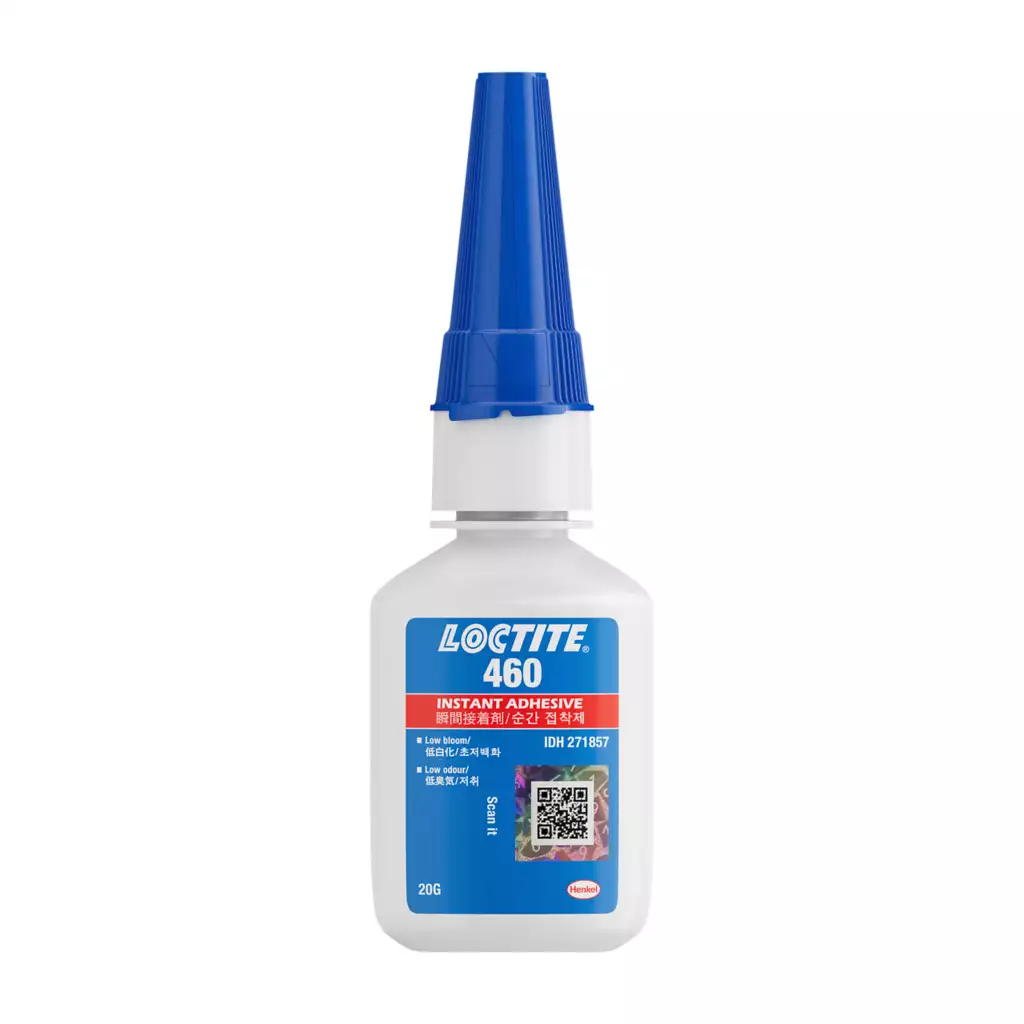
Product code: 460
LOCTITE 460 is a low-odor, low-bloom, low-viscosity instant adhesive for close-fitting parts where fumes or surface haze are a concern and vapor control is difficult.
LOCTITE
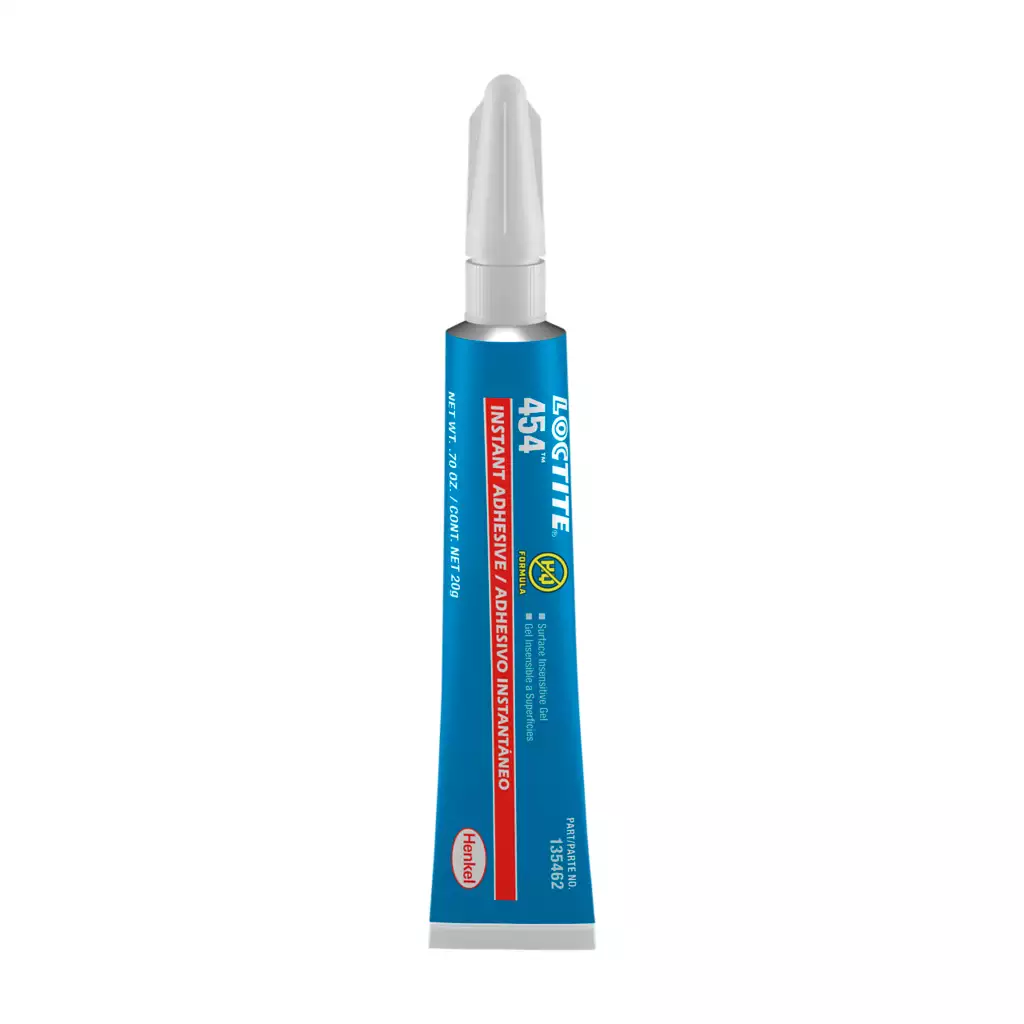
Product code: 454
LOCTITE 454 is a cyanoacrylate gel for vertical and overhead bonding, large gaps and quick repairs on metals, plastics, elastomers and porous materials.
LOCTITE
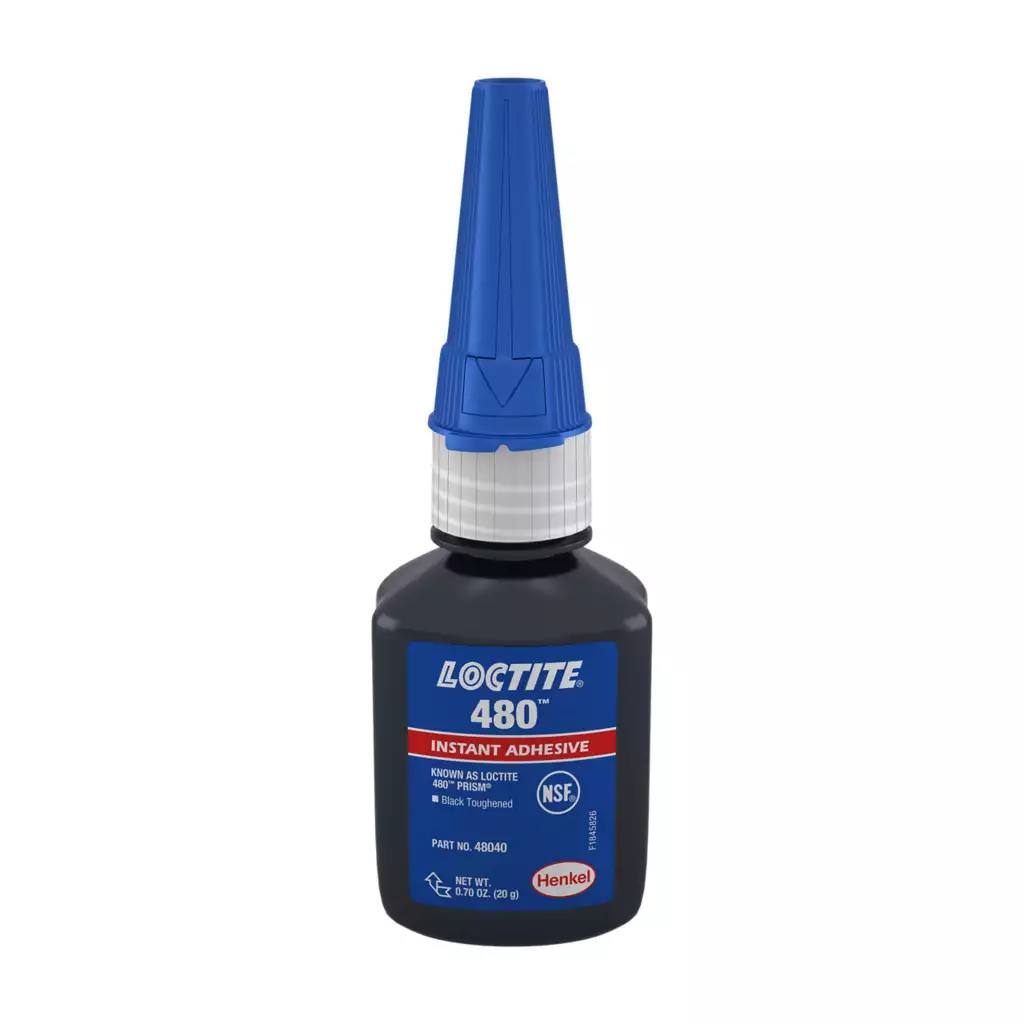
Product code: 480
LOCTITE 480 is a black, rubber-toughened instant adhesive for close-fitting parts that face shock or peel loads, with added flexibility on metals, plastics and rubbers.
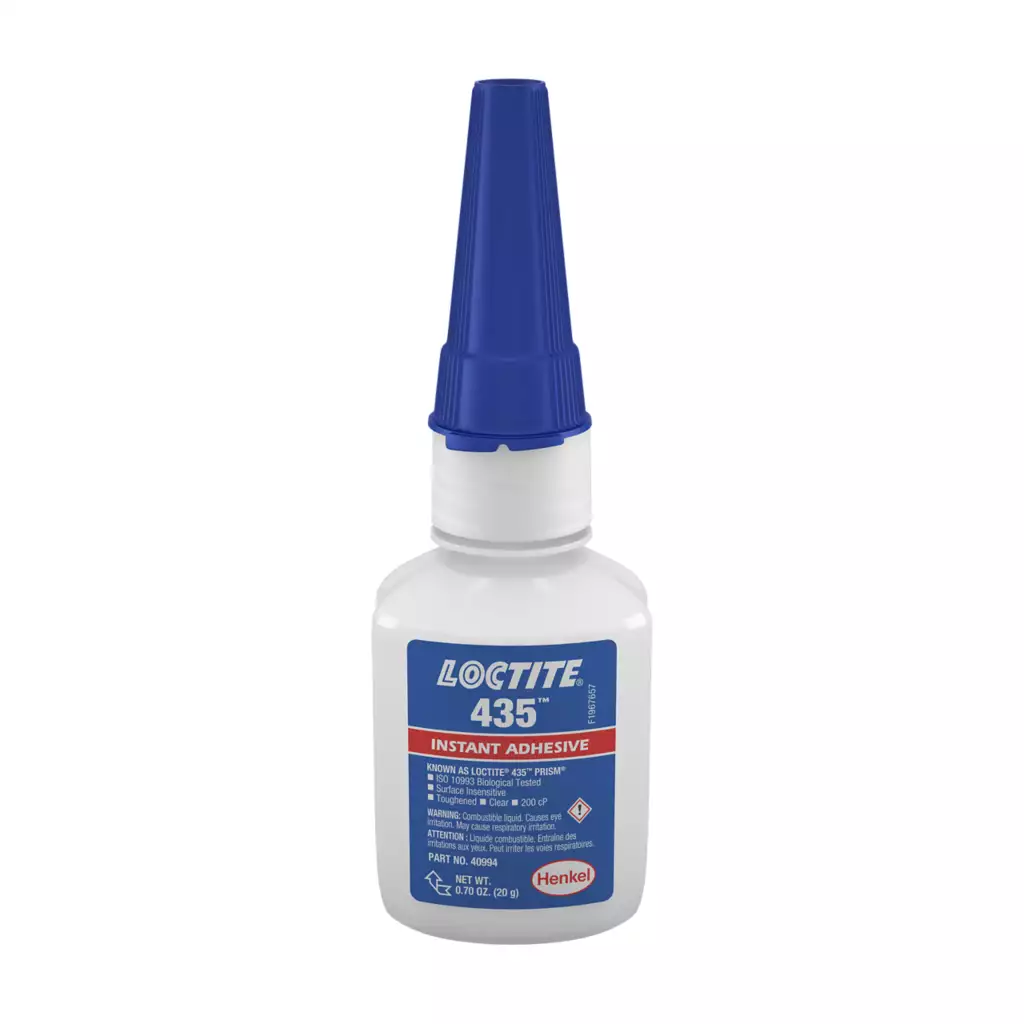
LOCTITE
Product code: 435
LOCTITE 435 is a rubber-toughened instant adhesive for parts under impact and shock, bonding metals, plastics, rubber, magnets and porous or acidic surfaces.
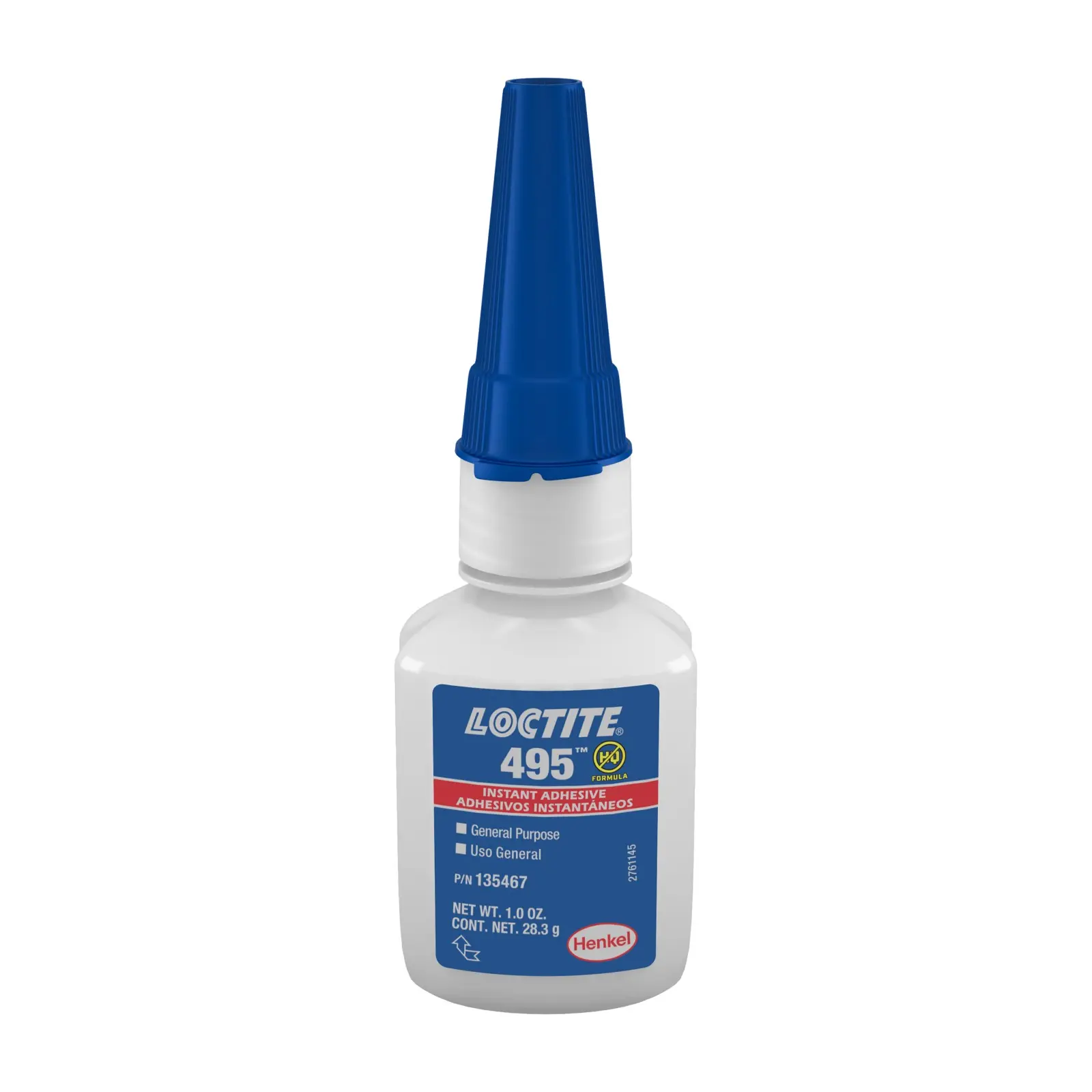
LOCTITE
Product code: 495
LOCTITE 495 is a low-viscosity, general-purpose instant adhesive for fast bonding and quick repairs on plastics, rubbers and metals, fixturing in seconds.
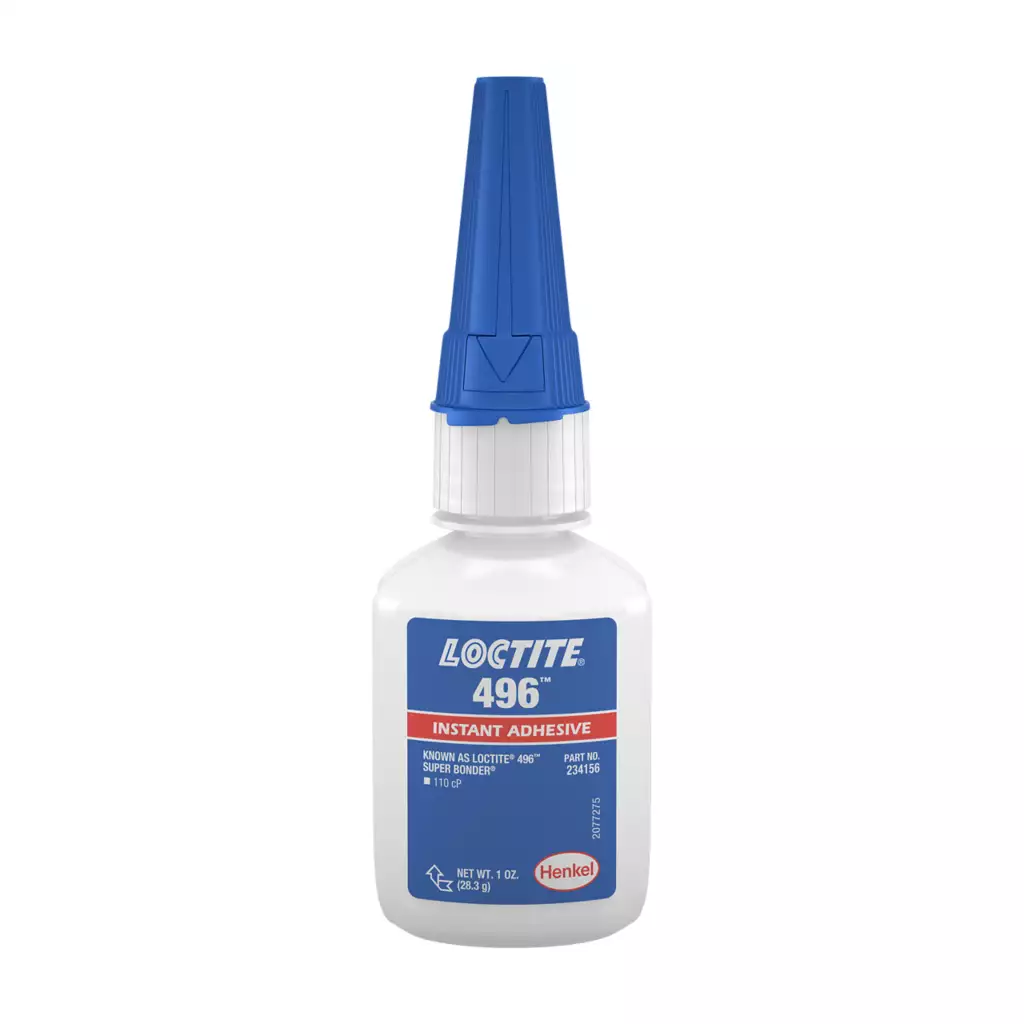
LOCTITE
Product code: 496
Methyl cyanoacrylate instant adhesive for bonding metal and close-fitting parts, with low viscosity for very tight gaps. Also bonds rubbers and plastics.
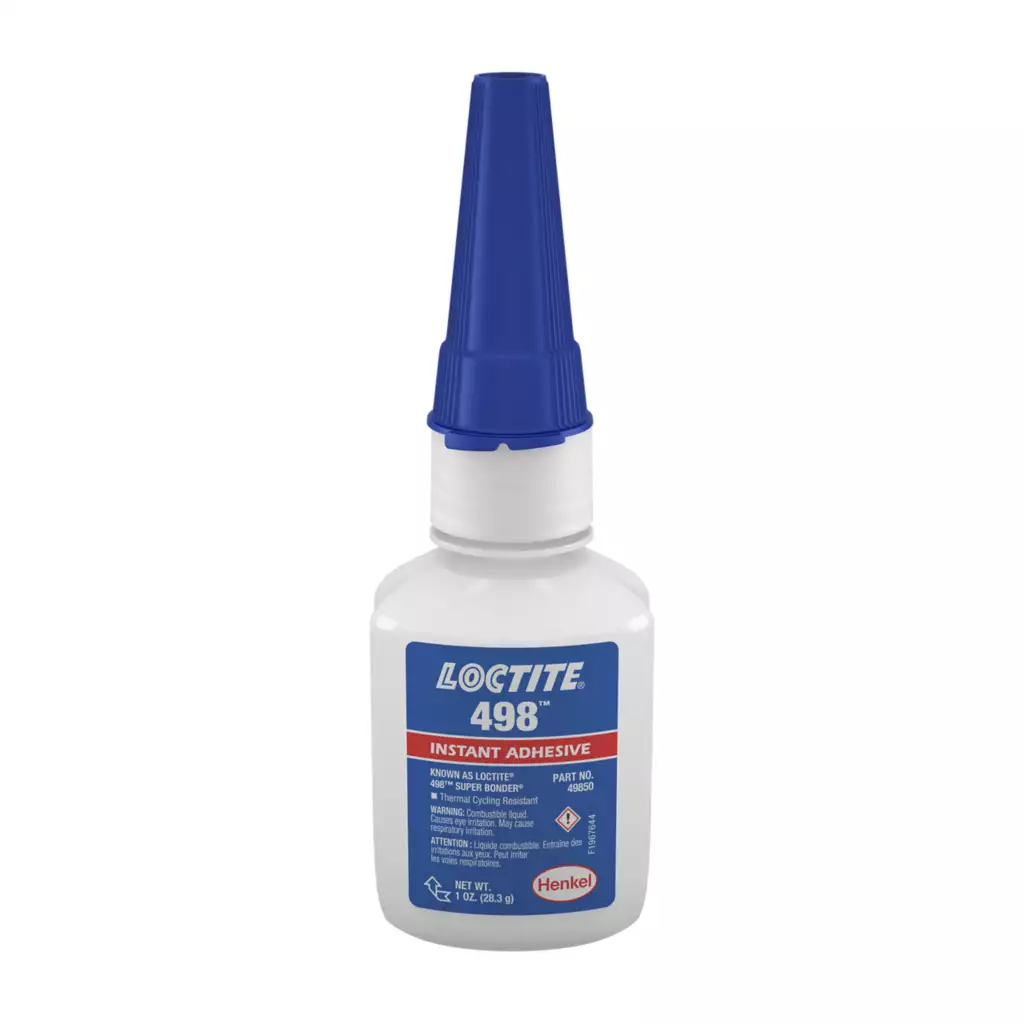
LOCTITE
Product code: 498
General-purpose ethyl cyanoacrylate for joints exposed to heat, formulated to resist thermal cycling and humidity. Medium viscosity for gaps up to 0.18 mm.
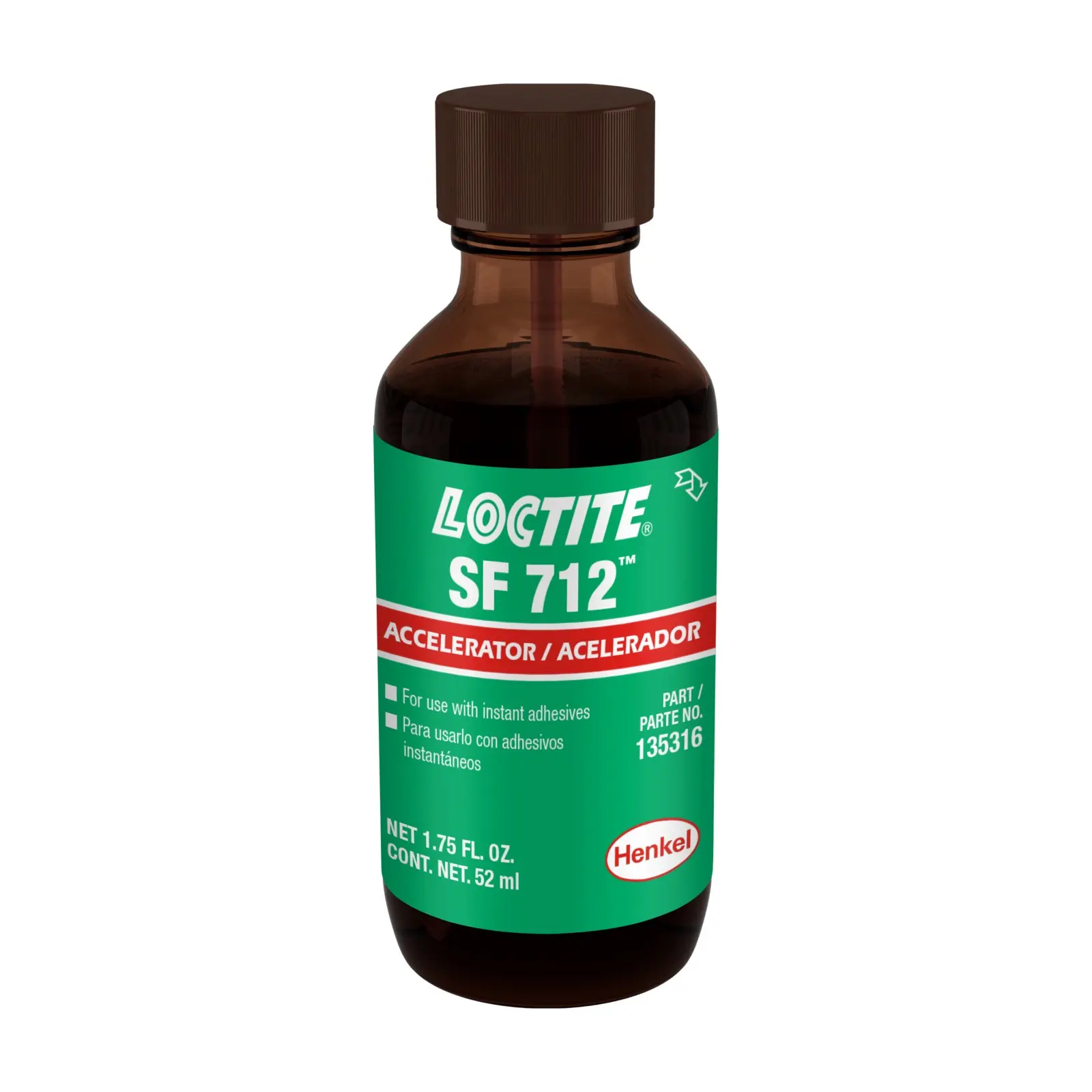
LOCTITE
Product code: SF 712
Solvent-based Activator that speeds the cure of LOCTITE cyanoacrylate adhesives, applied before or after bonding. Used for securing wires or coils to PCBs.
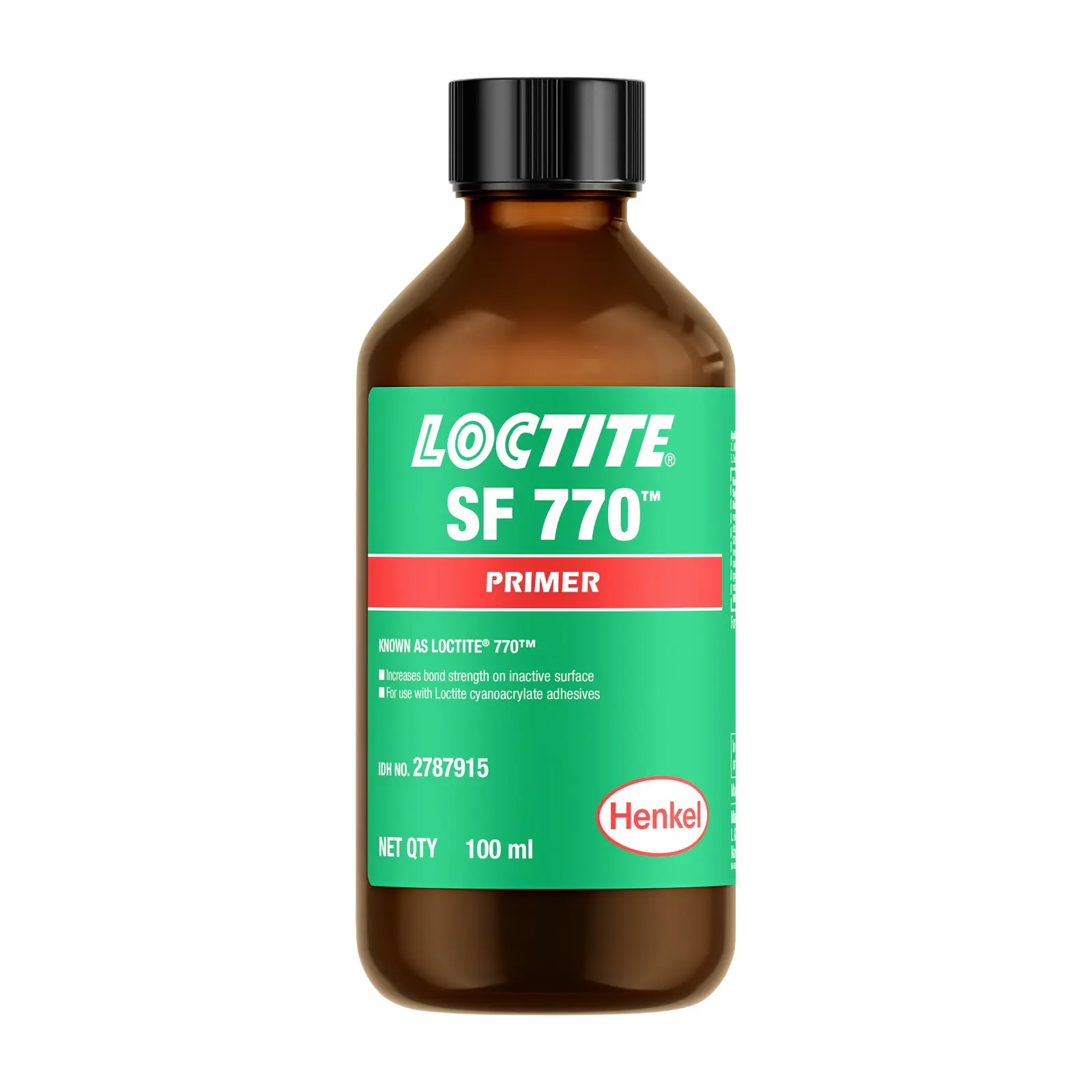
LOCTITE
Product code: SF 770
Primer that makes polyolefins and other low energy surfaces bondable with cyanoacrylate adhesives, including PE, PP, PTFE and thermoplastic rubber.
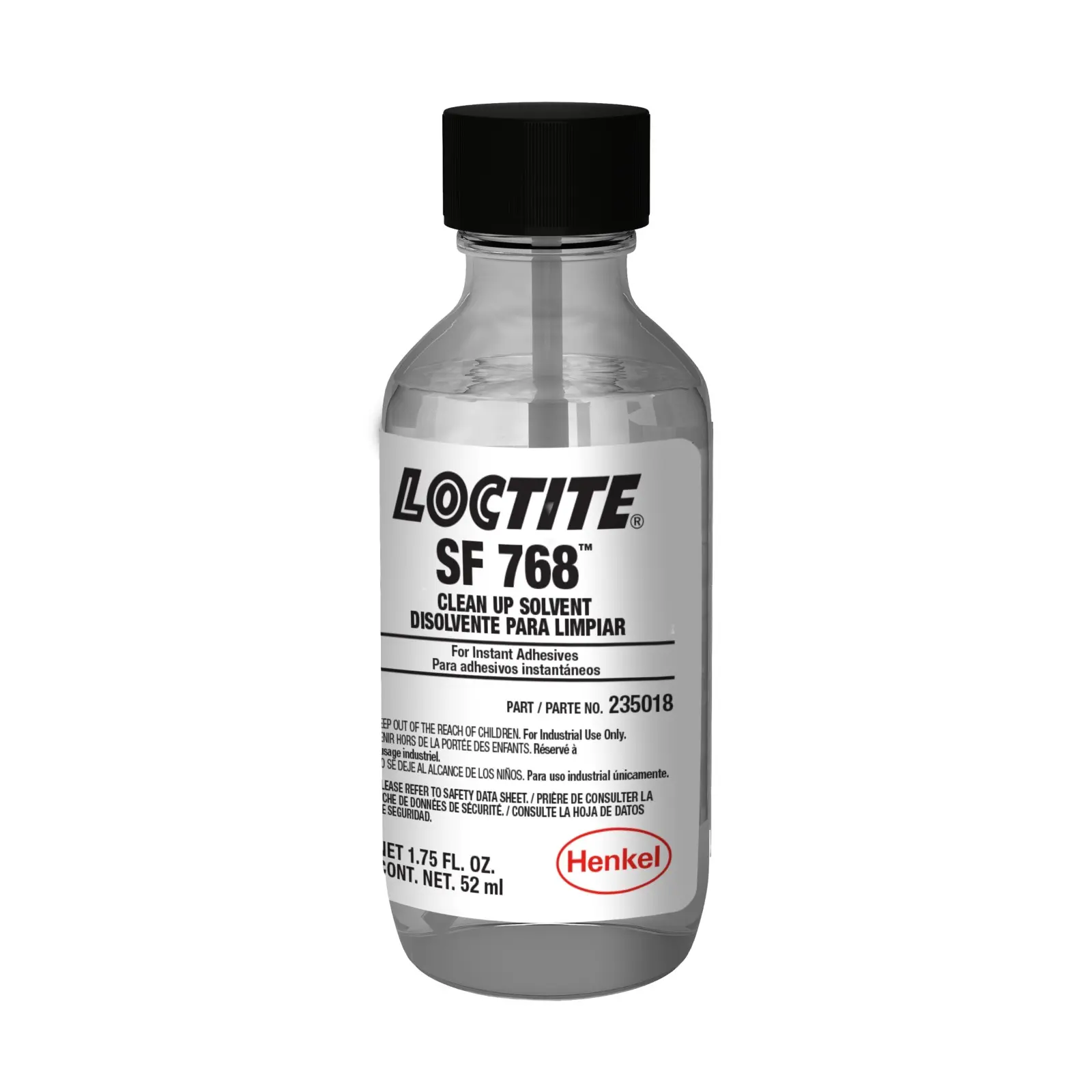
LOCTITE
Product code: SF 768
Solvent blend for removing cured cyanoacrylate adhesive from surfaces and for debonding parts assembled with it, by wiping or soaking.
How cyanoacrylates cure, and how to pick among the 19 LOCTITE grades by viscosity, substrate and special need.
How to prepare steel, aluminum, plated metal, plastics, rubber and glass, and which LOCTITE helpers to use.
Thin, thinnest and gel: how viscosity decides gap, substrate, position and porous parts for three grades.
The broken faces say whether to fix the surface, the adhesive, the cure or the design. Learn to read them.
Tell us the two materials, the grade in use, the amount and the station conditions. We will check the TDS and propose the grade, activator or primer that fits your line.
Not sure which product fits? Ask our assistant
Type the job, the material or a spec. It searches our published products and TDS values — no external AI.