
LOCTITE
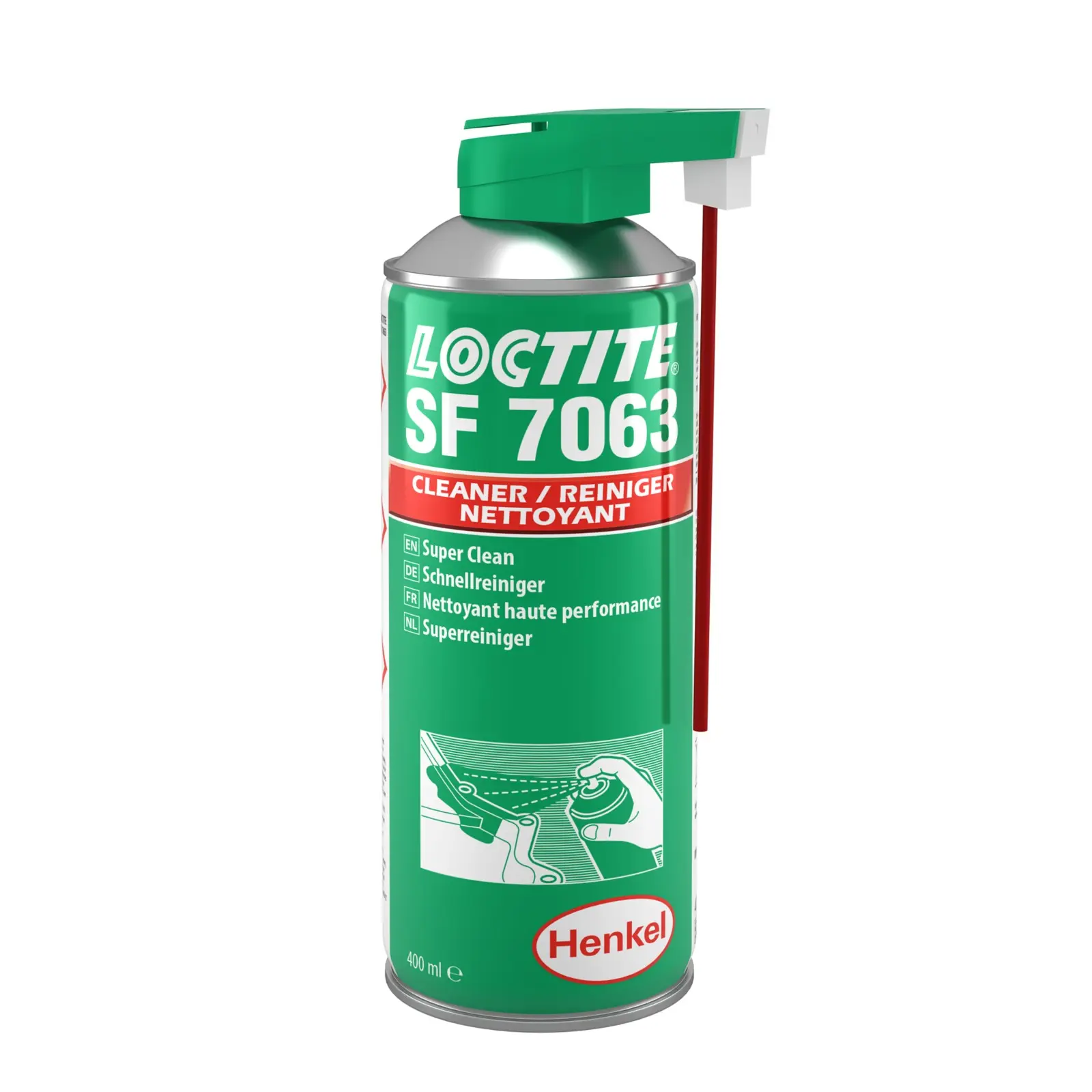
LOCTITE SF 7063
Product code: SF 7063
Solvent cleaner for degreasing surfaces before bonding with LOCTITE adhesives. It also cleans machine parts during maintenance.
Technical guide
An adhesive does not bond to steel, aluminum or polypropylene. It bonds to whatever is on top of them: cutting oil, oxide, release agent, a fingerprint, a passivation layer. This guide covers what is really on an industrial surface, how to prepare each common substrate, and where the cleaners, activators and primers in the LOCTITE catalog fit.
Every adhesive works by wetting the surface and then hardening against it. If a film of oil sits between the adhesive and the metal, the adhesive wets the oil, cures on the oil, and the oil lets go under load. The same is true for a layer of loose oxide, a release agent left from molding, or moisture adsorbed on glass. A bond is only ever as strong as the weakest layer in the stack, and the weakest layer is usually one nobody looked for.
Preparation therefore has two goals: remove what should not be there, and make sure the surface underneath is one the adhesive can actually bond to. Most substrates only need the first. A few, the low-surface-energy plastics and the passive metals, also need chemical help, and that is where the primers and activators come in.
Parts arrive at the bonding station carrying the history of every process before it. Walk back through that history and you can predict most of the contamination.
The table lists the usual issue for each substrate, the preparation that fixes it, and the catalog product that helps. Abrasion is listed only where the part allows it; on cosmetic, plated or thin-walled parts, cleaning alone is the limit.
| Substrate | Typical issue | Preparation | Catalogue helper |
|---|---|---|---|
| Steel, as received | Cutting oil, rust preventive, loose rust | Degrease, abrade if allowed, re-clean | LOCTITE 243 and 263 are oil tolerant on threads |
| Aluminum | Fast-forming oxide, casting release agent | Degrease, abrade, bond soon after | LOCTITE 248 suits aluminum threads |
| Stainless, passivated, zinc-plated | Passive surface slows anaerobic cure | Degrease; activator where the TDS says so | LOCTITE 243, 248, 263 are primerless on passive metals |
| Copper and brass | Tarnish film, lacquer on brass parts | Degrease, light abrasion, re-clean | LOCTITE 221, 242, 262 list brass |
| ABS, polycarbonate, nylon | Mold release, absorbed moisture in nylon | Wipe with a plastic-safe cleaner, dry | LOCTITE 401, 403, 454 bond engineering plastics |
| PP, PE, PTFE | Low surface energy, adhesive will not wet | Clean, then LOCTITE SF 770 primer per TDS | LOCTITE 495, 496, 498 with SF 770 primer |
| Rubber, EPDM, O-rings | Release agent, plasticizer bloom, acidic surfaces | Wipe, dry; abrade cut faces lightly | LOCTITE 406 for EPDM, 404 for O-rings, 435 for acidic surfaces |
| Glass and ceramic | Fingerprints, adsorbed moisture film | Clean, dry, bond promptly | LOCTITE 454 lists ceramics; SI 595 lists glass and ceramic |
| Painted, powder-coated | You bond to the coating, not the metal | Check coating adhesion; strip the bond area if allowed | LOCTITE AA 331 suits pre-coated sheet metal |
The order matters as much as the steps. Abrading before degreasing grinds oil into the fresh surface; degreasing after abrading removes the grit the abrasion left behind. Run the sequence the same way every time and write it into the work instruction.
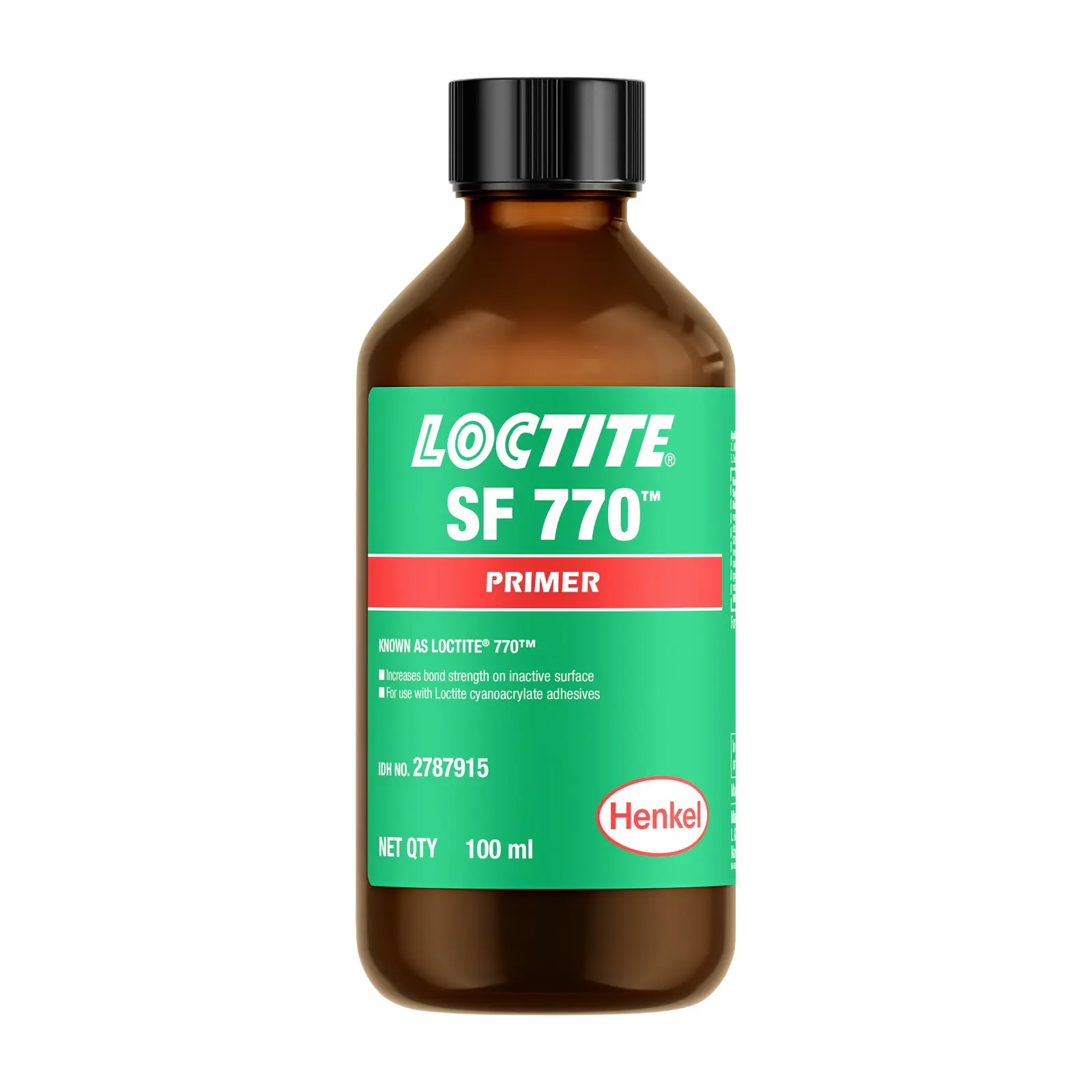
Cleaning cannot change the chemistry of a surface. Three situations need a chemical helper, and there is a LOCTITE product for each. Polyolefins and PTFE need a primer: LOCTITE 495, 496 and 498, among others, bond PP, PE and PTFE when LOCTITE SF 770 primer is used. The primer raises the surface energy so the cyanoacrylate can wet it.
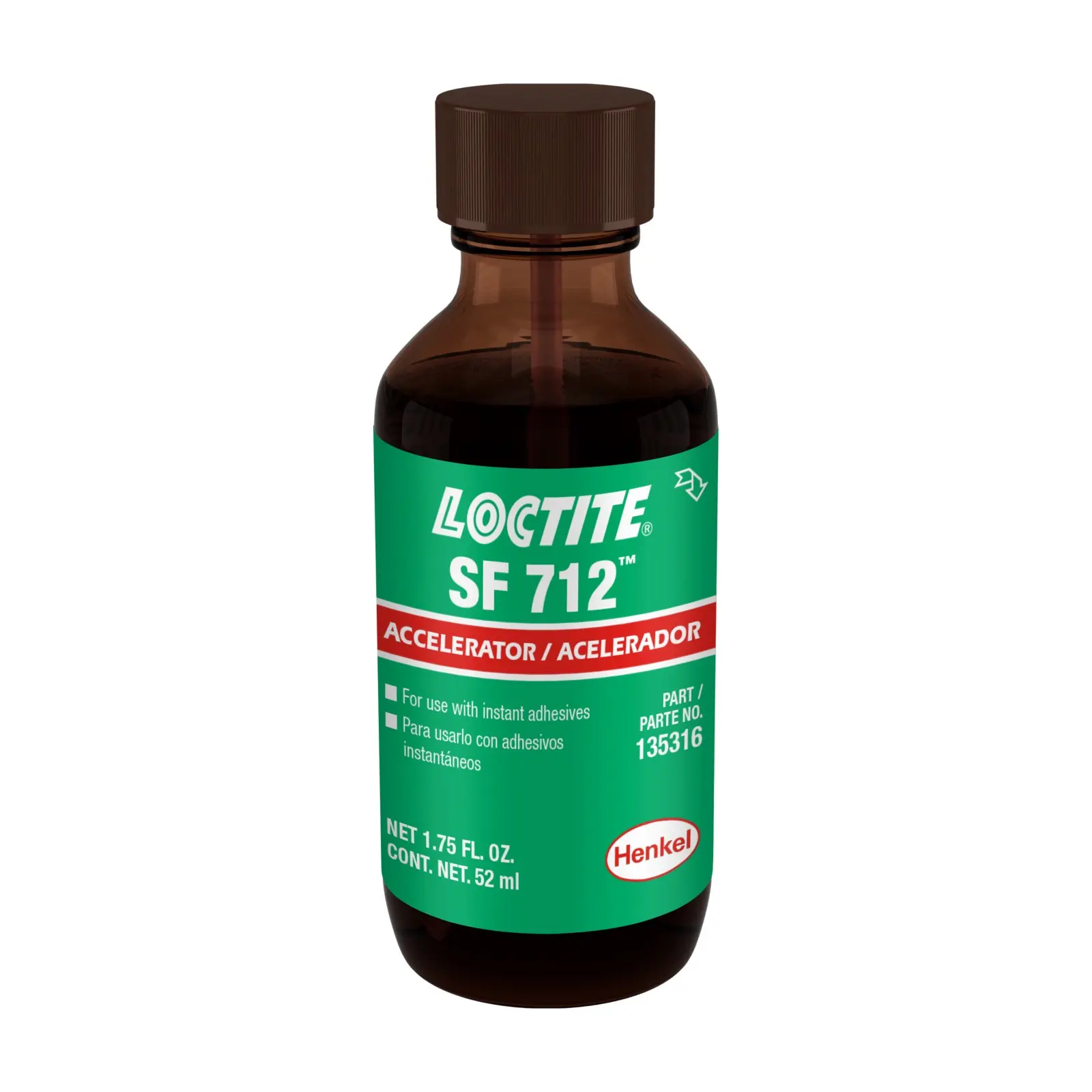
Inactive, acidic or very dry surfaces slow a cyanoacrylate, which cures from surface moisture. LOCTITE SF 712 is the solvent-based activator in the catalog that accelerates the cure of LOCTITE cyanoacrylates and supports rapid fixturing. Passive metals slow an anaerobic threadlocker in the same way; LOCTITE 243, 248 and 263 are primerless on passive metals, and for the other grades the TDS states when an activator is needed.
Structural acrylics are the third case: the cure itself is started by the activator. LOCTITE AA 326 is activated with LOCTITE SF 7649, applied as a two-step, no-mix system. Here the activator is not optional surface help but part of the adhesive system, and the TDS sets which face it goes on and how long it stays active.
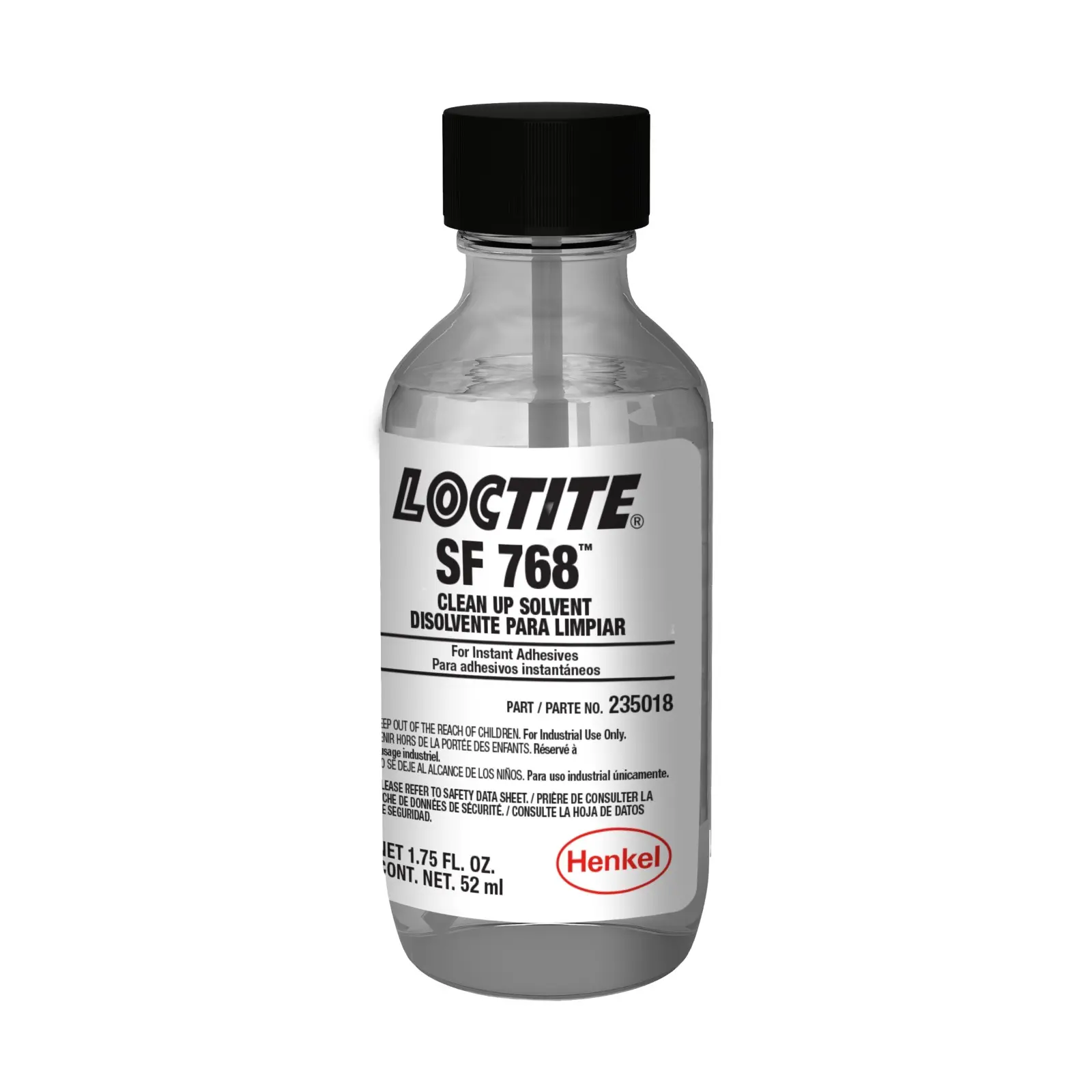
Old adhesive is contamination too. A part that was bonded once and failed, or a fixture coated in overflow, must be stripped back to the base material before it is bonded again. LOCTITE SF 768 is the very low viscosity solvent cleaner for removing cured cyanoacrylate, debonding parts assembled with instant adhesive, cleaning surfaces and cleaning dispensing equipment. Thin layers are wiped away after application; thick beads need re-application or soaking.
Its compatibility with plastics, particularly thermoplastics, has to be confirmed before use, and the cleaned surface then goes through the full preparation sequence again. Removing adhesive is not the same as preparing a surface.
Preparation failures show up as bond strength that varies from part to part or shift to shift. These are the causes ADVANCE finds most often.
LOCTITE
Product code: SF 7063
Solvent cleaner for degreasing surfaces before bonding with LOCTITE adhesives. It also cleans machine parts during maintenance.
LOCTITE
Product code: SF 768
Solvent blend for removing cured cyanoacrylate adhesive from surfaces and for debonding parts assembled with it, by wiping or soaking.
LOCTITE
Product code: SF 712
Solvent-based Activator that speeds the cure of LOCTITE cyanoacrylate adhesives, applied before or after bonding. Used for securing wires or coils to PCBs.
LOCTITE
Product code: SF 770
Primer that makes polyolefins and other low energy surfaces bondable with cyanoacrylate adhesives, including PE, PP, PTFE and thermoplastic rubber.
LOCTITE
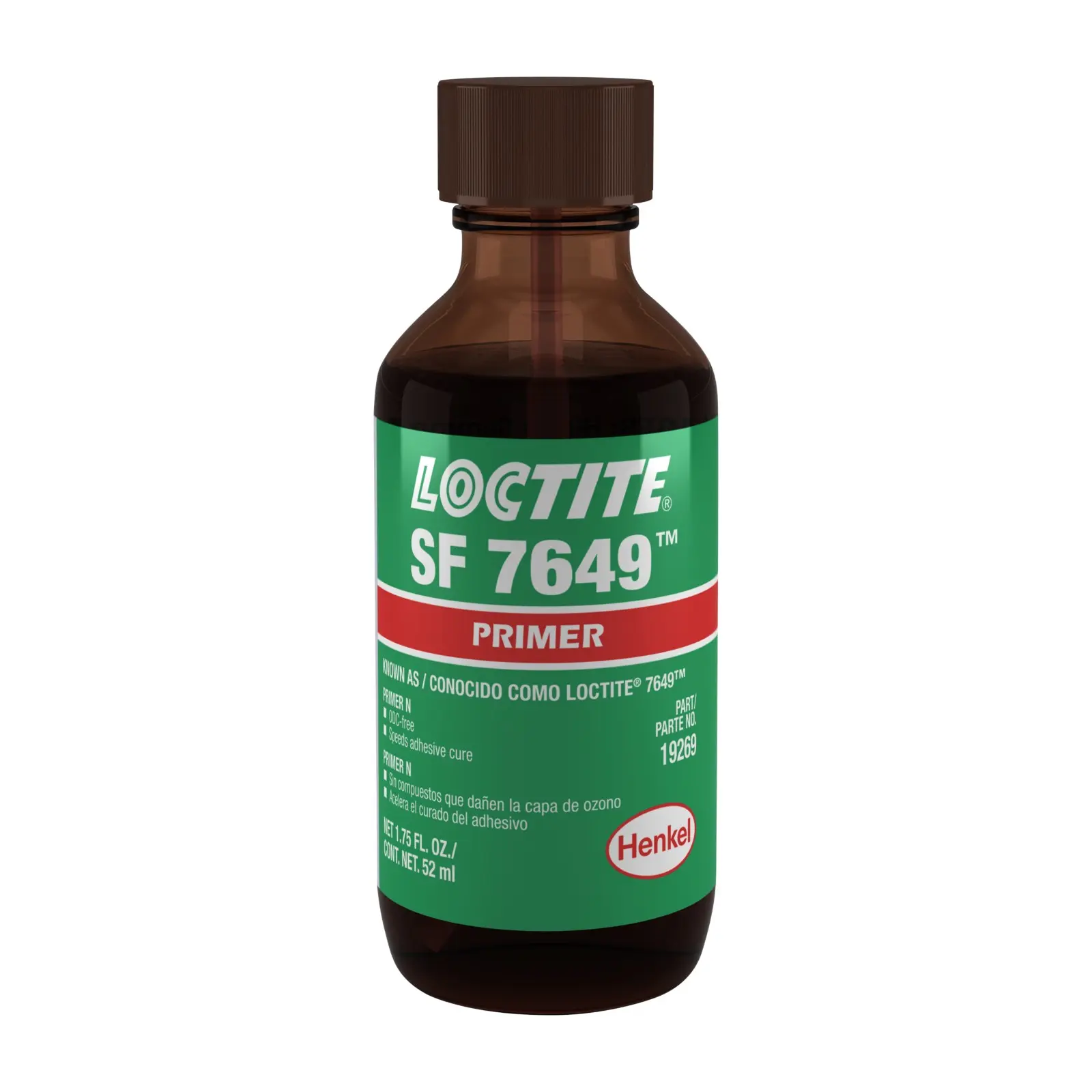
Product code: SF 7649
Green activator for anaerobic adhesives and sealants, for passive metals, large bond gaps and temperatures below 15 °C. Stays active on the part for 30 days.
LOCTITE
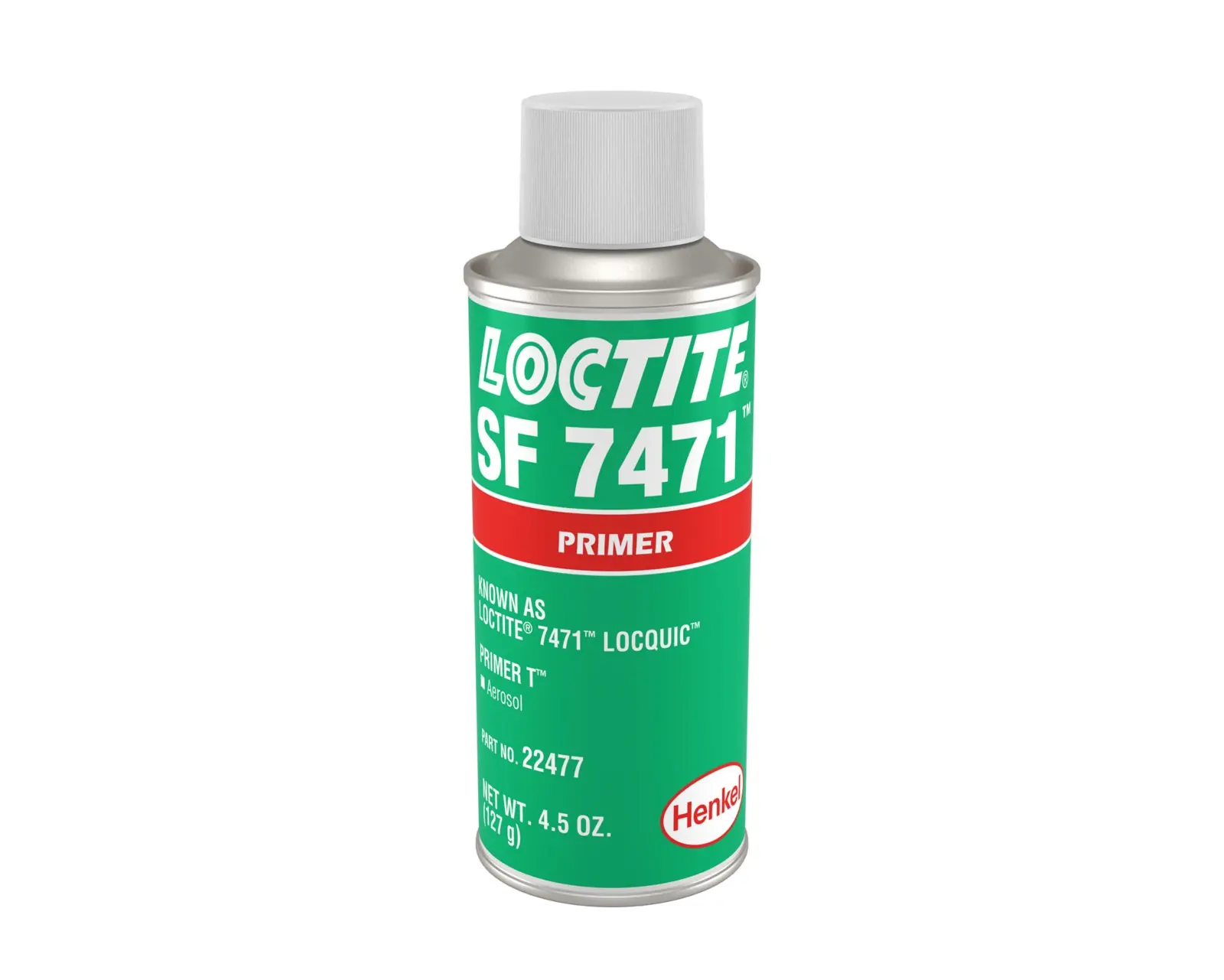
Product code: SF 7471
Activator for anaerobic adhesives and sealants, for passive metals, large bond gaps and temperatures below 15 °C. Stays active on the part for 7 days.
LOCTITE
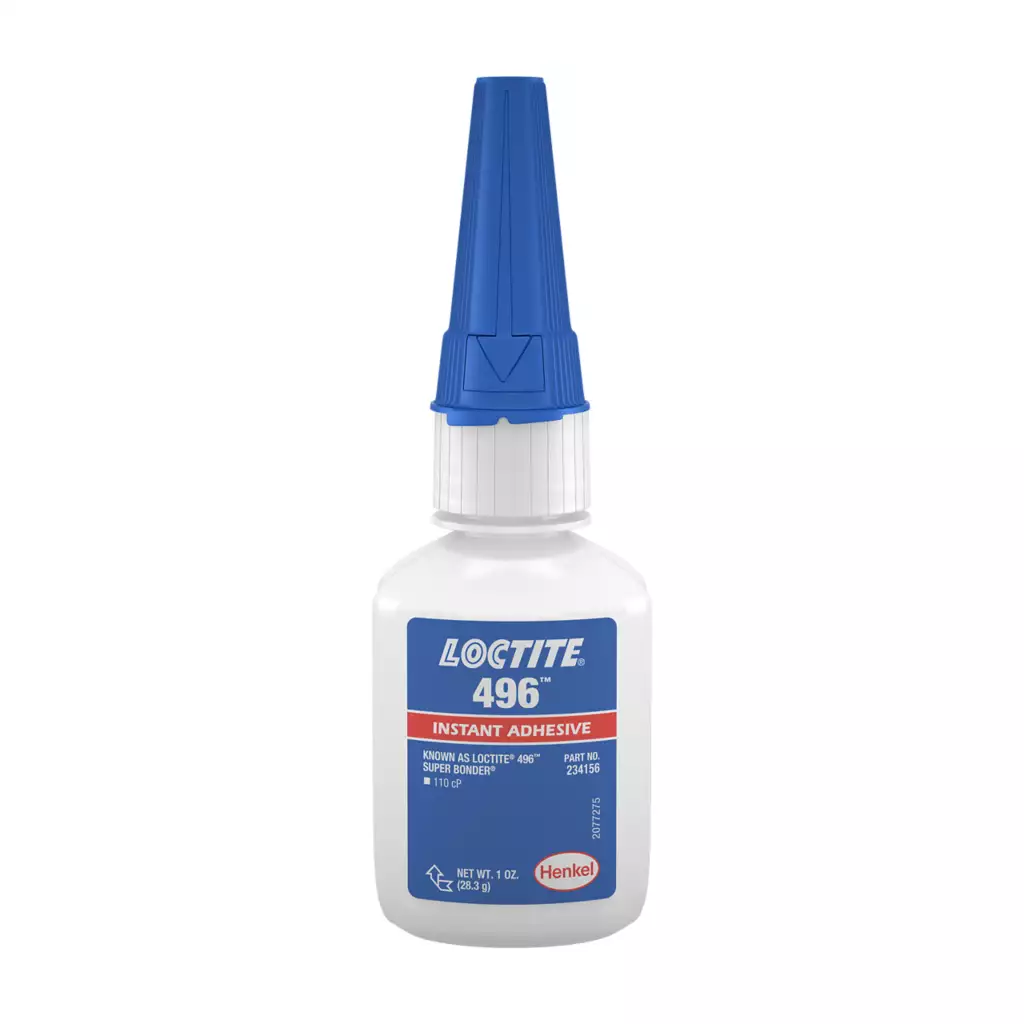
Product code: 496
Methyl cyanoacrylate instant adhesive for bonding metal and close-fitting parts, with low viscosity for very tight gaps. Also bonds rubbers and plastics.
LOCTITE
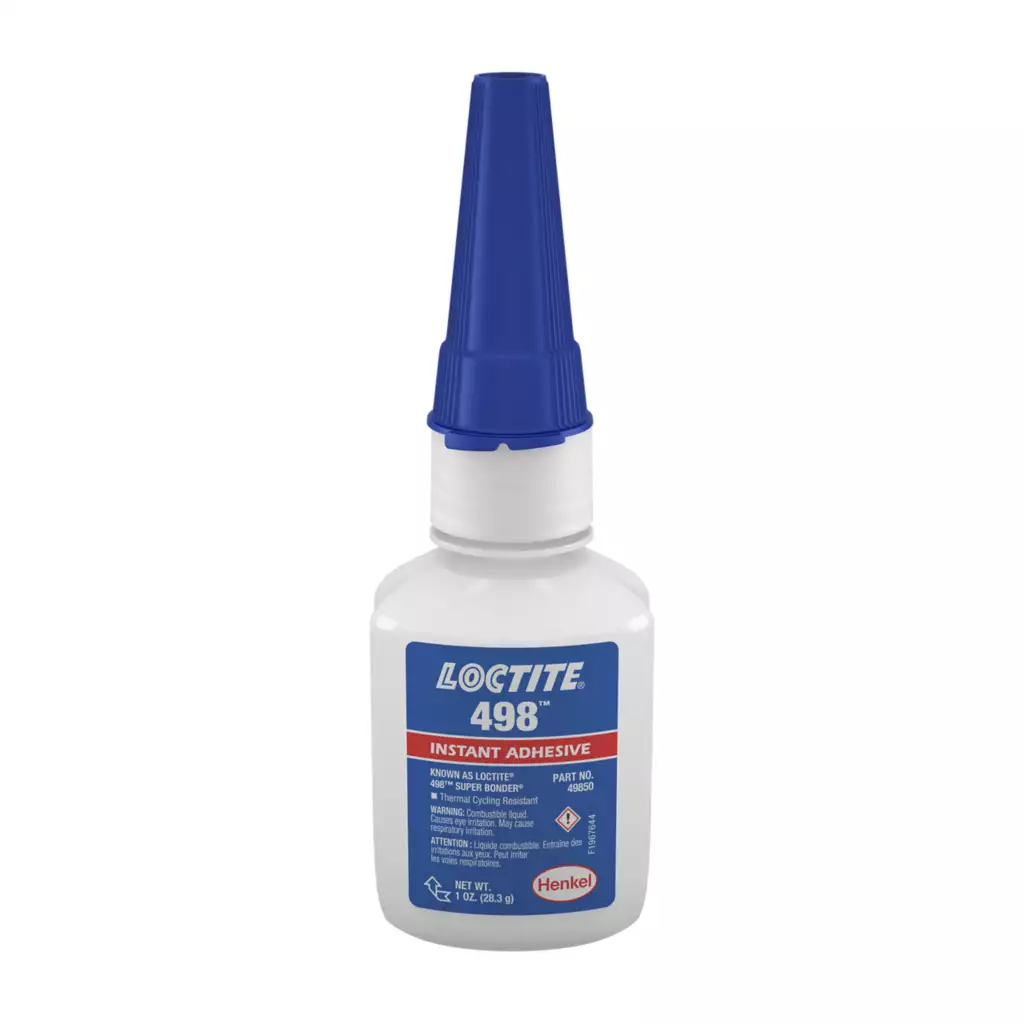
Product code: 498
General-purpose ethyl cyanoacrylate for joints exposed to heat, formulated to resist thermal cycling and humidity. Medium viscosity for gaps up to 0.18 mm.
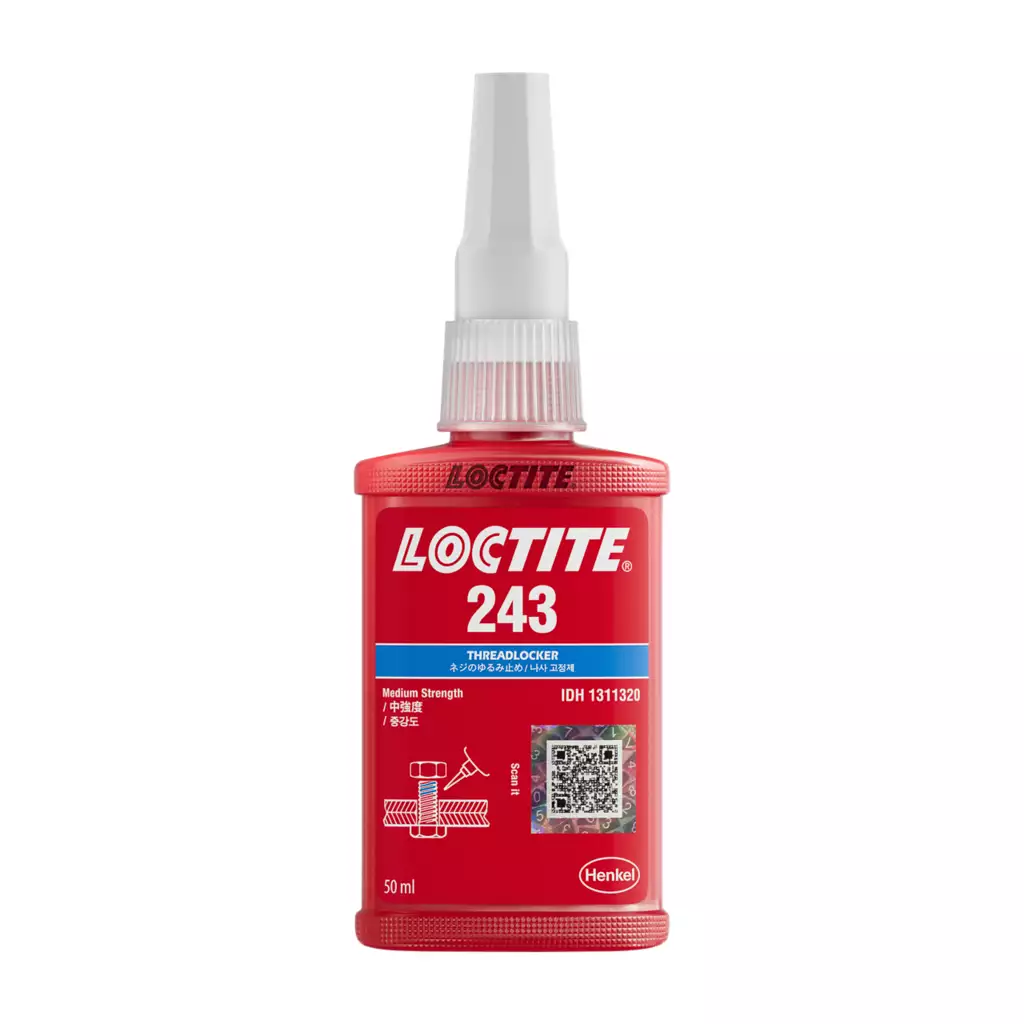
LOCTITE
Product code: 243
Blue medium-strength threadlocker for pumps, gearboxes and motors that works on passive metals and tolerates minor oil contamination.
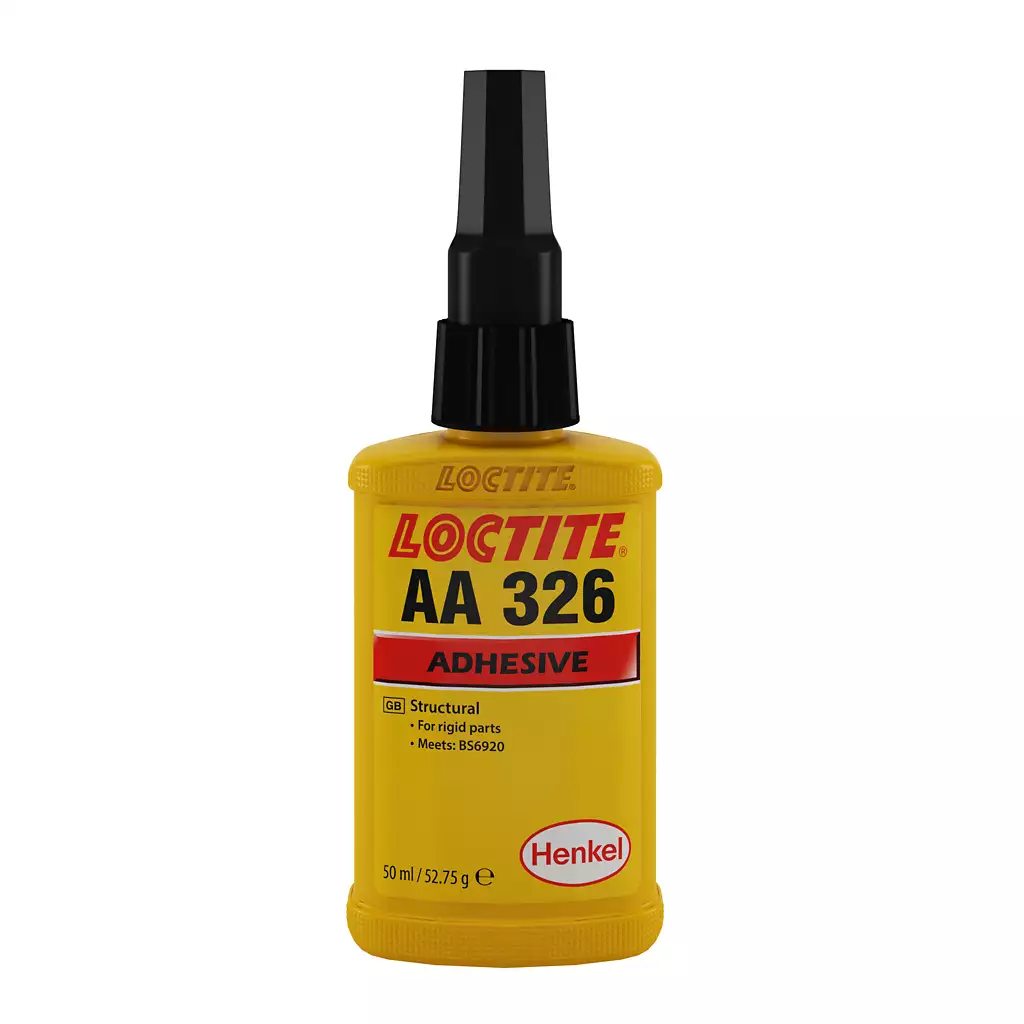
LOCTITE
Product code: AA 326
LOCTITE AA 326 is a high-viscosity structural acrylic used with LOCTITE SF 7649 activator for fast metal bonding, such as ferrites on plated parts in electric motors.
Five questions, from job and materials to gap, removal and process, that lead to the right LOCTITE family.
Blooming, slow cure, brittle joints, PP and PE that will not bond, heat failures: the cause and fix for each.
Liquid threads, bolts that back off under vibration, product that stays soft: find the cause and the fix.
The broken faces say whether to fix the surface, the adhesive, the cure or the design. Learn to read them.
Tell us the material, the coating or plating and the adhesive you plan to use. We will confirm the preparation, primer or activator the TDS calls for.
Not sure which product fits? Ask our assistant
Type the job, the material or a spec. It searches our published products and TDS values — no external AI.