
LOCTITE
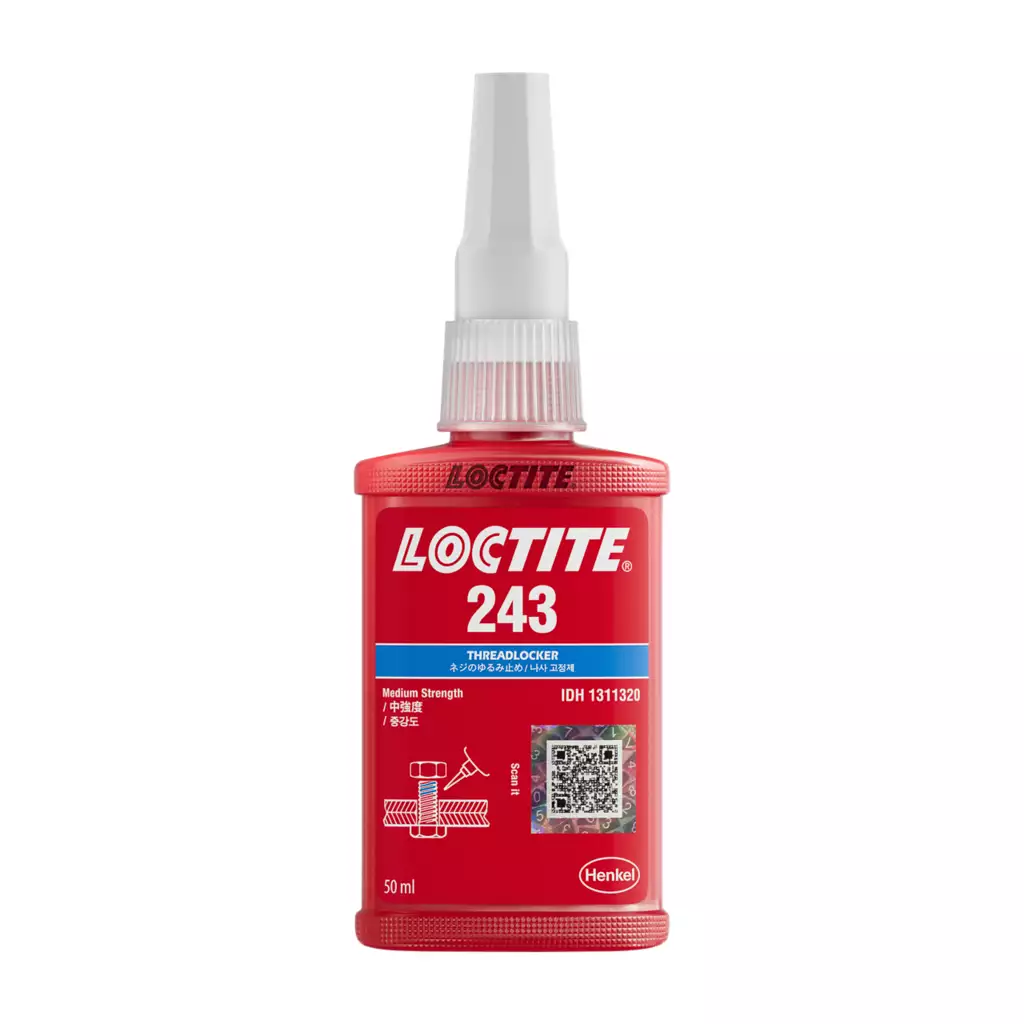
LOCTITE 243
Product code: 243
Blue medium-strength threadlocker for pumps, gearboxes and motors that works on passive metals and tolerates minor oil contamination.
Troubleshooting
A threadlocker that stays liquid, or a bolt that loosens anyway, almost always comes down to the surface, the fit, the timing or the bottle, not to a bad batch. This page walks through each cause group in the order a technician should check them.
The complaint usually arrives in one of four forms. Each points to a different cause group, so record exactly what the technician saw before anything is cleaned or re-torqued.
Anaerobic threadlockers cure when air is excluded between close-fitting threads and the metal surface supplies the ions that start the reaction. Plain steel, brass and copper start it readily. Stainless steel, zinc or chromate plating, anodized aluminum and passivated or black-oxide parts are passive: they exclude air just as well but feed the reaction slowly, so cure takes far longer or stalls.
LOCTITE 243, LOCTITE 248 and LOCTITE 263 are described as primerless on passive metals, and LOCTITE 222 as suitable for passive metals; for other grades or very slow surfaces the TDS names the activator to apply to one side before assembly. Contamination is the second surface problem: cutting fluid, heavy preservative oil, old cured product and debris stop the liquid wetting the metal. LOCTITE 243 is described as oil tolerant, meaning it tolerates minor surface contamination from various oils, and LOCTITE 263 as suitable for most oil-coated as-received fasteners; neither covers a bolt dripping with cutting fluid.
A threadlocker is designed for close-fitting threads. If the thread is worn, stripped or drilled oversize, air is not excluded and the product near the gap never cures; what cures is a thin ring at the few points of real contact, which the first load breaks. Repair or replace the thread before blaming the adhesive.
Quantity and position matter as much. Too little product leaves dry threads, and product on the tip of a long bolt stays at the tip while the threads engaged by the nut stay dry. For a blind hole, apply into the hole so the air forced out during assembly carries the product along the thread. For a fastener that is already assembled, the wicking grade LOCTITE 290 is described as penetrating engaged threads; the standard liquids will not.
Fixture time is the point at which the joint can take light handling; full strength develops over hours. A bolt that is torque-checked, loaded or vibrated before fixture time breaks the half-formed polymer, and that product never recovers. Put the TDS times into the work instruction and keep torque audits outside that window.
Grade and fastener size go together. LOCTITE 222, described for small fasteners up to 6.35 mm, is not meant to hold a large stud under heavy vibration; the blue LOCTITE 243 or the stick LOCTITE 248 is the general choice, and the red LOCTITE 263 is for permanent assemblies. The chemistry also needs metal on both sides: a plastic fastener, a nylon insert or a non-metal mating part gives no cure at all.
A cured threadlocker resists rotation at the threads; it does not create clamp load. If a soft gasket relaxes, a painted or burred face embeds, or heat stretches the bolt, the clamp load drops and the joint opens even though the threads never turned. Fretting marks, gasket extrusion and torque records that show under-tightening point to the joint, and the fix is in the tightening procedure or the design.
The bottle is the last place people look and a common culprit. Anaerobic products are packed with air in the bottle on purpose, because oxygen keeps them liquid. A bottle stored on its side, topped up, decanted into a full dispensing reservoir or kept outside the storage range in the TDS begins to gel, and thickened or stringy product will not cure predictably. Keep bottles upright, closed and within the TDS range.
Use the table during the first inspection; most cases resolve in the first two rows.
| Symptom | Likely cause | Check | Fix |
|---|---|---|---|
| Liquid after hours on stainless or plated parts | Passive surface, slow anaerobic cure | Material and plating of bolt and tapped part | Grade described as primerless on passive metals, or the activator in the TDS |
| Patchy cure on bolts fresh from machining | Cutting fluid or heavy oil on threads | Wipe a thread with a clean cloth; look for residue | Degrease and dry; oil-tolerant grades cover minor oil only |
| Cured ring at the mouth, liquid deeper in | Thread gap too large or damaged thread | Gauge the thread; check for wobble before tightening | Repair or replace the thread |
| Engaged threads dry, bolt tip wet | Applied on the wrong end or too little | Disassemble one bolt and see where the product sits | Apply where threads engage; fill blind holes from inside |
| Crumbly product, loosened at start-up | Loaded or torque-checked before fixture time | Assembly log against start-up and audit times | Hold for the TDS fixture time; move audits outside it |
| Cured threads, joint still opens | Clamp load lost: gasket, embedment, under-torque | Fretting marks, gasket condition, torque records | Fix the tightening procedure or joint design |
| Thick, stringy or discolored product | Bottle on its side, topped up or too warm | Inspect the bottle and the shelf | Discard; store upright, closed, inside the TDS range |
Run the steps in order and stop at the first that explains the failure. Change one thing per trial so the result tells you something.
Change the product only after the surface, fit, timing and storage checks have passed. In most cases the change is a grade or form inside the same anaerobic family.
LOCTITE
Product code: 243
Blue medium-strength threadlocker for pumps, gearboxes and motors that works on passive metals and tolerates minor oil contamination.
LOCTITE
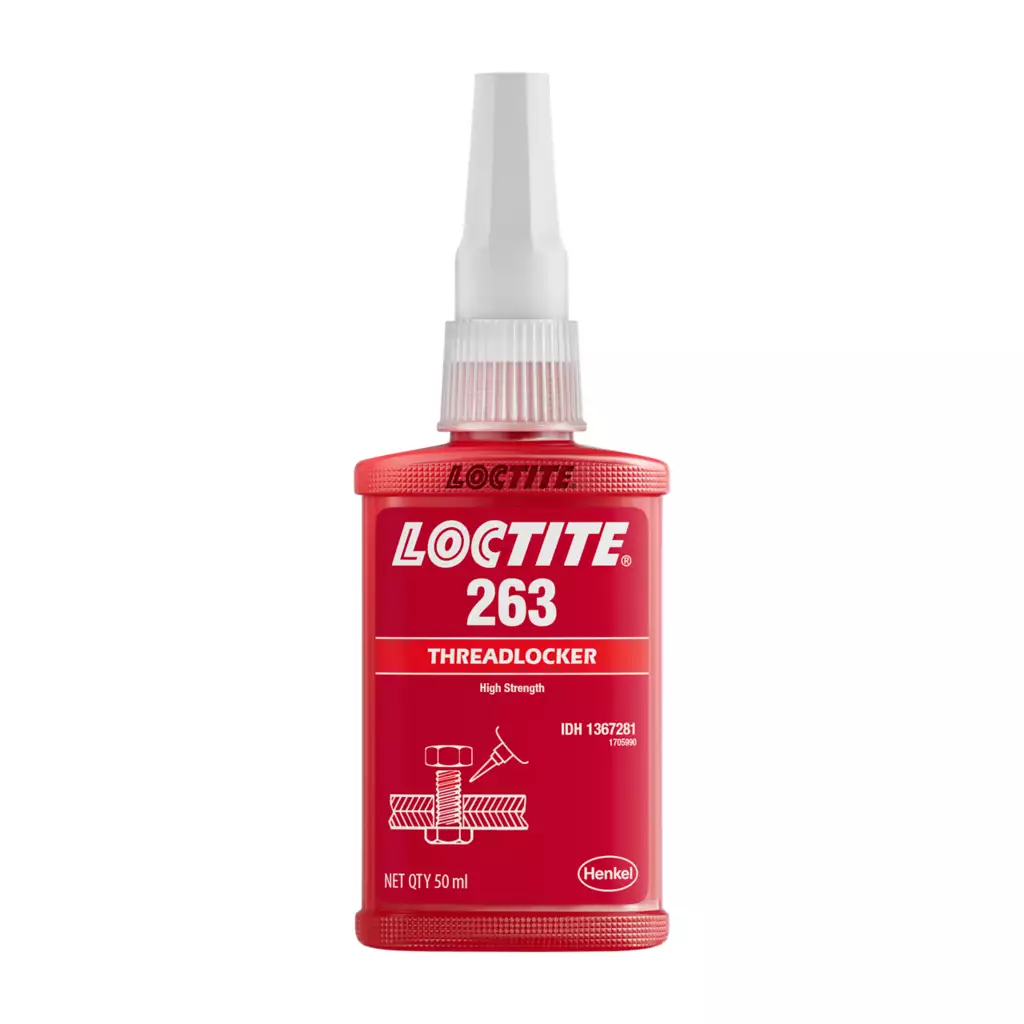
Product code: 263
Red high-strength, low-viscosity threadlocker for heavy-duty studs and nuts in motor and pump housings, up to 180 °C.
LOCTITE
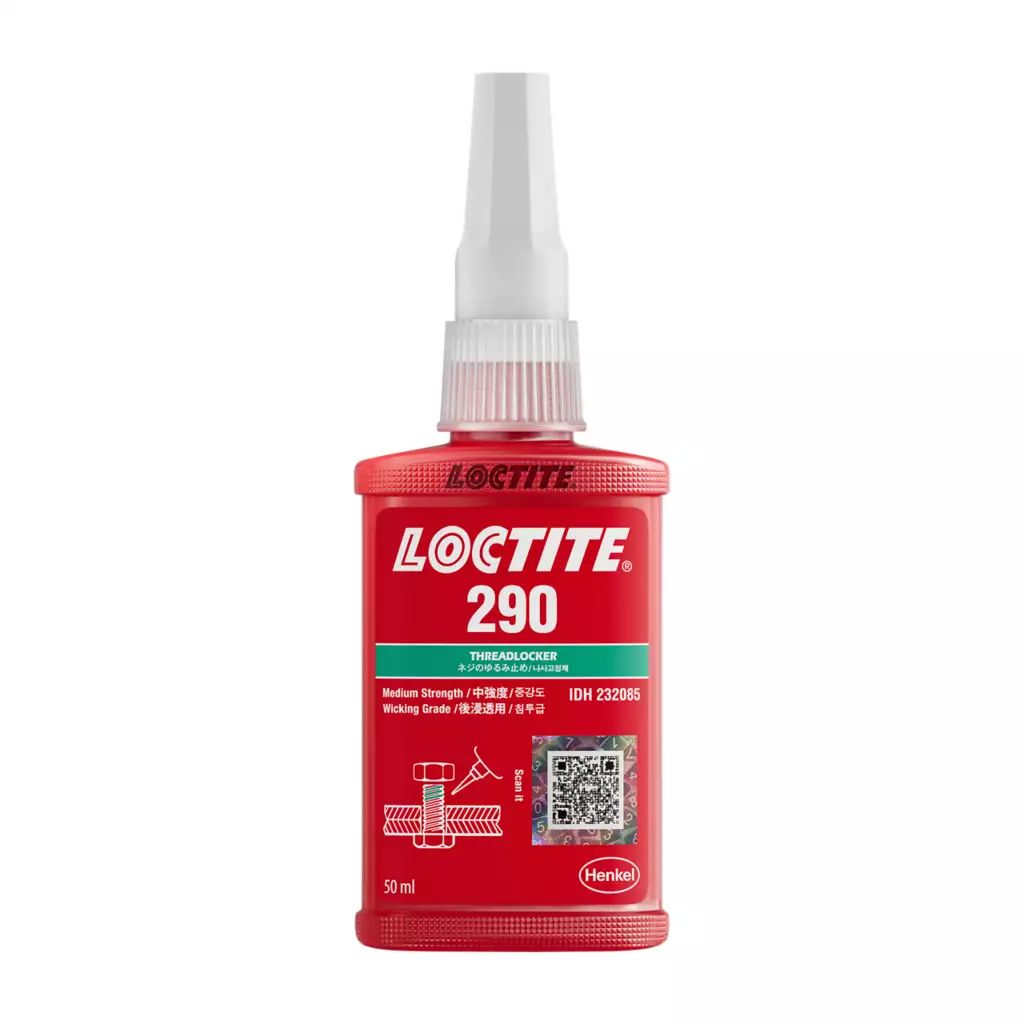
Product code: 290
Green wicking threadlocker that flows into already assembled fasteners by capillary action and also seals porosity in metal parts.
LOCTITE
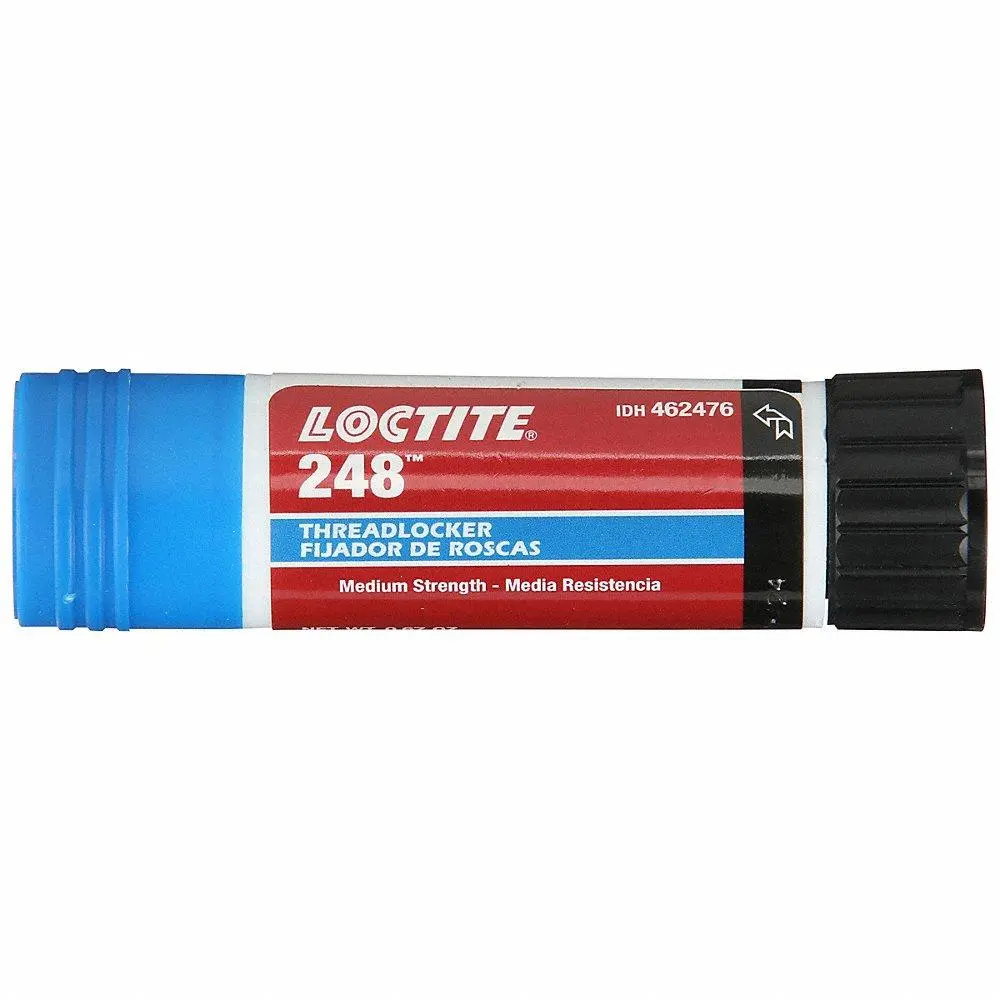
Product code: 248
Blue medium-strength threadlocker in a wax-like stick for vertical and overhead threads where a liquid would run off.
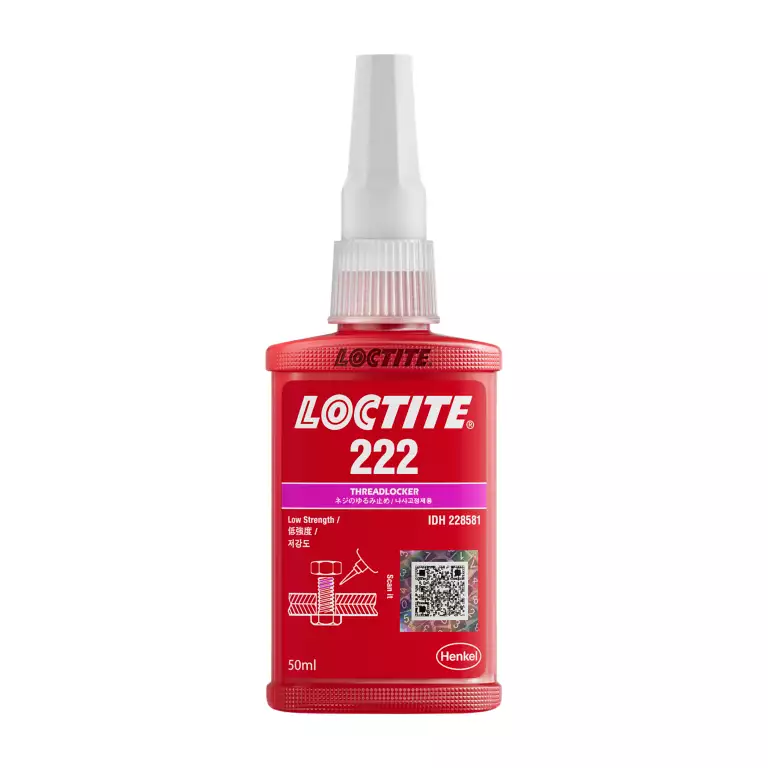
LOCTITE
Product code: 222
Thixotropic low-strength threadlocker for adjustment, countersunk and set screws up to 6.35 mm in aluminium, brass and other metals.
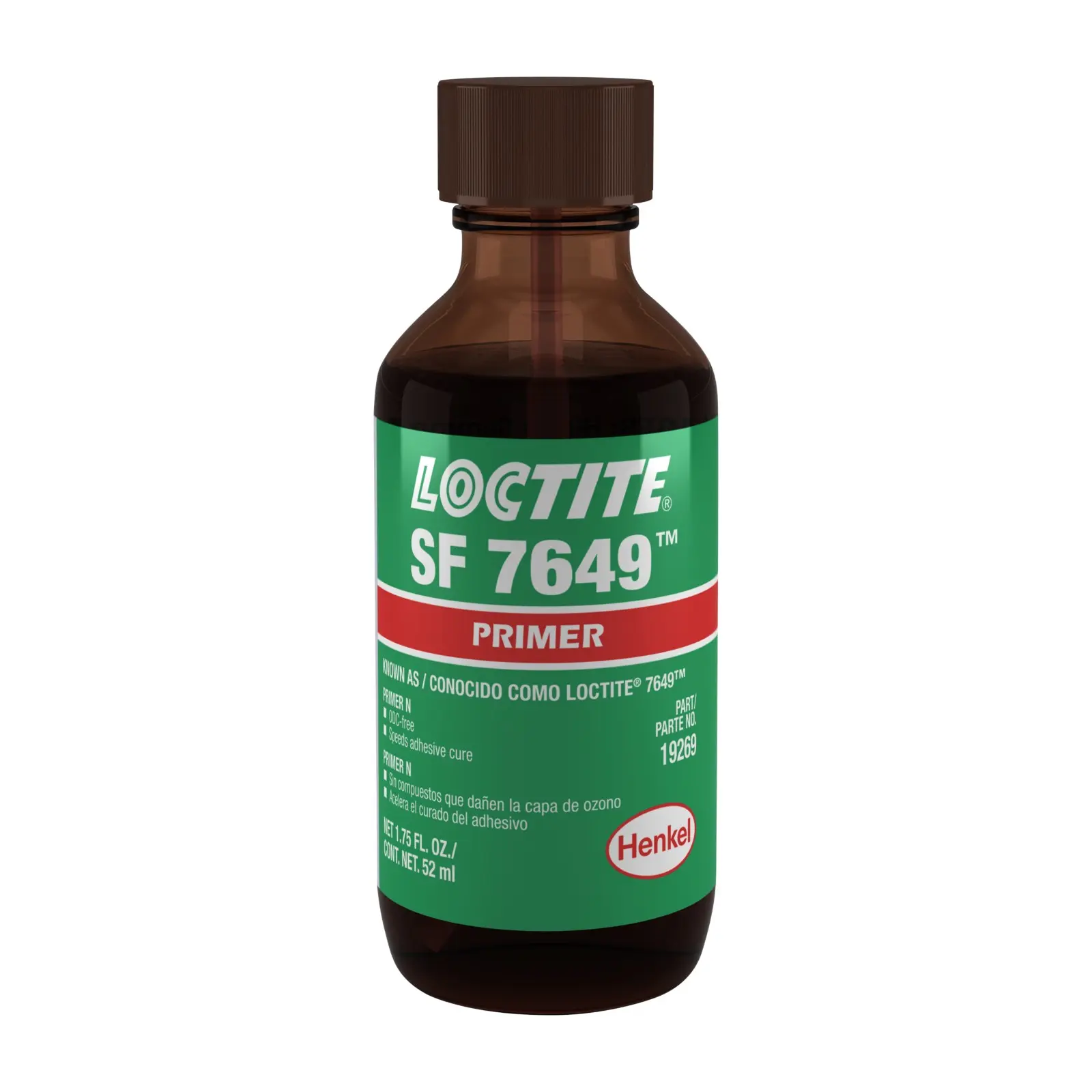
LOCTITE
Product code: SF 7649
Green activator for anaerobic adhesives and sealants, for passive metals, large bond gaps and temperatures below 15 °C. Stays active on the part for 30 days.
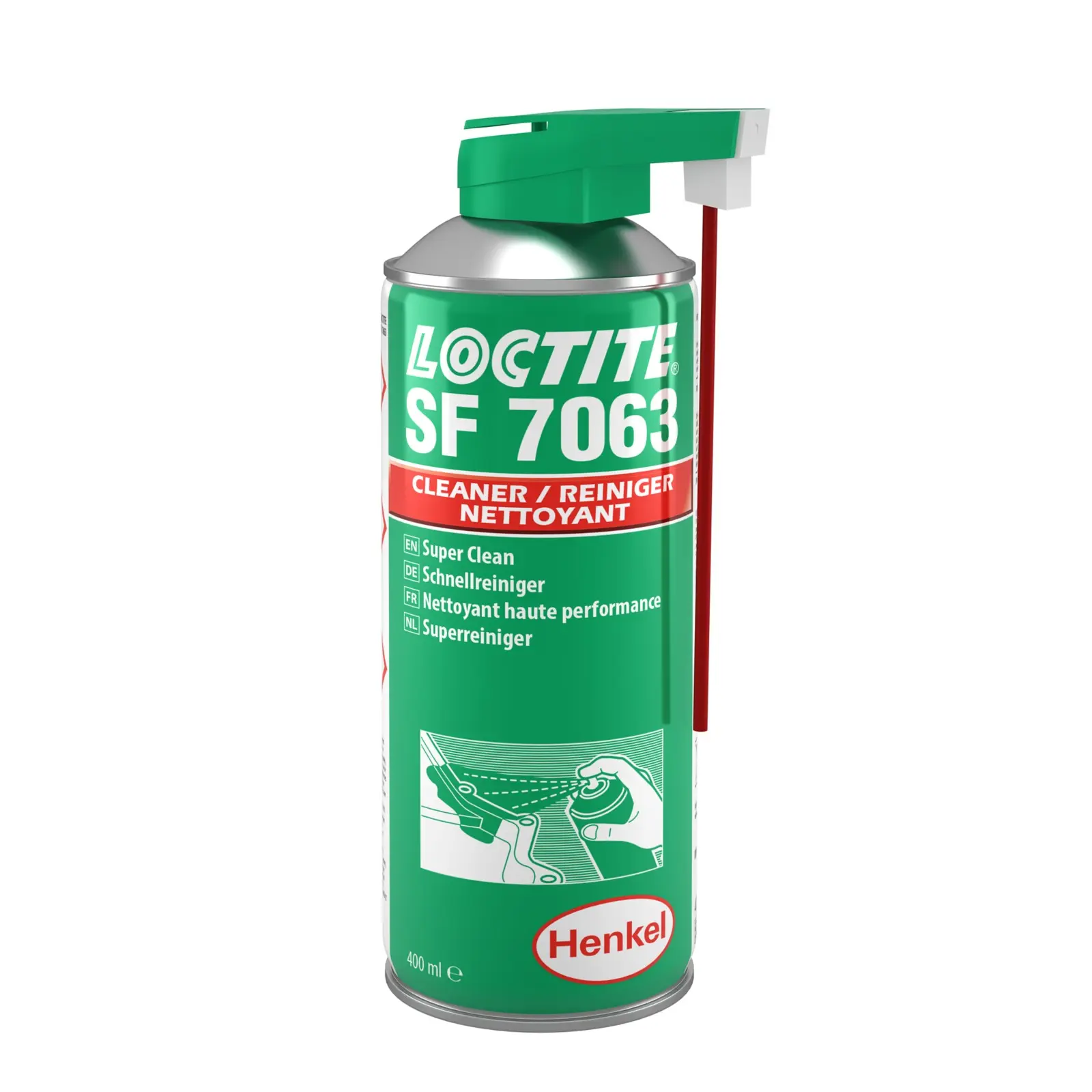
LOCTITE
Product code: SF 7063
Solvent cleaner for degreasing surfaces before bonding with LOCTITE adhesives. It also cleans machine parts during maintenance.
What each color means, how fastener size and removal drive the choice, and where each form fits.
How to prepare steel, aluminum, plated metal, plastics, rubber and glass, and which LOCTITE helpers to use.
Purple, blue, red and green side by side: strength, fastener size, removal and when each grade fits.
The broken faces say whether to fix the surface, the adhesive, the cure or the design. Learn to read them.
Send us the fastener material and plating, the product and batch number, and a photo of the threads. We will go through the TDS with you and recommend the grade or activator that fits.
Not sure which product fits? Ask our assistant
Type the job, the material or a spec. It searches our published products and TDS values — no external AI.