
LOCTITE
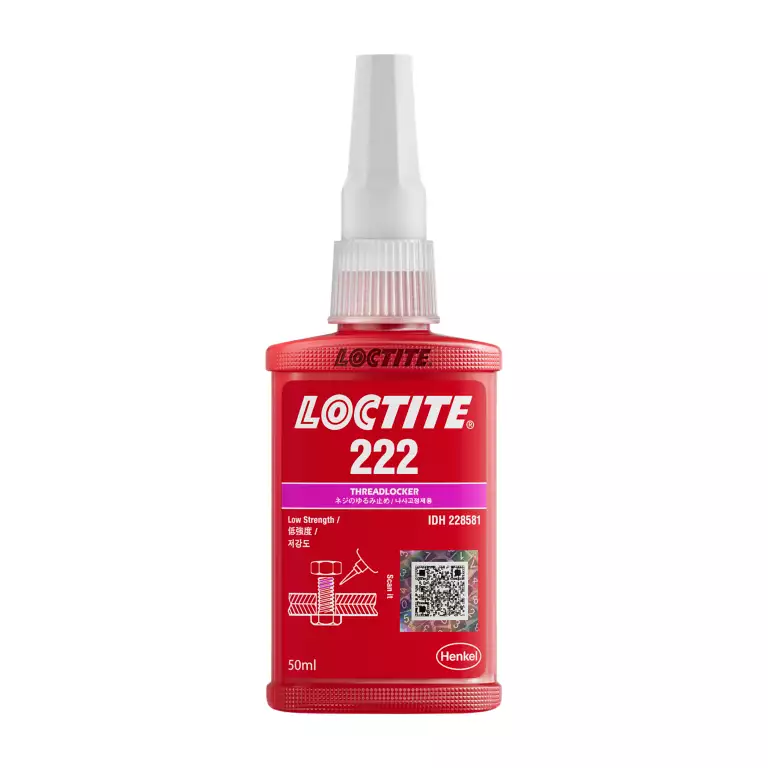
LOCTITE 222
Product code: 222
Thixotropic low-strength threadlocker for adjustment, countersunk and set screws up to 6.35 mm in aluminium, brass and other metals.
Comparison
Most threadlocking questions come down to four products. LOCTITE 222, 243, 263 and 290 cover low, medium, high and wicking grades, and once you know how they differ the rest of the range falls into place.
All four are one-component anaerobic threadlockers: they stay liquid until confined between metal threads without air, and they lock and seal the fastener once cured. The difference is how hard the cured product resists removal, which thread sizes each one suits, and whether the product goes on before or after assembly.
| Criterion | LOCTITE 222 | LOCTITE 243 | LOCTITE 263 | LOCTITE 290 |
|---|---|---|---|---|
| Color | Purple | Blue | Red | Green |
| Strength | Low | Medium | High, permanent | Medium to high |
| Viscosity | Liquid, thixotropic | Liquid, thixotropic | Liquid | Low viscosity, wicking |
| Fastener | Small fasteners up to 6.35 mm (1/4 in) | General threaded fasteners | Metal fasteners, heavy-duty fastening | Pre-assembled fasteners |
| Applied | Before assembly | Before assembly | Before assembly | After assembly; wicks into engaged threads |
| Surface tolerance | Suitable for passive metals | Oil tolerant; primerless on metals incl. passive | Oil tolerant; primerless; active and passive metals | See the TDS |
| Removal | Easy, standard hand tools | Standard hand tools | Heat-assisted disassembly | Requires heat for disassembly |
| Choose when | Small screws that must be adjusted | General locking, parts serviced later | Must never loosen, no planned removal | Already assembled or sealing porosity |
These are the two removable grades. The choice between them is mostly fastener size and how often the part will be taken apart.
These two are the grades you do not plan to undo. Both need heat for disassembly, so pick them only where the service plan allows it.
All four are one-component products with no mixing, cure anaerobically between metal threads, and fluoresce under UV light so that an inspector can confirm the product was applied. All four lock and seal the fastener against loosening and leakage from shock and vibration. None of them adds clamp load, repairs a damaged thread or fills a loose fit, and none cures on plastic threads.
The strength class narrows the choice; the TDS gives the numbers. Before writing a product into a work instruction, check these five points.
LOCTITE
Product code: 222
Thixotropic low-strength threadlocker for adjustment, countersunk and set screws up to 6.35 mm in aluminium, brass and other metals.
LOCTITE
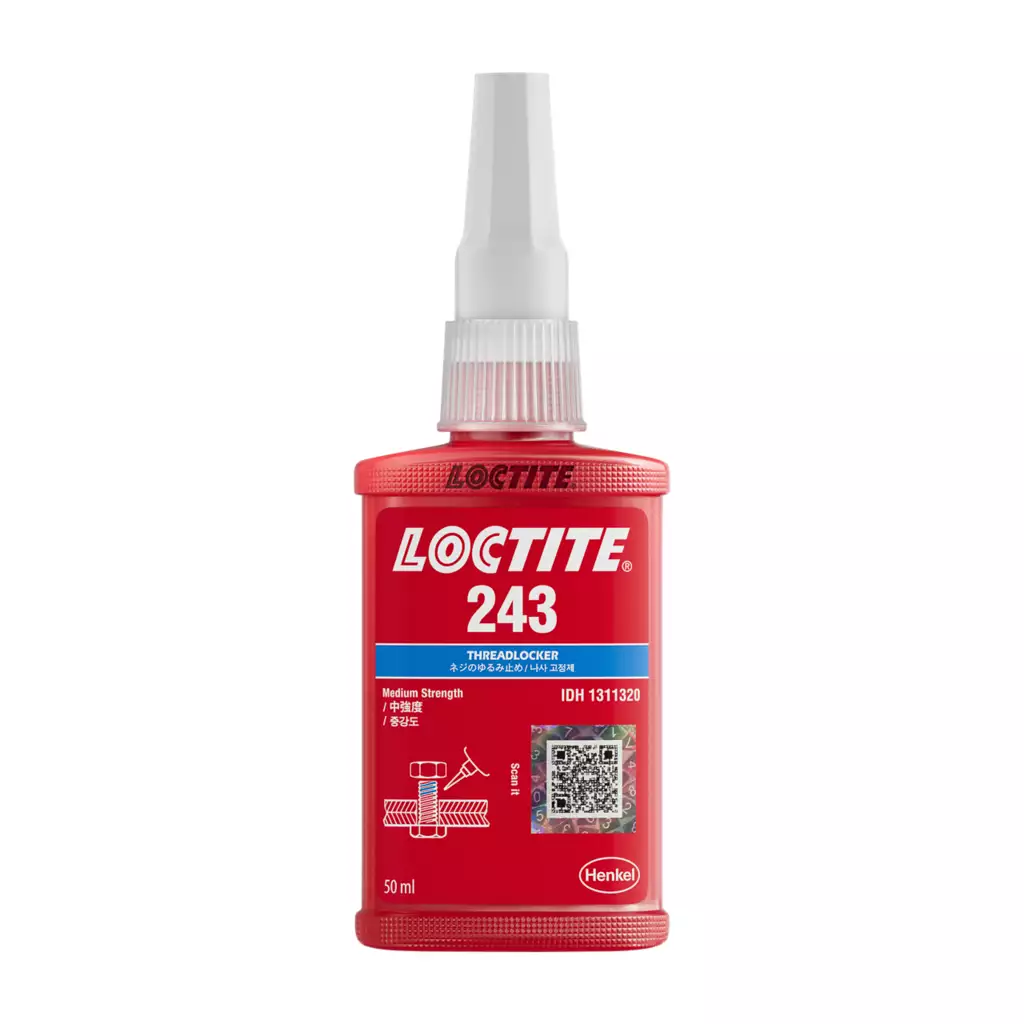
Product code: 243
Blue medium-strength threadlocker for pumps, gearboxes and motors that works on passive metals and tolerates minor oil contamination.
LOCTITE
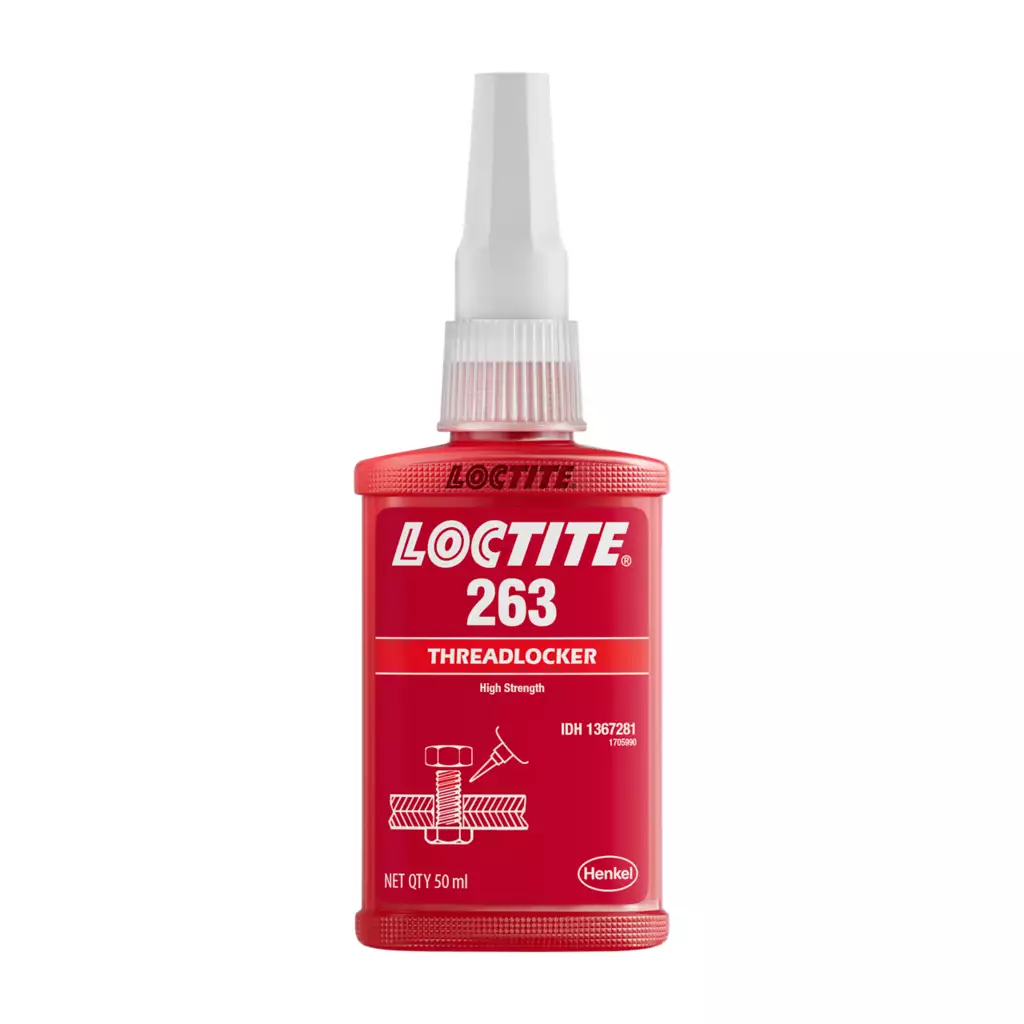
Product code: 263
Red high-strength, low-viscosity threadlocker for heavy-duty studs and nuts in motor and pump housings, up to 180 °C.
LOCTITE
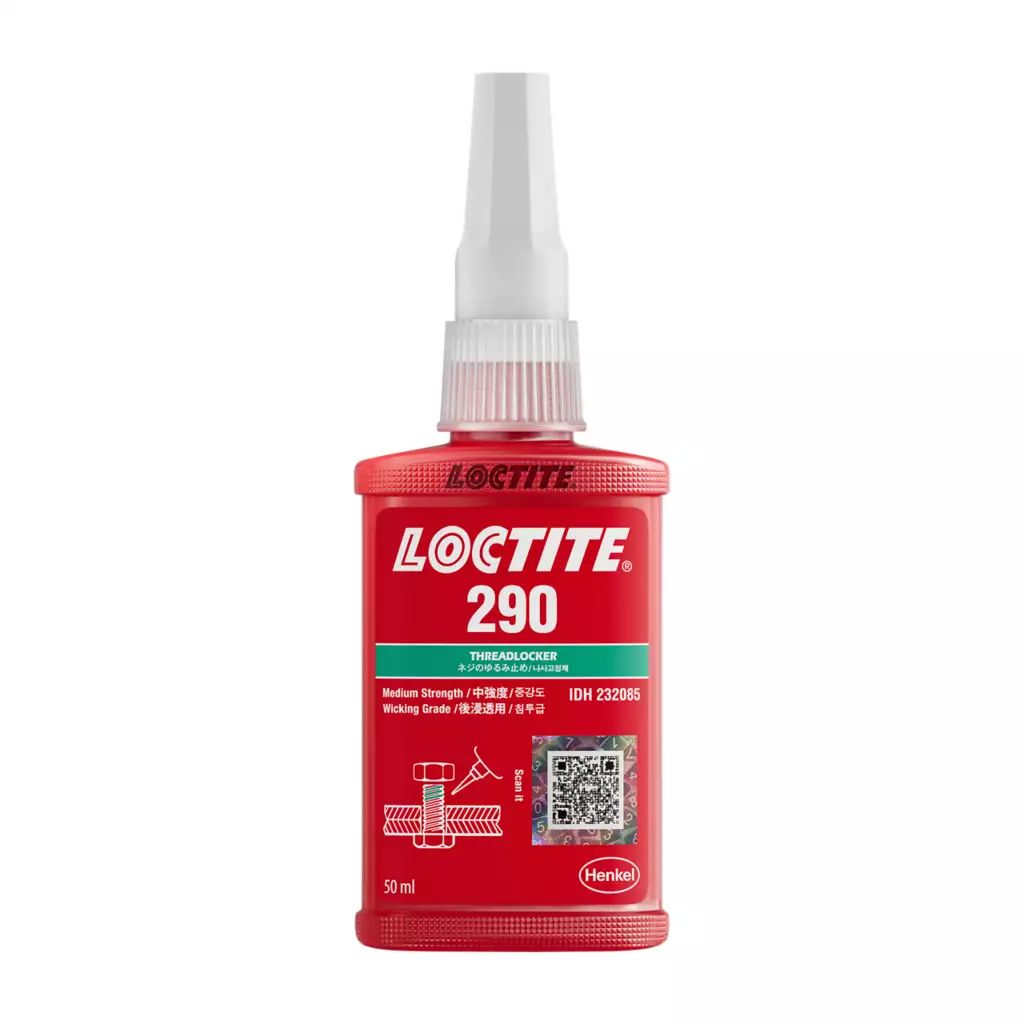
Product code: 290
Green wicking threadlocker that flows into already assembled fasteners by capillary action and also seals porosity in metal parts.
What each color means, how fastener size and removal drive the choice, and where each form fits.
Same strength classes, two forms: drips, portability, metering, line vs field use and removal compared.
Liquid threads, bolts that back off under vibration, product that stays soft: find the cause and the fix.
Send us the fastener size, material, service conditions and whether it must come apart again. We will compare the TDS of the candidates with you.
Not sure which product fits? Ask our assistant
Type the job, the material or a spec. It searches our published products and TDS values — no external AI.