
LOCTITE
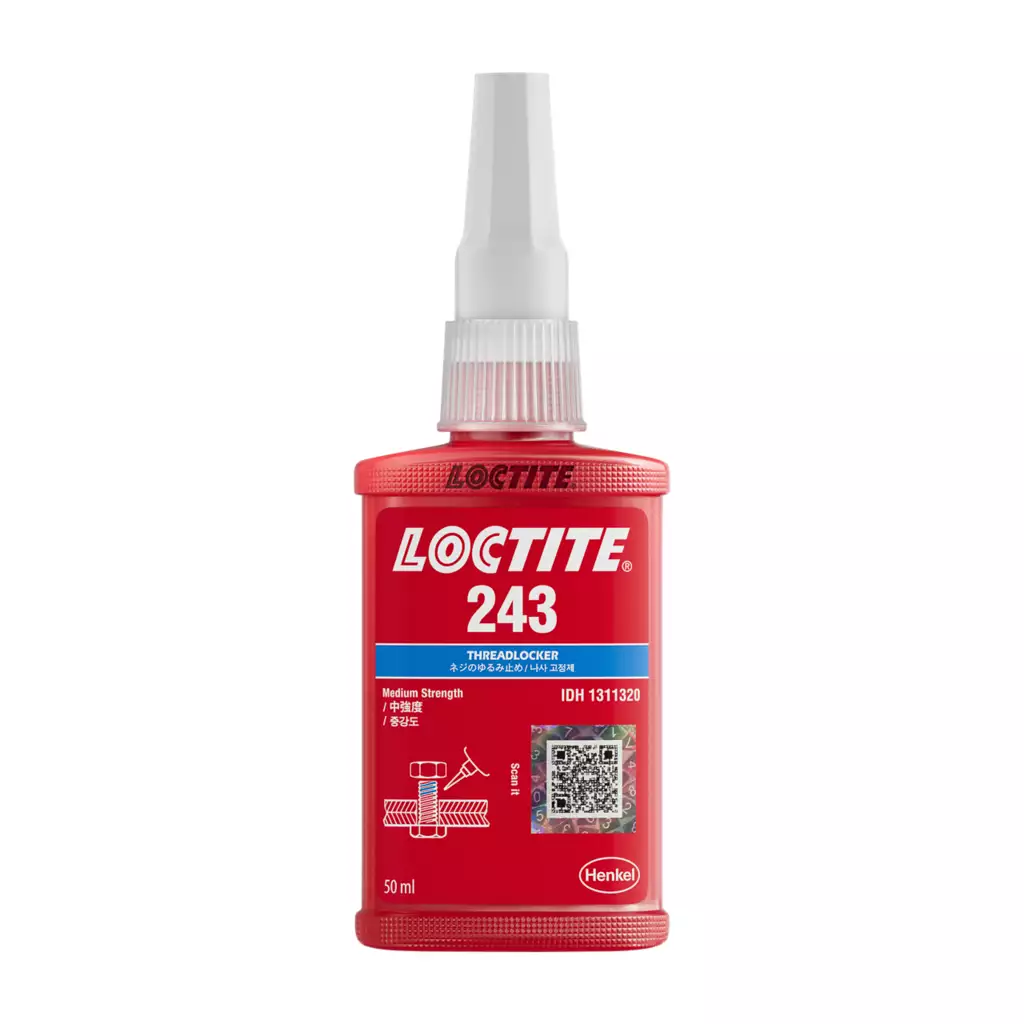
LOCTITE 243
Product code: 243
Blue medium-strength threadlocker for pumps, gearboxes and motors that works on passive metals and tolerates minor oil contamination.
Comparison
LOCTITE 248 and 268 put the medium and high strength classes of 243 and 263 into a wax-like semi-solid stick. The chemistry and the removal method stay the same; what changes is how the product gets onto the thread and where it can go with you.
All four products are one-component anaerobic threadlockers that lock and seal threaded metal fasteners and are removable the same way within each class: hand tools for the medium grades, heat and hand tools for the high grades. The liquids are the bench and production-line standard. The sticks exist because a liquid runs off a vertical or overhead bolt, spills in a toolbox and is hard to meter by hand in the field.
| Criterion | LOCTITE 243 | LOCTITE 248 | LOCTITE 263 | LOCTITE 268 |
|---|---|---|---|---|
| Color | Blue | Blue | Red | Red |
| Strength class | Medium | Medium | High, permanent | High, permanent |
| Form | Liquid, thixotropic | Wax-like semi-solid stick | Liquid | Semi-solid stick |
| Vertical and overhead | Thixotropic; may still run on large threads | Non-drip; suited to vertical and overhead | Liquid; may run off | Non-drip; suited to vertical and overhead |
| Surface tolerance | Oil tolerant; primerless on metals | Light oil or cutting fluid; primerless on passive metals | Oil tolerant; active and passive metals | As-received fasteners without aggressive cleaning |
| Best setting | Bench, line, dispensing | Maintenance kit, field service | Bench, line, dispensing | Maintenance kit, field service |
| Removal | Standard hand tools | Standard hand tools | Heat-assisted, hand tools | Heat-assisted, hand tools |
A liquid is the right default wherever the fastener is applied at a bench or on a line and the quantity can be controlled.
The stick wins wherever the liquid would drip, spill or be impossible to meter. Both sticks are non-drip, suited to vertical and overhead applications, and usable on most as-received fasteners.
The form does not change the class. 248 is medium strength like 243 and is removable with standard hand tools; 268 is high strength like 263 and needs heat-assisted disassembly. All four are primerless on the metals listed in each TDS, work on active and passive substrates, fluoresce under UV light for inspection, and are one-component products with no mixing. A technician who knows how to remove 243 knows how to remove 248, and the same holds for 263 and 268.
Within a class the two forms are interchangeable in strength terms, but not in every detail. Check these points before swapping one for the other in a work instruction.
LOCTITE
Product code: 243
Blue medium-strength threadlocker for pumps, gearboxes and motors that works on passive metals and tolerates minor oil contamination.
LOCTITE
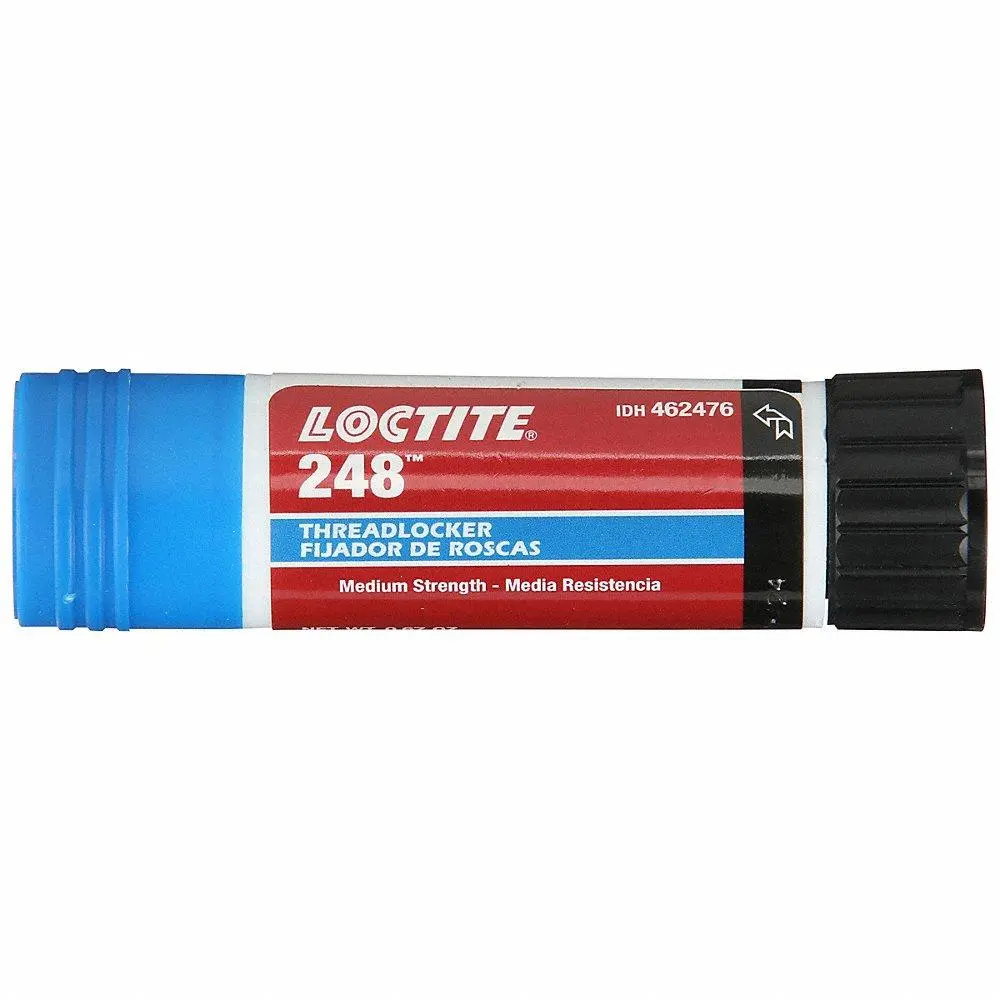
Product code: 248
Blue medium-strength threadlocker in a wax-like stick for vertical and overhead threads where a liquid would run off.
LOCTITE
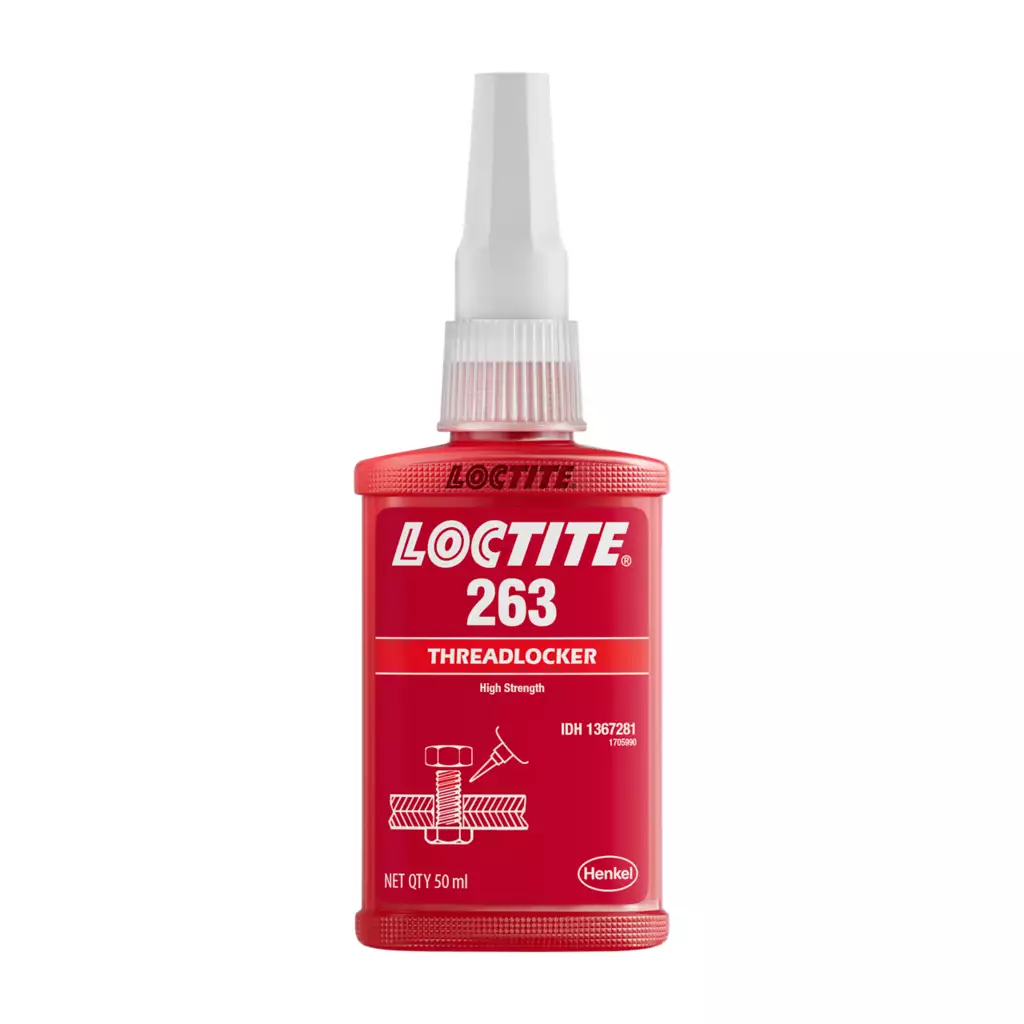
Product code: 263
Red high-strength, low-viscosity threadlocker for heavy-duty studs and nuts in motor and pump housings, up to 180 °C.
LOCTITE
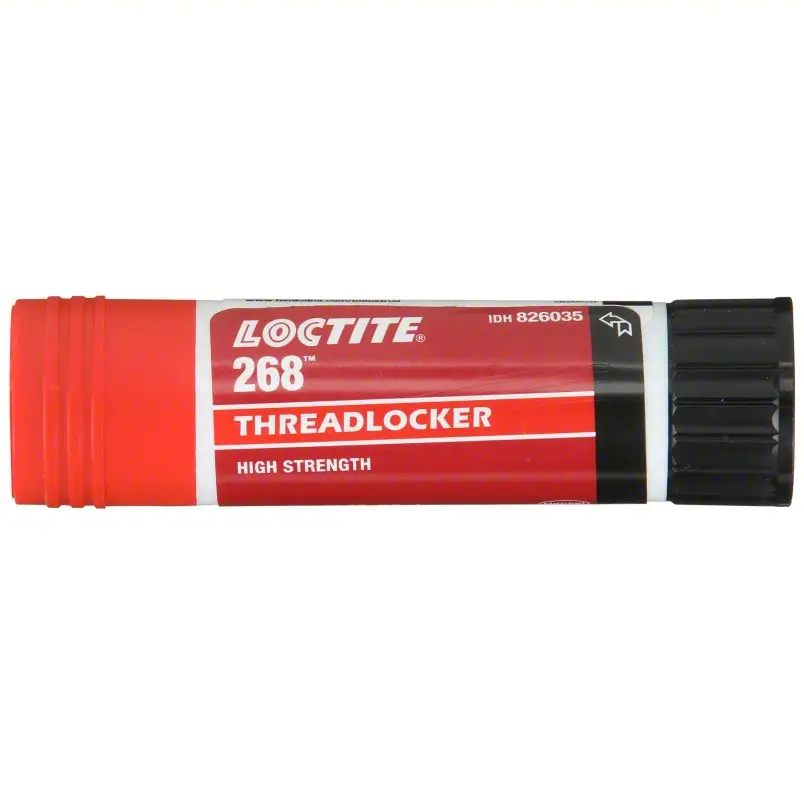
Product code: 268
Red high-strength threadlocker in a wax-like stick for permanent locking of vertical and overhead threads on most metals.
What each color means, how fastener size and removal drive the choice, and where each form fits.
Purple, blue, red and green side by side: strength, fastener size, removal and when each grade fits.
Liquid threads, bolts that back off under vibration, product that stays soft: find the cause and the fix.
Tell us where the fasteners are, who applies the product and how often. We will help you decide between liquid and stick for each station.
Not sure which product fits? Ask our assistant
Type the job, the material or a spec. It searches our published products and TDS values — no external AI.