
LOCTITE
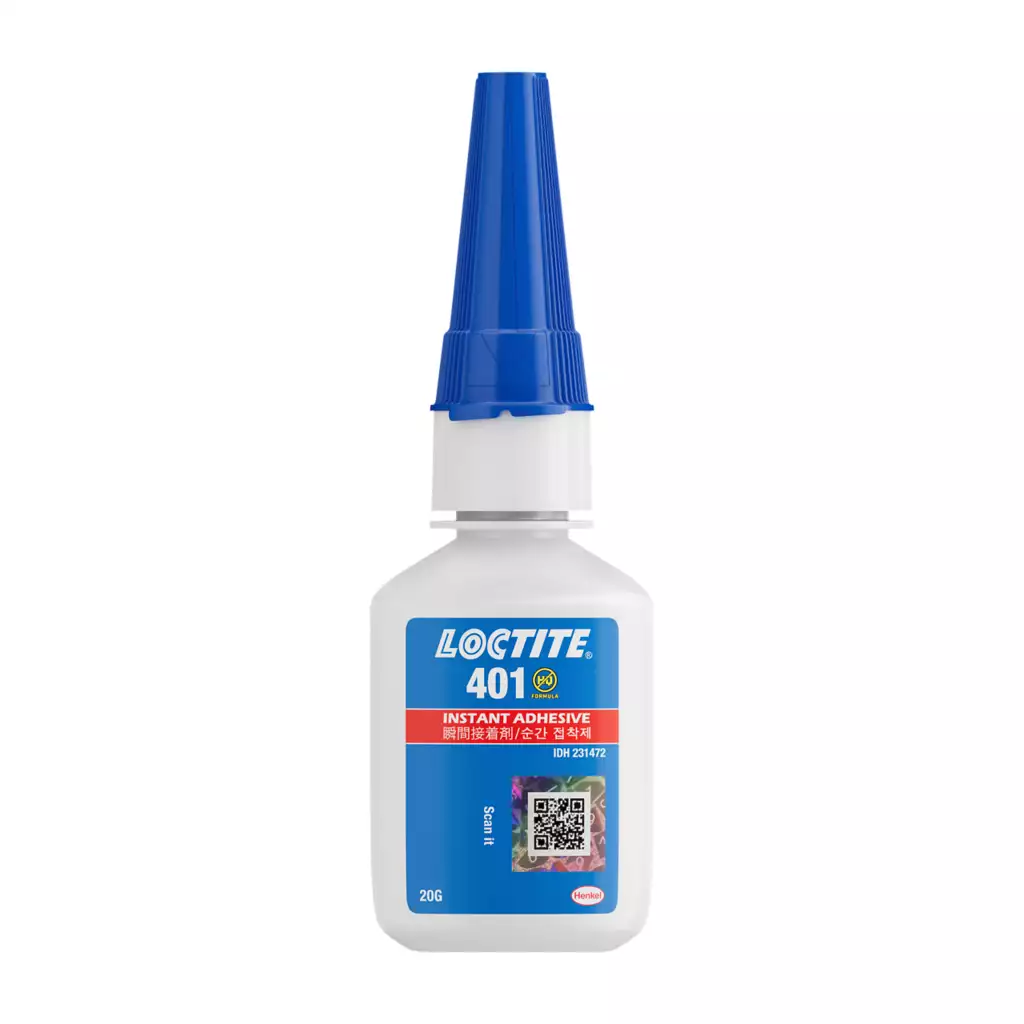
LOCTITE 401
Product code: 401
LOCTITE 401 is a general-purpose instant adhesive for fast assembly of close-fitting parts and repairs on metals, plastics, rubber and porous materials.
Comparison
LOCTITE 401, 406 and 454 are all one-part cyanoacrylate instant adhesives that cure with surface moisture in seconds. The useful difference between them is viscosity, and viscosity decides almost everything else: the gap the adhesive fills, the parts it suits and whether it stays put on a vertical face.
401 is a low-viscosity, surface-insensitive, general-purpose grade for metals, plastics, elastomers and porous substrates; 406 is exceptionally low in viscosity, for plastics and elastomers including EPDM in tight-fitting joints with the smallest gaps; and 454 is a surface-insensitive, high-viscosity, thixotropic gel for large bond gaps, vertical and overhead work and porous or difficult-to-bond materials. Think of them as thin, thinnest and gel.
| Criterion | LOCTITE 401 | LOCTITE 406 | LOCTITE 454 |
|---|---|---|---|
| Viscosity and form | Low-viscosity liquid | Exceptionally low-viscosity liquid | High-viscosity thixotropic gel |
| Bond gap | Close-fitting parts | Smallest gaps; ultra-thin film | Large bond gaps |
| Substrates named | Metals, plastics, elastomers, porous substrates | Plastics and elastomers incl. EPDM | Wood, metals, ceramics, most plastics, elastomers |
| Surface sensitivity | Surface insensitive | See the TDS | Surface insensitive |
| Vertical or overhead | Runs; apply to the lower part | Runs and wicks; apply after assembly if needed | Stays in place; suited to overhead and vertical |
| Porous parts | Bonds porous materials | Not the first choice; soaks in | Suited to porous wood, paper, leather, fabric |
| Fixture | Fast fixturing | Fast fixturing in seconds, minimal adjustment time | Fast fixturing; thicker gel gives a little more positioning time |
| Choose when | Mixed materials, general assembly and repair | Rubber and plastic parts that fit tightly | Gaps, vertical faces, porous or awkward parts |
401 is the general-purpose grade: the first bottle to reach for when the parts fit and the materials vary.
The exceptionally low viscosity of 406 is the point: it flows into the thinnest joint and forms an ultra-thin film, which suits tight-fitting plastic and elastomer parts.
The gel stays where it is put. That one property covers gaps, position and porous parts; 454 is also surface insensitive and covers a wide range of substrates in similar or dissimilar combinations.
All three are one-part cyanoacrylates with reduced hazardous ingredients: no mixing, fast fixture, moisture cure at room temperature, and a thin film that is strongest when the parts fit well. Two helpers apply across the range: LOCTITE SF 712 is a solvent-based activator that accelerates the cure of LOCTITE cyanoacrylates when the surface is dry, the gap is wide or the parts must fixture faster, and LOCTITE SF 768 removes cured cyanoacrylate, debonds parts and cleans dispensing equipment. For the full family and the SF 770 primer, see the instant adhesive selection guide.
Viscosity picks the grade; the TDS confirms the fit for your parts before the first production batch.
LOCTITE
Product code: 401
LOCTITE 401 is a general-purpose instant adhesive for fast assembly of close-fitting parts and repairs on metals, plastics, rubber and porous materials.
LOCTITE
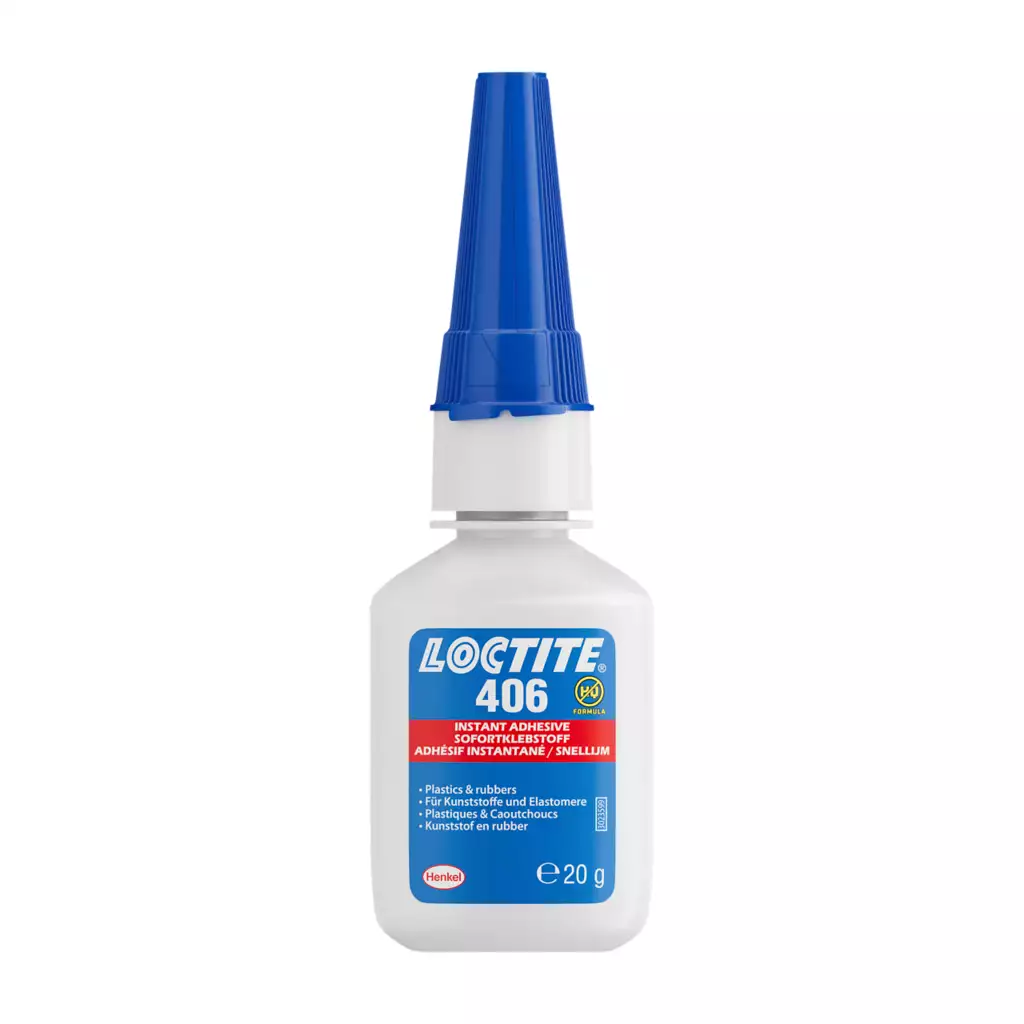
Product code: 406
LOCTITE 406 is a very low-viscosity instant adhesive for fast bonding of plastics and rubbers, including EPDM, forming an ultra-thin film in tight joints.
LOCTITE
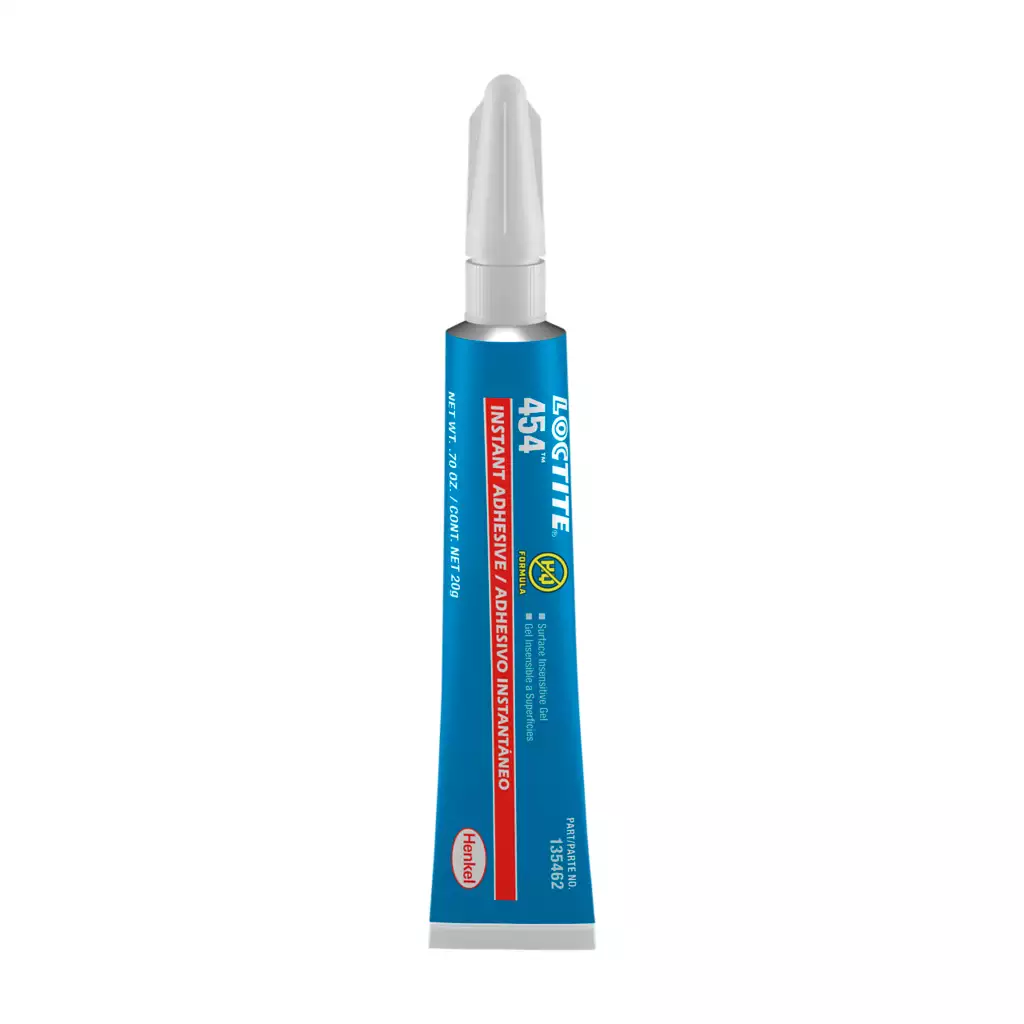
Product code: 454
LOCTITE 454 is a cyanoacrylate gel for vertical and overhead bonding, large gaps and quick repairs on metals, plastics, elastomers and porous materials.
LOCTITE
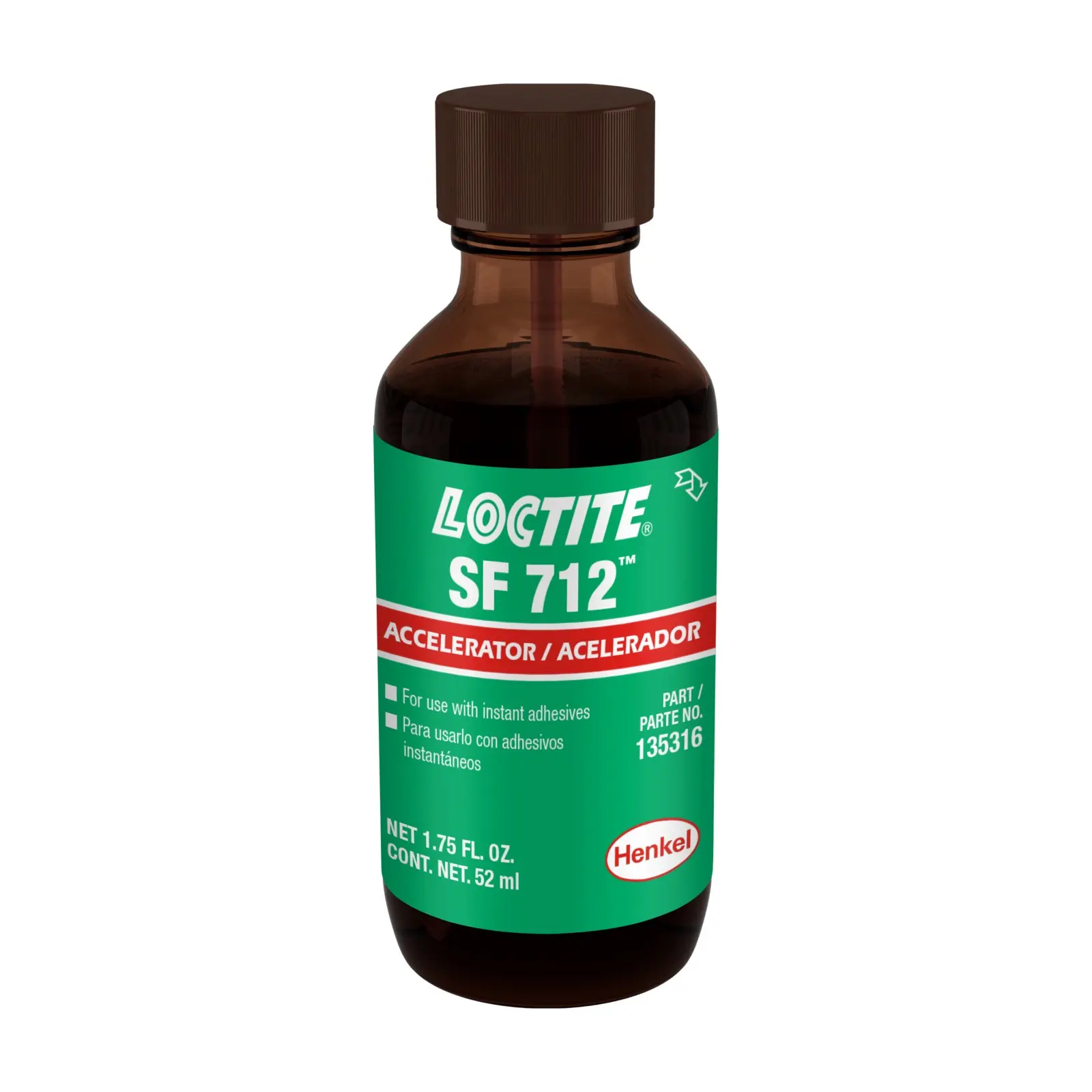
Product code: SF 712
Solvent-based Activator that speeds the cure of LOCTITE cyanoacrylate adhesives, applied before or after bonding. Used for securing wires or coils to PCBs.
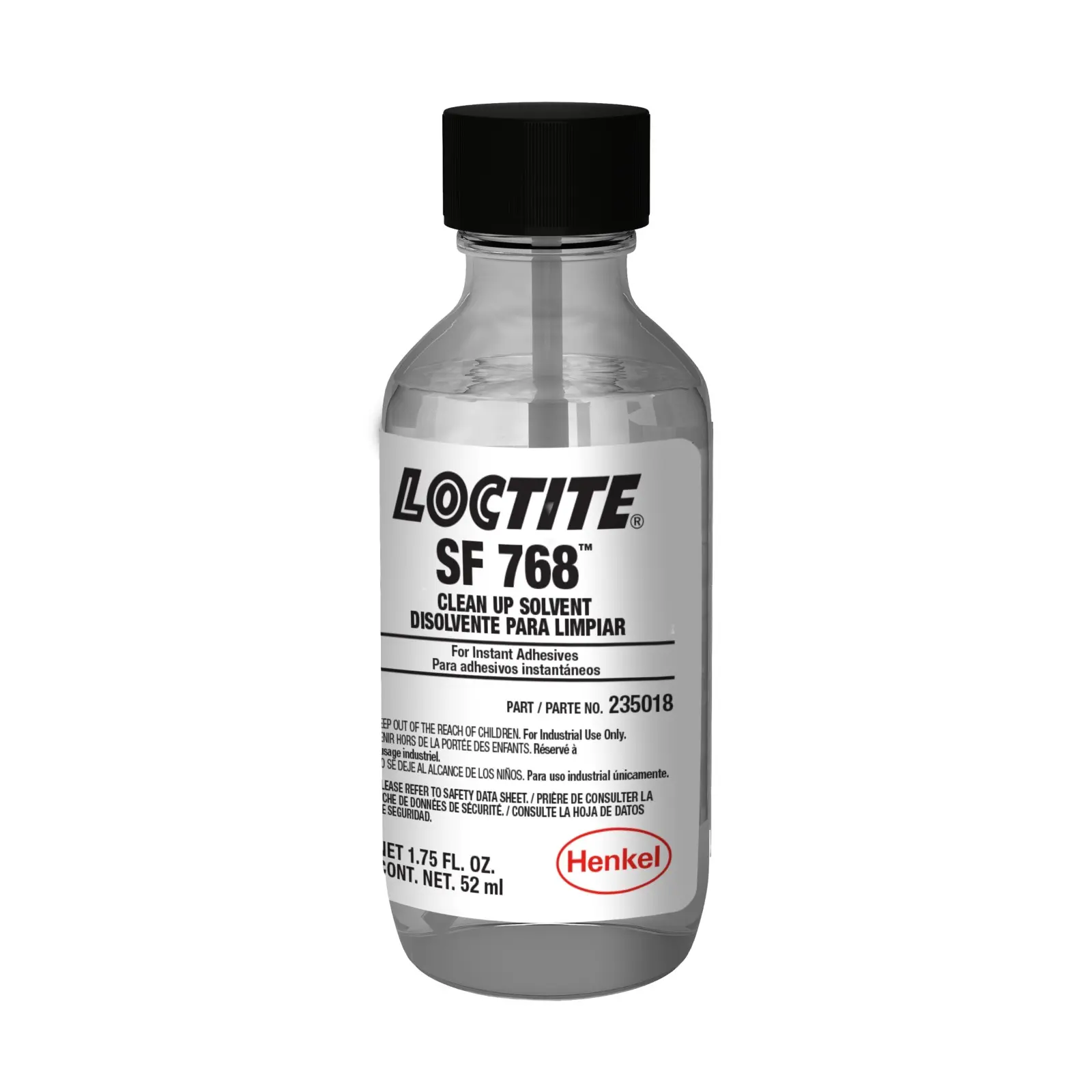
LOCTITE
Product code: SF 768
Solvent blend for removing cured cyanoacrylate adhesive from surfaces and for debonding parts assembled with it, by wiping or soaking.
How cyanoacrylates cure, and how to pick among the 19 LOCTITE grades by viscosity, substrate and special need.
Blooming, slow cure, brittle joints, PP and PE that will not bond, heat failures: the cause and fix for each.
Cyanoacrylates 480 and 496 versus structural acrylics AA 326 and AA 331: gap, load, cure path and process.
Tell us the materials, the gap, the orientation and the cycle time. We will match the grade and check the TDS with you.
Not sure which product fits? Ask our assistant
Type the job, the material or a spec. It searches our published products and TDS values — no external AI.