
LOCTITE
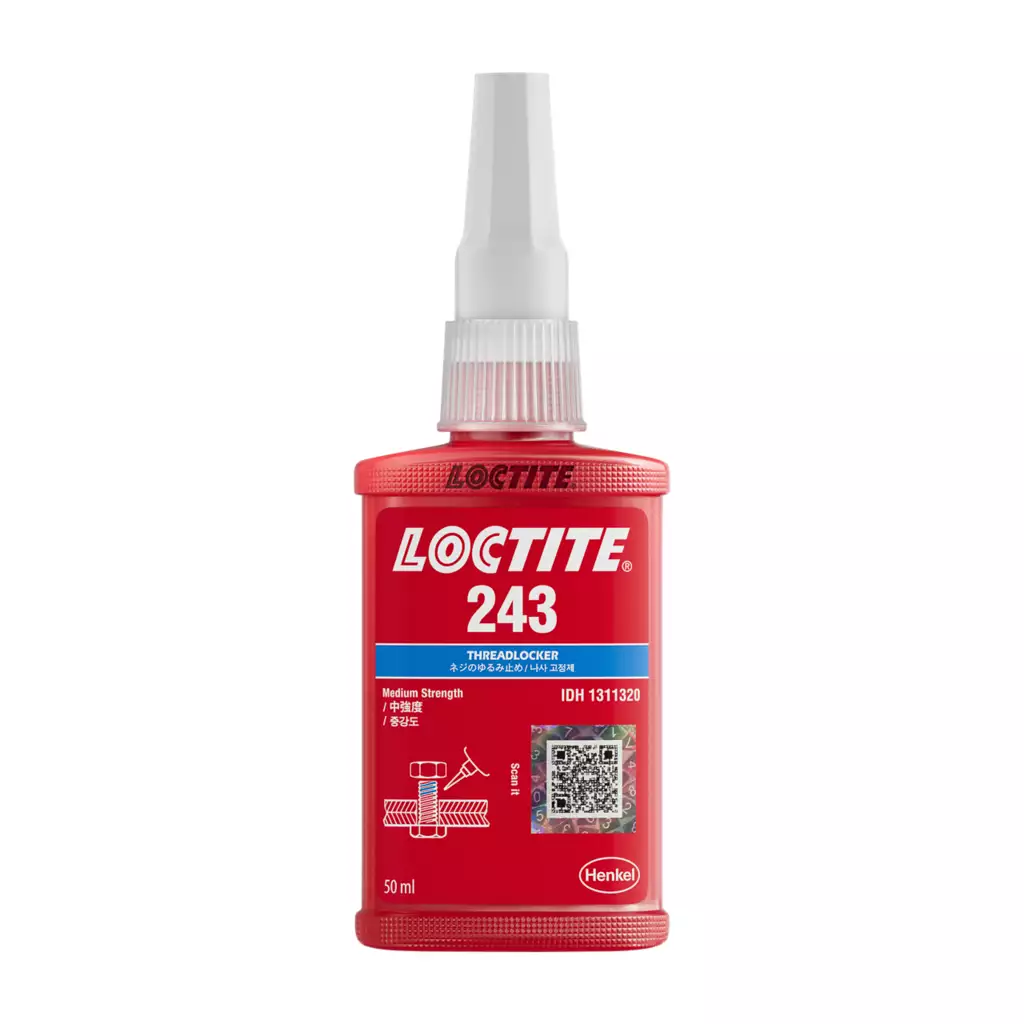
LOCTITE 243
Product code: 243
Blue medium-strength threadlocker for pumps, gearboxes and motors that works on passive metals and tolerates minor oil contamination.
Technical guide
An adhesive that was stored badly fails exactly like one that was applied badly, and the failure shows up weeks later on the line. Each LOCTITE family has its own storage logic, and a plant store that follows it is cheap insurance.
Every LOCTITE product has a storage range in its TDS, and the ranges differ by family: cyanoacrylates and the SMT adhesive are stored refrigerated, while threadlockers, activators, cleaners and the RTV silicone sit in a cool range well below a Thai shop floor in April. The number to follow is the one in the current TDS and on the label. Shelf life on the label assumes the product has lived inside that range the whole time.
Heat is the enemy in a Thai plant: a carton left on a loading dock, a bottle on a windowsill or next to an oven, a dispensing reservoir under a lamp. Each hour above the range shortens the real shelf life in a way the label cannot show. Treat the storage range as a process parameter and log the store temperature.
Threadlockers such as LOCTITE 243 and the other anaerobic grades are packed with air space in the bottle on purpose. Oxygen keeps them liquid; remove it and they begin to cure, which is exactly what happens between the threads. The bottle must not be filled to the top, topped up from another bottle, or decanted into an airtight container. A bottle on its side puts liquid against the cap and the neck, where it can gel and block the tip.
At the station: keep the bottle upright in a holder, cap it between uses, and never push the applied product back into the bottle with the tip. Product that has thickened, strings from the nozzle or has changed color is curing in the bottle; quarantine it. The semi-solid stick grades such as LOCTITE 248 are the exception that travels well in a toolbox, but the storage range in their TDS still applies.
Instant adhesives such as LOCTITE 401 cure with moisture, so moisture is what the store must keep out. Unopened stock is kept refrigerated in the range the TDS states. The rule that matters most is the one most often broken: let a cold container reach room temperature before opening it. Open it cold and water condenses inside the bottle and on the tip, and from then on the product is slowly curing in its own container. Take out only what a shift will use, and do not return warmed, opened material to the refrigerator.
At the station: cap the bottle between uses, keep the tip clean and dry, and store the open bottle upright at room temperature out of direct sun. Thickening, a slow first drop or a tip that keeps blocking are signs the bottle is done; the TDS gives the use period after opening.
LOCTITE 3609 is a one-part, heat-cure epoxy surface-mount adhesive for dispensing at medium to high speeds. It is refrigerated stock with the same discipline as a cyanoacrylate: sealed warm-up to room temperature before the syringe or cartridge is opened, so that no condensation reaches the adhesive, and a defined life on the machine once loaded. Record the time each syringe is taken out and installed; a syringe that sat warm and sealed for a day has used part of its life whether or not it dispensed.
LOCTITE SI 595 is a one-part RTV acetoxy silicone that cures with moisture from the air. A cartridge is therefore safe only while it is sealed: cut the nozzle at the moment of use, not in advance, and cap or plug an opened cartridge immediately. A plug of cured silicone in the nozzle is normal after a pause and can be pulled out; a cartridge that has skinned deep inside or become stiff to extrude has cured in storage. Keep cartridges within the TDS range and away from humid areas such as wash stations.
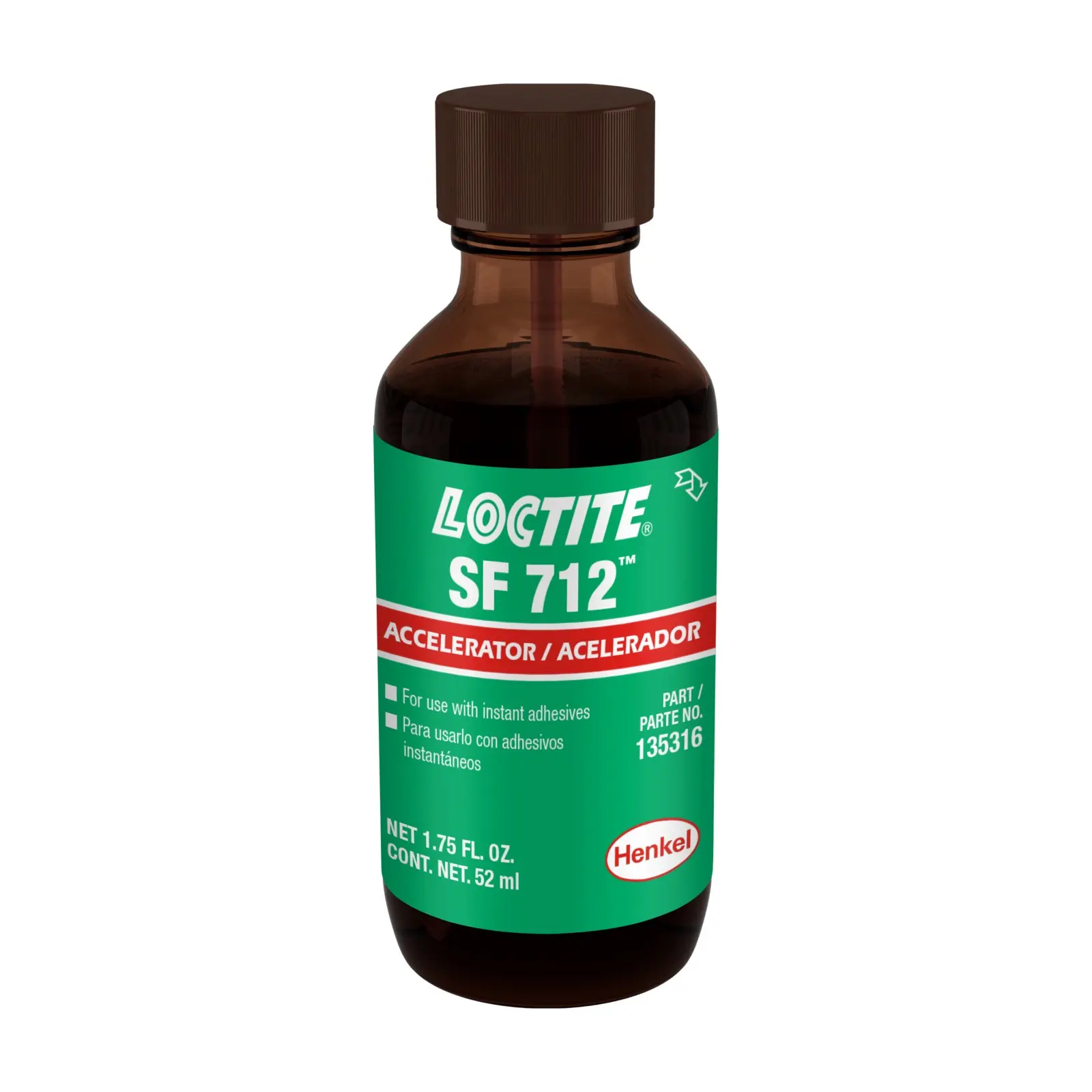
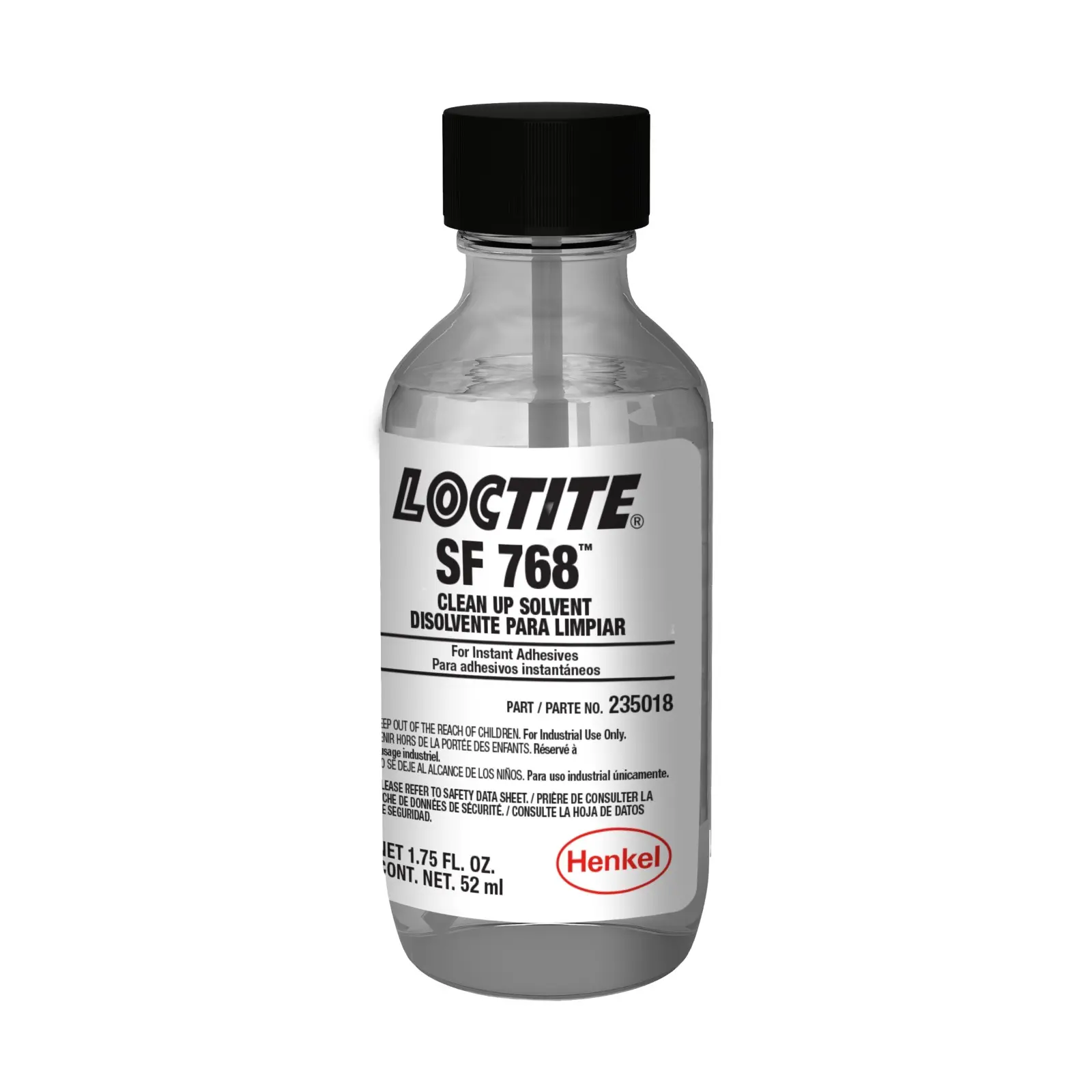
LOCTITE SF 712 is a solvent-based cyanoacrylate activator and LOCTITE SF 768 a solvent cleaner for removing cured cyanoacrylate and debonding parts. Both are flammable liquids, and the SDS states the classification, the ventilation and the personal protection they need. In practice that means: stored in the flammables cabinet, not on the adhesive shelf; used with the extraction the SDS describes; container closed the moment the wipe or spray is done, because an open can of activator loses solvent and strength and an open can of cleaner fills the station with vapor.
Keep the activator physically separate from the adhesive bottles at the station. A drop of activator on a cyanoacrylate tip cures it solid, and activator sprayed near an open bottle shortens its life.
The table is the one-page version for the store and the station. Temperature ranges and use periods after opening are in each TDS.
| Family | Storage practice | Handling at the station | Signs it has degraded |
|---|---|---|---|
| Anaerobic threadlockers (243 and family) | Cool range per TDS; upright; never topped up or decanted airtight | Upright holder, cap between uses, apply from original bottle | Thickened, stringy, lumps, color change |
| Cyanoacrylates (401 and family) | Refrigerated unopened per TDS; sealed warm-up before opening | Room temperature once opened, upright, tip clean, no return to fridge | Slow first drop, blocked tip, thickening, slower fixture |
| SMT adhesive (3609) | Refrigerated per TDS; log the time out of the fridge | Sealed warm-up, then machine life from installation | Dot shape drifts, stringing, poor wet strength |
| RTV silicone (SI 595) | Cool range per TDS; sealed; away from humid areas | Cut nozzle at use, plug when paused, use opened cartridges first | Deep skin, stiff extrusion, cured plug beyond the nozzle |
| Activator (SF 712) | Flammables cabinet; closed; range per TDS | Separate from adhesive bottles; ventilation per SDS; close after each use | Weak effect, strong solvent loss, residue in the can |
| Cleaner (SF 768) | Flammables cabinet; closed; range per TDS | Extraction per SDS; small quantities at the bench; check plastic compatibility | Discolored, slow to dissolve cured adhesive |
A good store is a small one with rules. Six steps set it up; the last two keep it honest.
The store is usually run by habit rather than by TDS, and these five habits do the most damage.
LOCTITE
Product code: 243
Blue medium-strength threadlocker for pumps, gearboxes and motors that works on passive metals and tolerates minor oil contamination.
LOCTITE
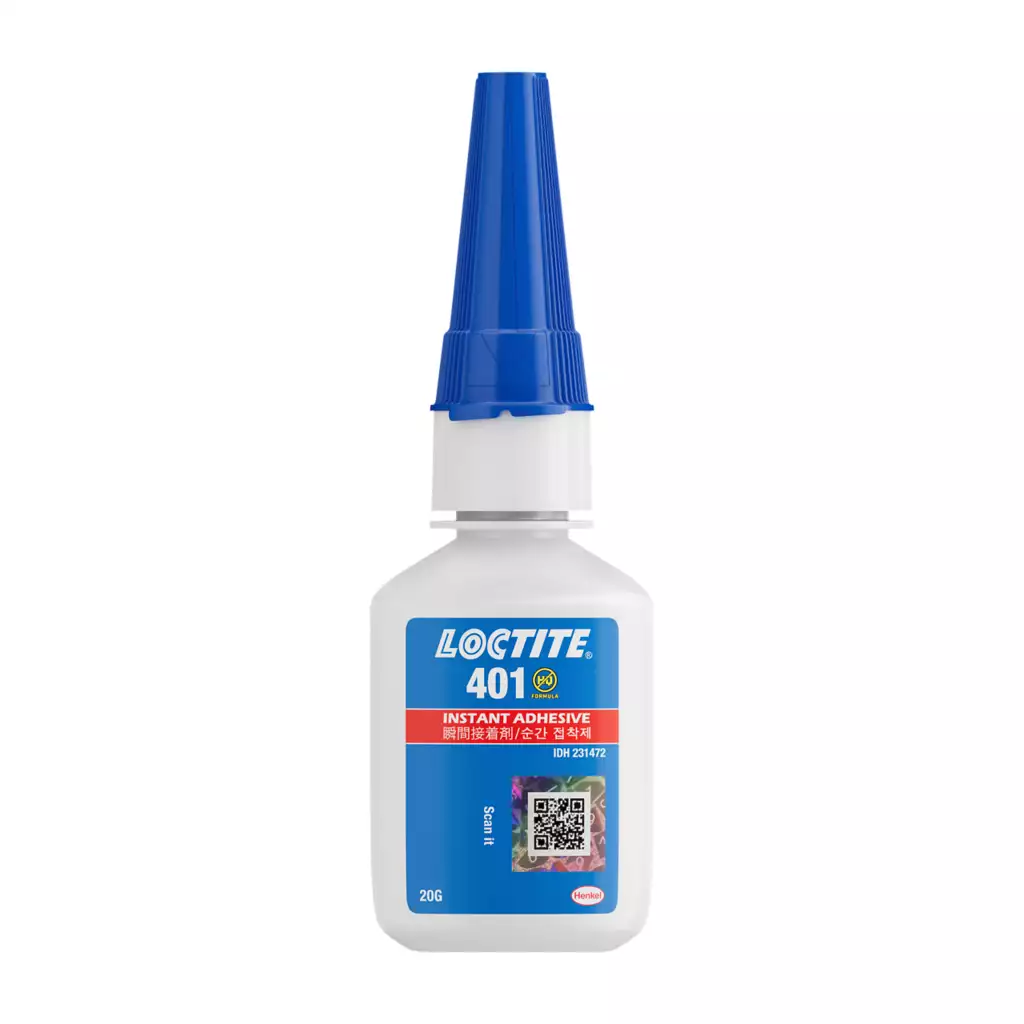
Product code: 401
LOCTITE 401 is a general-purpose instant adhesive for fast assembly of close-fitting parts and repairs on metals, plastics, rubber and porous materials.
LOCTITE
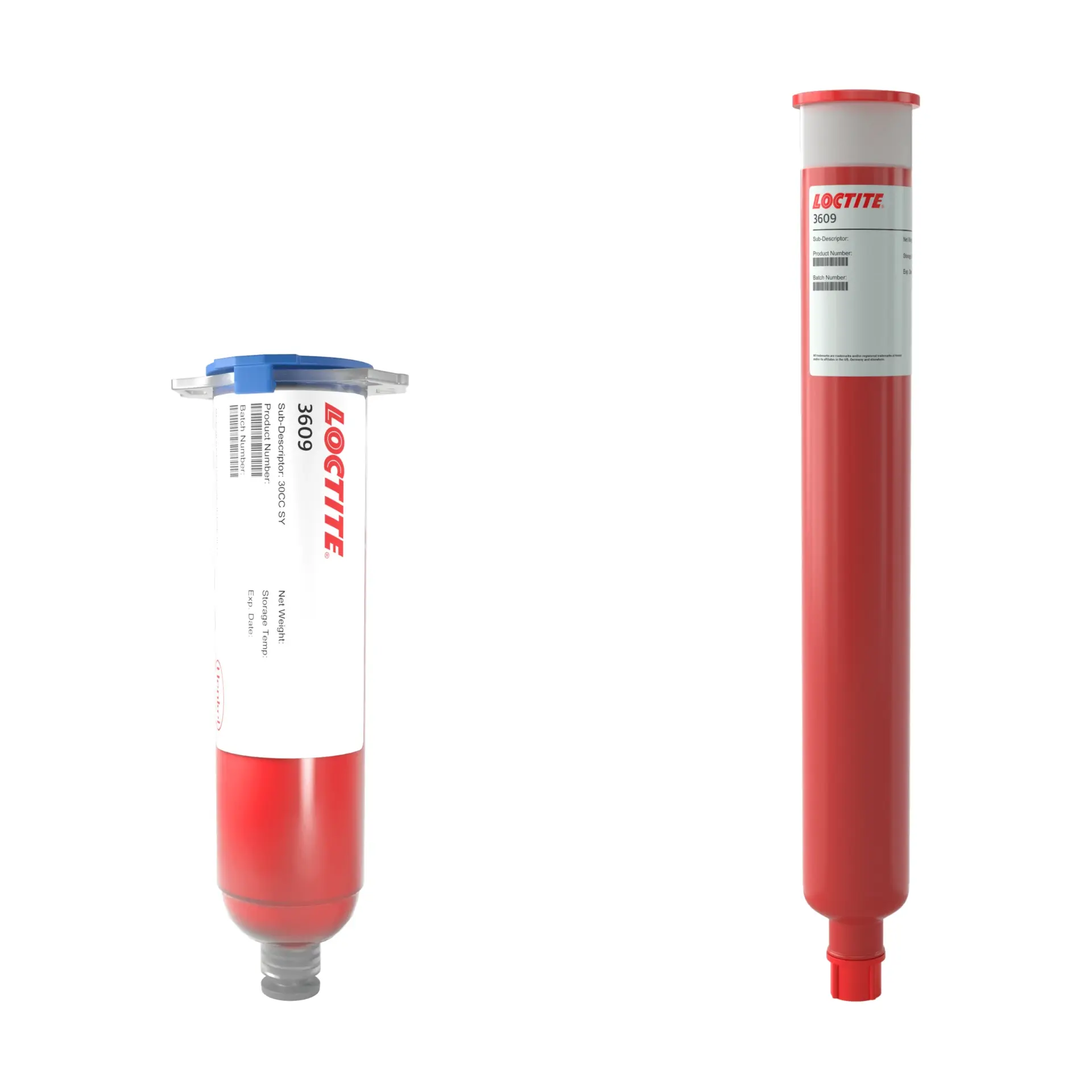
Product code: 3609
LOCTITE 3609 is a red, 1-part epoxy surface mount adhesive that holds SMD components on printed circuit boards before wave soldering, at medium to high dispense speeds.
LOCTITE
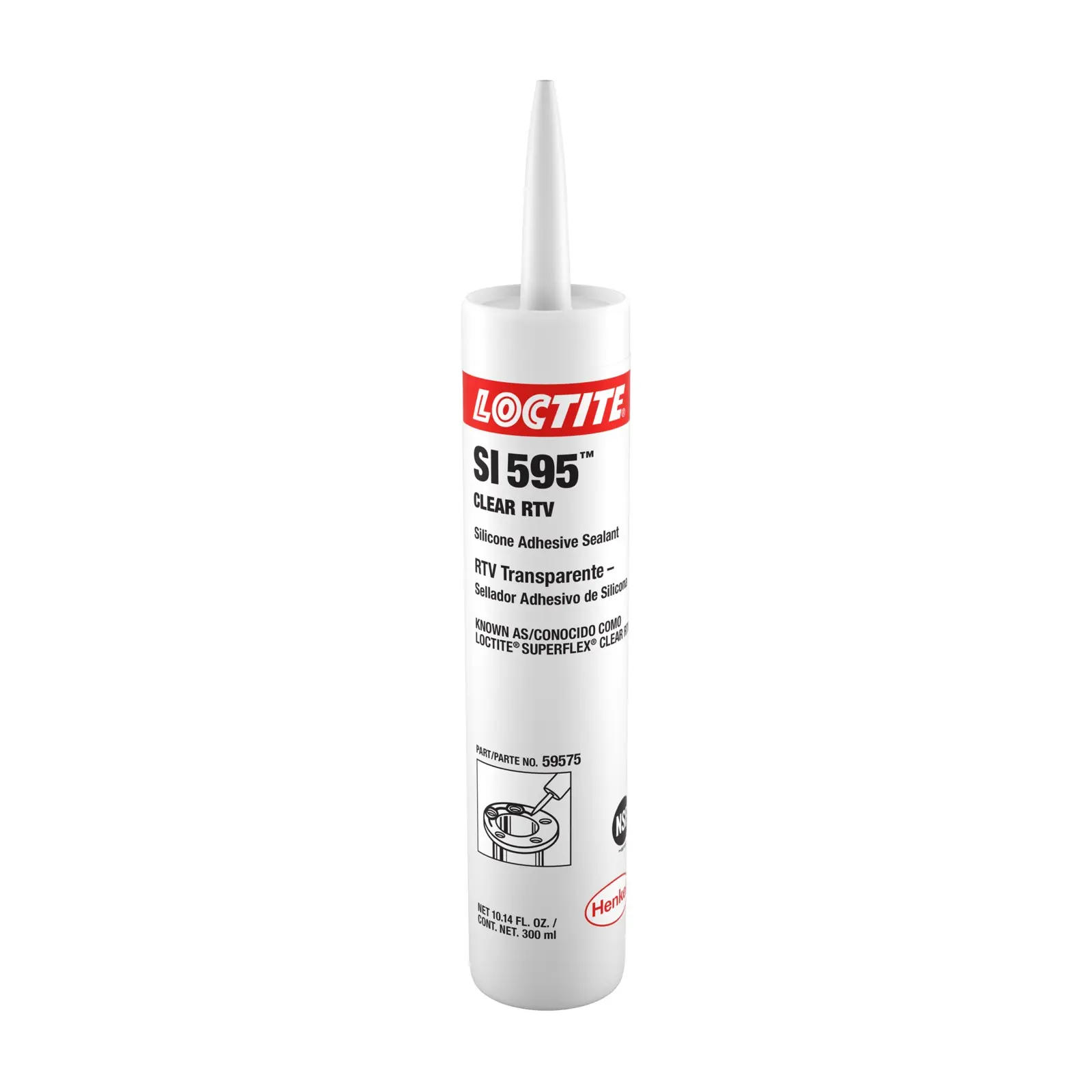
Product code: SI 595
Clear one-part RTV silicone for sealing and flexible bonding on mechanical assemblies. Thixotropic Paste that will not slump, for use up to 204 °C.
LOCTITE
Product code: SF 712
Solvent-based Activator that speeds the cure of LOCTITE cyanoacrylate adhesives, applied before or after bonding. Used for securing wires or coils to PCBs.
LOCTITE
Product code: SF 768
Solvent blend for removing cured cyanoacrylate adhesive from surfaces and for debonding parts assembled with it, by wiping or soaking.
Turn a bench result into a repeatable line method: application, quantity, fixture time, activators and checks.
What fixture, handling strength, full cure, open time and pot life mean, and what triggers cure in each LOCTITE family.
Ten things that change between bench and line, how each hurts the joint, and how to trial for real.
How cyanoacrylates cure, and how to pick among the 19 LOCTITE grades by viscosity, substrate and special need.
Send us the list of LOCTITE products you stock. We will pull the storage range and use-after-opening period from each current TDS and SDS into one sheet for the store and the line.
Not sure which product fits? Ask our assistant
Type the job, the material or a spec. It searches our published products and TDS values — no external AI.